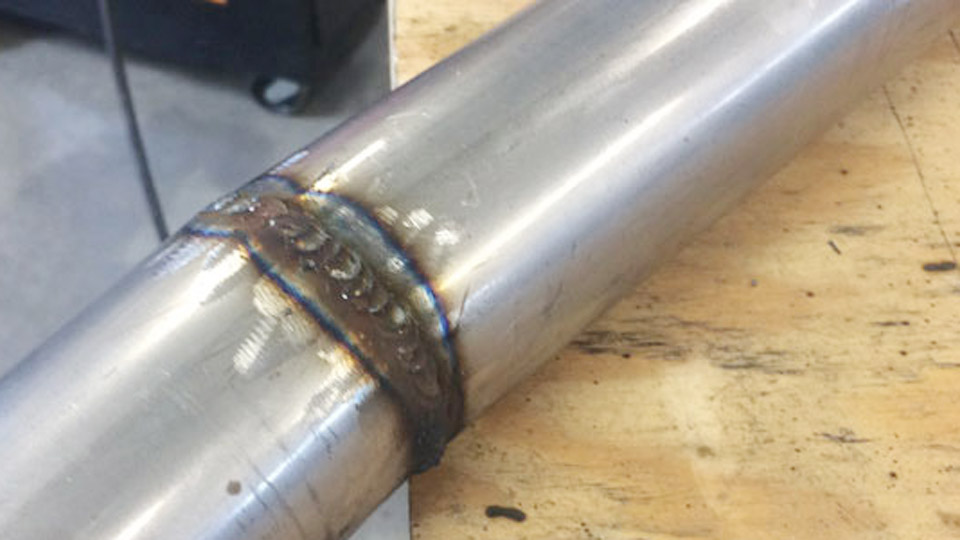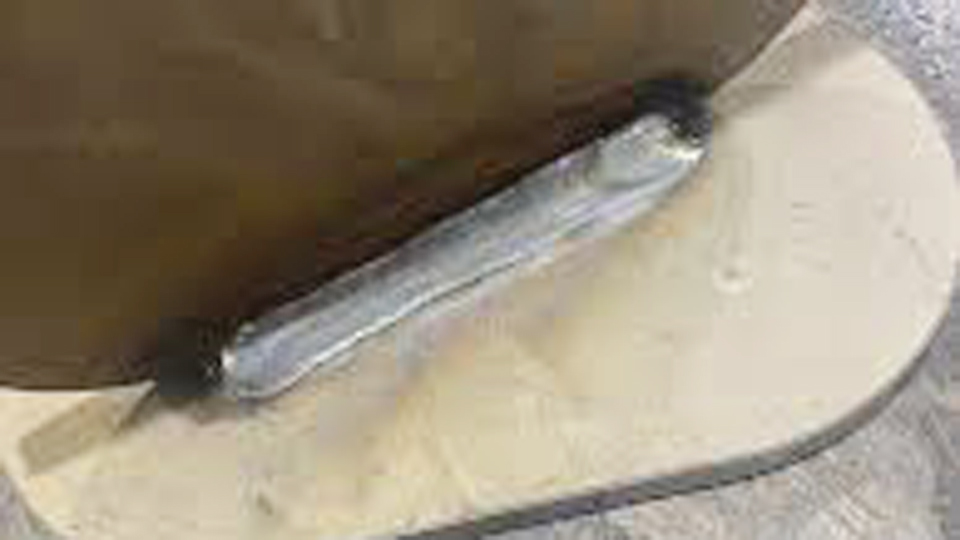
Auto body panels, typically 0.6–1.2 mm thick (18–22 gauge), present unique challenges in MIG welding. Burn-through, excessive distortion, and weak joints frequently occur when settings or techniques do not match the thin material.
Learning how to MIG weld auto body panels correctly delivers strong, low-profile welds that minimize grinding and preserve panel shape for professional-looking repairs.
Proper MIG welding on sheet metal requires balancing heat input, wire selection, and technique to achieve fusion without destroying the base material.
This guide provides the exact parameters, decisions, and methods experienced welders use for reliable results on patch panels, rust repairs, and bodywork.
Image by eastwood
Equipment and Material Selection for Sheet Metal MIG Welding
Choosing the Right Wire Diameter
Use 0.023″ (0.6 mm) or 0.030″ (0.8 mm) solid wire for auto body panels. Thinner wire melts at lower heat inputs, reducing the risk of burn-through on 20–22 gauge steel.
0.023″ wire excels on the thinnest panels and tight gaps, producing smaller weld pools that cool faster. 0.030″ wire offers better feedability on many home/shop machines and works well up to 18 gauge or when slight gaps exist. Avoid 0.035″ unless the panel has thicker sections or you run very short, hot tacks with high wire speed.
Select ER70S-6 for general use due to its deoxidizers that handle light surface contamination. ER70S-7 provides better wetting and flatter beads, reducing grinding on visible areas.
Shielding Gas and Flow Rates
75/25 Argon/CO2 delivers the best arc stability, bead appearance, and low spatter on thin metal. Pure CO2 works but increases spatter and requires more cleanup. Set flow to 15–20 CFH; higher rates waste gas without benefit, while lower rates risk porosity in drafts.
Welder Capabilities
A machine with good low-end control (synergic or fine voltage/wire speed adjustment) performs best. Many 110V or 220V units with 0.023–0.035″ capability suffice. Inductance or arc control settings soften the arc for thinner material when available.
Surface Preparation and Joint Fit-Up
Cleanliness determines weld quality more than almost any other factor on auto body panels. Remove rust, paint, undercoating, and galvanization to bright metal using a flap disc, grinder, or media blasting. Focus on the weld zone plus 1–2 inches on either side for good electrical contact and gas shielding.
Fit-up is critical. Butt joints should have a tight but consistent gap—roughly the thickness of a razor blade or 0.5–1 mm. Too tight causes lack of fusion or burn-through; too wide increases heat input needs. For patch panels, overlap slightly then trim for a precise butt joint, or use plug welds in factory locations.
Clamp panels securely with welding clamps or magnets. Use backing bars (copper or aluminum) behind the joint when possible to absorb heat and support the puddle. Tack every 1–2 inches initially, allowing full cooling between groups of tacks.
Optimal MIG Settings for Auto Body Panels
Start with manufacturer charts as a baseline, then fine-tune on scrap of identical thickness and condition.
Typical starting parameters for 0.023–0.030″ wire on 18–22 gauge:
- Voltage: 12–16 V (lower for thinner material)
- Wire feed speed: 100–250 IPM (adjust for stable short-circuit transfer)
- Inductance (if available): Medium to high for softer arc
- Stickout: 3/8–1/2 inch (longer stickout reduces heat input)
Test on scrap: Aim for a stable arc with quick puddle formation and good tie-in without excessive penetration or burn-through. Higher voltage + higher wire speed + very short trigger pulls often yields flatter welds with less overall heat than cold, slow settings.
For example, on 20 gauge with 0.023″ wire and 75/25 gas, settings around 13–14.5 V and moderate wire speed allow 0.5–1 second tacks. Adjust upward slightly for penetration on cleaner or thicker edges.
Welding Techniques for Thin Sheet Metal
Tack and Stitch (Skip) Welding
Continuous beads destroy thin panels through heat buildup and warping. Use short tacks or stitches: 1/4–1/2 inch welds, spaced 1–3 inches apart, allowing complete cooling between segments.
Start tacks on the edge of the previous one for smooth tie-in. This “hot on hot” method with short duration minimizes heat-affected zone (HAZ) expansion.
Gun Angle and Movement
Push (forehand) technique generally produces wider, flatter beads with less penetration—ideal for cosmetic bodywork. Pull (backhand) offers deeper penetration but more buildup. Many welders push at 5–15° for sheet metal to improve gas coverage and visibility.
Maintain consistent travel speed. Pause briefly to establish the puddle, then move steadily. For gaps, angle the gun steeper initially then straighten.
Managing Heat Input
- Short bursts only
- Allow air cooling (or use compressed air)
- Weld in alternating sections (skip around the panel)
- Use factory stiffening ribs or flanges where possible to locate welds and resist pull
Copper heat sinks or wet rags (away from the arc) can help on large flat areas.
Common Joint Types and Approaches
Butt Joints
Ideal for invisible repairs after finishing. Requires excellent fit-up. Weld in short segments from one end or alternate sides. Back-purge or use backing if accessible.
Lap Joints
More forgiving on fit. Weld along the edge with the gun angled to direct more heat into the thicker or lower piece. Watch for undercut on the top sheet.
Plug or Spot Welds
Replicate factory resistance spots. Drill holes (5–8 mm), then weld around the edge or fill completely. Use higher settings for quick fill without blowing through the back side. Grind flush afterward.
Edge and Corner Repairs
Direct heat into the thicker member. Use smaller wire and shorter durations.
Post-Weld Finishing and Distortion Correction
Grind welds flush carefully with 40–80 grit flap discs, progressing to finer grits. Avoid overheating during grinding, which can cause additional distortion. Planish (hammer and dolly) welds while warm or after cooling in sequence to stretch the metal back.
For warped panels, use heat shrinking techniques or mechanical straightening. Apply weld-through primer or epoxy in hidden areas for corrosion protection. Seal visible joints properly before body filler and paint.
Troubleshooting MIG Welds on Auto Body Panels
Burn-through: Lower voltage/wire speed, shorten trigger time, increase stickout, improve fit-up, or add backing.
Lack of fusion/porosity: Increase cleaning, check gas flow and leaks, adjust angle, ensure good ground contact.
Excessive distortion: Smaller welds, more spacing, better sequencing, lower overall heat.
Spatter: Optimize voltage/speed balance, clean contact tip, proper gas.
Weak welds: Verify penetration on test pieces; adjust for full fusion without excessive melt-through.
Always test settings on scrap matching your repair material, including any coatings or rust levels.
Advanced Considerations for Professional Results
Modern high-strength steels in newer vehicles may require specific procedures—consult OEM guidelines. For mixed materials or aluminum panels, switch processes entirely (TIG often preferred for aluminum).
Pulse MIG or advanced synergic machines reduce heat input significantly on thin panels, producing excellent results with less skill. However, standard short-circuit MIG remains highly effective with proper technique.
When repairing galvanized panels, remove coating in the weld zone or accept increased porosity risk and use wires designed for it.
Real-world Application Insight
uccess in MIG welding auto body panels comes down to heat management above all else. Prioritize fit-up, short controlled welds, and iterative cooling over speed.
The flattest, least noticeable repair often results from slightly “hotter” but extremely brief tacks rather than cold, prolonged ones that build excessive reinforcement.
Mastering these decisions separates hobbyist patches from factory-like restorations. Practice on scrap panels until settings and rhythm become intuitive, then apply the same controlled process to the vehicle. This yields strong structural integrity with minimal finishing work.
FAQ
What wire size is best for MIG welding auto body panels?
0.023″ or 0.030″ solid wire. These diameters allow low heat input while maintaining good arc stability on 18–22 gauge steel.
Can I use flux core wire for auto body work?
It is not recommended for visible or thin body panels due to higher spatter, slag, and poorer bead appearance. Gas-shielded solid wire provides cleaner results.
How do I prevent warping when MIG welding sheet metal?
Use short tacks or stitches, allow full cooling between welds, alternate welding locations, maintain tight fit-up, and leverage panel stiffeners.
What voltage and wire speed settings should I use?
Start at 12–15 V with moderate wire speed for 0.023–0.030″ wire. Fine-tune on test scrap for quick puddle formation without burn-through. Higher speed with short trigger pulls often works best.
(Word count: approximately 2,150)