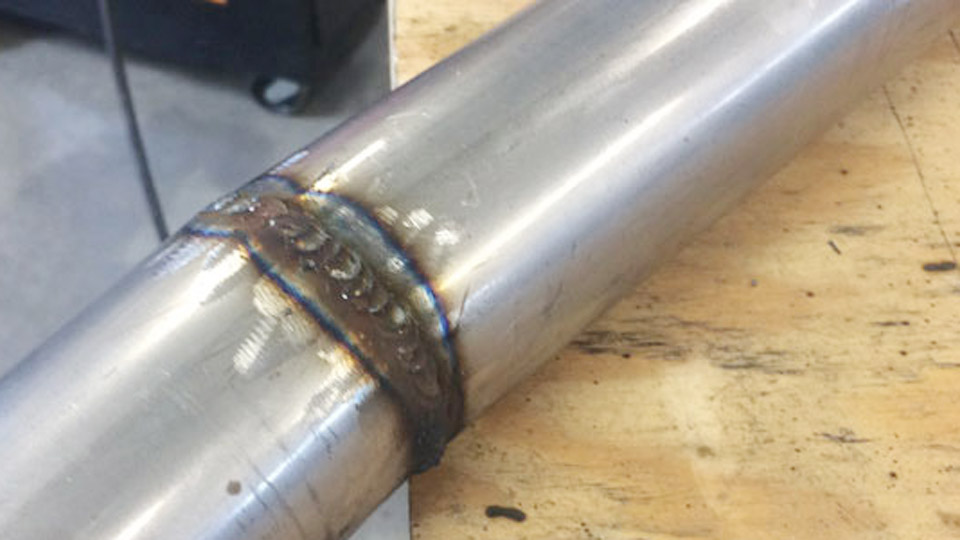
Many welders hit a wall when moving from short-circuit MIG to thicker materials. The arc becomes erratic, spatter increases, or penetration falls short despite cranking the machine.
Spray transfer welding resolves these issues with its axial droplet transfer, delivering high deposition rates, smooth beads, and excellent fusion on materials 1/8 inch and thicker.
A reliable spray transfer welding settings chart becomes essential for dialing in voltage, wire feed speed (WFS), and amperage to achieve that characteristic hiss and stable arc without burn-through or undercut.
This mode excels in production and structural work where speed and quality matter. Understanding the exact parameters prevents wasted time and material while ensuring code-compliant welds.
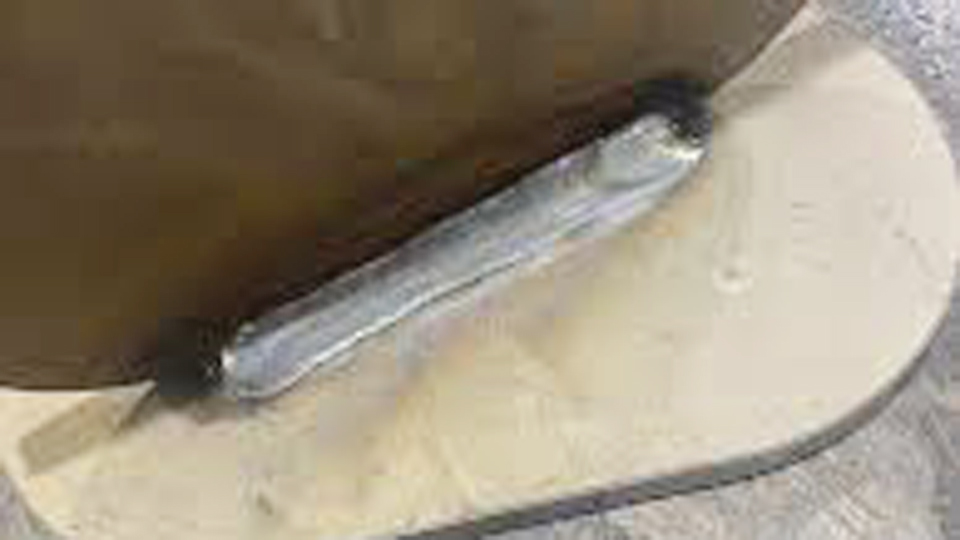
Image by I See You Don’t Know Shit About Welding
Understanding Spray Transfer Mode in MIG Welding
Core Characteristics of Spray Transfer
Spray transfer propels tiny droplets of molten wire across the arc in a continuous stream, driven by electromagnetic forces. Unlike short-circuit (which bridges the wire to the puddle) or globular (large irregular drops), spray creates a stable, cone-shaped arc with minimal spatter.
It requires specific conditions: high current density, argon-rich shielding gas (typically 80%+ argon), and voltage usually above 24V. The transition current varies by wire diameter—around 180-220A for .035″ wire and higher for .045″. Below this threshold, the process shifts to globular transfer with increased spatter.
When Spray Transfer Outperforms Other Modes
Use spray transfer for flat and horizontal positions on carbon steel, stainless, or aluminum thicker than 1/8 inch. It supports high travel speeds and single-pass fillets up to 3/8-1/2 inch depending on joint design.
Short-circuit suits thinner materials or out-of-position work but risks lack of fusion on heavy plate. Globular offers a middle ground but produces more cleanup.
For structural steel or heavy fabrication, spray delivers deeper penetration and higher deposition rates—often 2-3 times faster than short-circuit on equivalent thickness.
Key Factors Influencing Spray Transfer Performance
Shielding Gas Selection
Argon/CO2 blends with 10-20% CO2 or argon/oxygen mixes enable true spray. 90/10 Ar/CO2 works well for mild steel, providing good wetting and arc stability. Higher CO2 (above 15-20%) pushes the process toward globular. For stainless, tri-mix or 98/2 Ar/O2 minimizes oxidation.
Gas flow rates of 25-40 CFH maintain coverage without turbulence. Too low causes porosity; too high creates air entrainment.
Wire Diameter and Type
- .035″ wire: Versatile for most shop work; transitions to spray around 180-220A.
- .045″ wire: Higher deposition for thicker sections; needs 250A+ for optimal spray.
- .030″ wire: Possible but requires higher WFS and limits maximum thickness.
ER70S-6 or similar solid wires perform best. Metal-cored wires enhance spray characteristics with even higher deposition and less spatter.
Material Thickness and Joint Design
Spray works best on 3/16″ and thicker plate. On 1/8″ material, maintain fast travel speeds to avoid burn-through. Groove joints benefit from spray’s penetration; fillets in horizontal positions allow larger single-pass welds.
Spray Transfer Welding Settings Chart
Settings depend on wire size, material, and gas. These serve as starting points—fine-tune based on machine, joint, and technique. Amperage correlates closely with WFS.
.035″ Wire Settings (Mild Steel, 90/10 Ar/CO2)
| Thickness | Voltage | WFS (IPM) | Approx. Amps | Travel Speed (IPM) |
|---|---|---|---|---|
| 3/16″ | 24-26 | 350-450 | 180-240 | 12-18 |
| 1/4″ | 25-27 | 380-520 | 200-280 | 10-16 |
| 3/8″ | 26-28 | 450-600 | 240-320 | 8-14 |
| 1/2″+ | 27-30 | 500-700+ | 280-400+ | 6-12 |
.045″ Wire Settings (Mild Steel, 90/10 or 95/5 Ar/CO2)
| Thickness | Voltage | WFS (IPM) | Approx. Amps | Travel Speed (IPM) |
|---|---|---|---|---|
| 1/4″ | 26-28 | 350-450 | 220-300 | 10-15 |
| 3/8″ | 27-29 | 400-550 | 260-350 | 8-13 |
| 1/2″ | 28-31 | 450-650 | 300-420 | 7-12 |
| 3/4″+ | 29-32 | 550-750 | 380-500+ | 6-10 |
Notes: Use 98/2 Ar/O2 for cleaner arcs on stainless. Increase voltage 1-2V for aluminum with 100% argon. Monitor for undercut—if present, reduce voltage slightly or increase travel speed.
Optimizing Voltage and Wire Feed Speed Balance
Voltage Effects on Arc Behavior
Voltage primarily controls arc length and bead profile. In spray transfer, 24-32V range keeps the arc stable. Too low causes stubbing or globular shift; too high leads to undercut or excessive heat. Aim for a soft hiss without popping.
Wire Feed Speed and Amperage Relationship
WFS directly drives amperage and deposition. Higher WFS increases heat input and penetration but demands matching voltage. Use manufacturer multipliers as baselines: .035″ wire often runs ~1.6-2 IPM per amp.
Test on scrap: Increase WFS until spray establishes, then adjust voltage for optimal puddle fluidity.
Technique and Position Considerations
Gun Angle and Travel Techniques
Maintain a 10-15° push angle (forehand) for best wetting and gas coverage. Perpendicular works but may trap slag or gas. Drag angles risk poor shielding in spray mode.
Travel speed must match deposition—too slow causes excessive reinforcement and heat; too fast results in lack of fusion. Keep consistent speed for uniform beads.
Position Limitations
Spray transfer restricts to flat and horizontal due to the fluid puddle. Vertical or overhead requires pulsed spray or short-circuit. For multi-pass on thick sections, use stringer beads rather than wide weaves to control heat.
Advanced Adjustments for Specific Materials
Stainless Steel Spray Transfer
Stainless demands tri-mix (90% He / 7.5% Ar / 2.5% CO2) or similar for fluidity. Settings typically run 1-2V higher than mild steel. Watch for sensitization—control interpass temperature below 350°F. Use .035″ or .045″ 308/309 series wire.
Aluminum in Spray Mode
100% argon enables excellent spray with .035-.047″ wire. Higher thermal conductivity requires 20-30% higher WFS than steel. Preheat thick sections and use push technique aggressively. Settings often start at 22-26V but scale quickly with thickness.
Troubleshooting Common Spray Transfer Issues
Arc Instability or Spatter
- Increase voltage incrementally (0.5V steps).
- Check contact tip to work distance (CTWD): 1/2-3/4″ ideal for spray.
- Verify gas purity and flow; contaminated gas disrupts transfer.
Undercut or Convex Beads
Reduce voltage or WFS. Increase travel speed. Ensure proper joint preparation—clean metal, correct bevel angles (30-35° typical).
Burn-Through on Marginal Thickness
Drop to pulsed spray if available, or switch to short-circuit for root passes. Use copper backing bars for heat sinking.
Machine Limitations
Many home/shop machines lack power for consistent spray with .045″ wire. .035″ on a 200-250A machine often reaches the threshold, but duty cycle drops at high settings.
Equipment and Consumable Choices
Select power sources with sufficient output and inductance control. Constant voltage (CV) machines with good volt-amp curves perform best. Synergic or pulsed MIG units simplify setup by automating transitions.
Quality contact tips, liners, and drive rolls prevent feeding issues that destroy spray stability. Replace tips frequently as they wear and affect current transfer.
Real-World Application Decisions
Choose spray transfer when deposition rate and appearance justify the setup. For high-volume production on 1/4″+ plate, it reduces labor hours significantly compared to short-circuit or stick. In maintenance, evaluate if repositioning the workpiece for flat welding is feasible.
Always qualify settings on test coupons matching the actual job—thickness, material grade, and position.
Performance-based Takeaway
Mastering spray transfer welding settings means shifting from reactive adjustments to predictive control. The right combination of 26-28V and 400+ IPM on .035″ wire transforms heavy fabrication efficiency while delivering superior mechanical properties through consistent fusion.
Pro-level insight comes from recognizing that true optimization occurs when you correlate bead geometry, travel speed, and heat input to the specific base metal’s metallurgical requirements—turning a settings chart into a precision tool for repeatable, high-integrity welds.
FAQ
What voltage is needed for spray transfer MIG welding?
Spray transfer typically requires 24-32 volts, depending on wire size and gas. Start around 25-27V for .035″ wire and adjust for a stable hissing arc without undercut.
Can you achieve spray transfer with 75/25 argon CO2 gas?
75/25 usually stays in globular or short-circuit due to higher CO2 content. Switch to 90/10 or richer argon mixes for reliable axial spray transfer.
What wire size works best for spray transfer on 1/4″ steel?
.035″ wire offers excellent control and transitions smoothly around 200A. .045″ provides higher deposition for faster production but needs more machine power.
How do I know if I’m in spray transfer mode?
Listen for a smooth, high-pitched hiss instead of crackling (short-circuit) or popping (globular). Visually, expect a tight arc cone with tiny droplets streaming across—no large globs or wire touching the puddle.