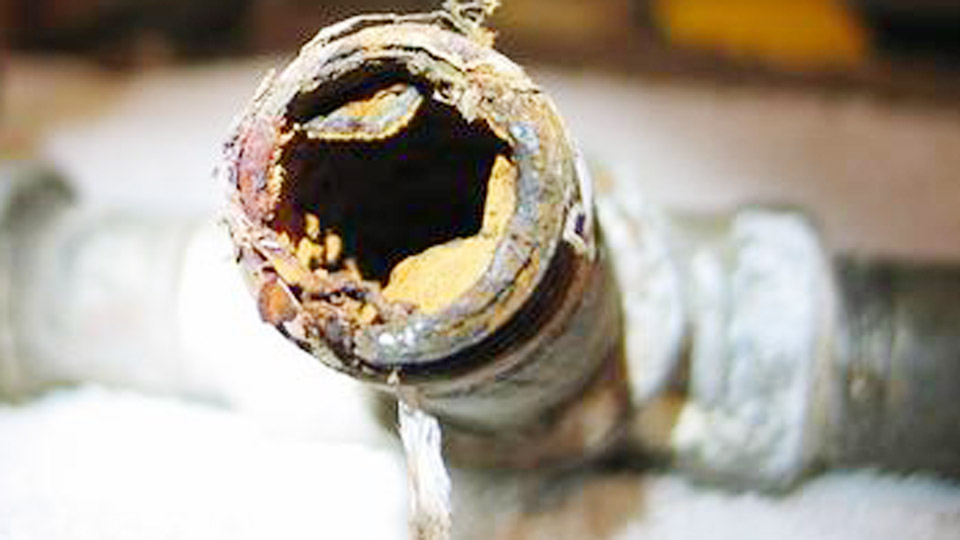
Copper plumbing systems can fail long before their expected service life when corrosion develops inside the pipe wall. Understanding what causes copper water pipes to corrode is important because the issue can lead to pinhole leaks, reduced water flow, contamination risks, and expensive repairs in residential, commercial, and industrial systems.
In fabrication and maintenance environments, corrosion also affects system reliability, inspection schedules, and long-term operating costs.
Several factors contribute to copper pipe corrosion, including acidic water, high flow velocity, improper grounding, chemical reactions, and poor installation practices.
In systems connected to welding, HVAC, or industrial process equipment, temperature fluctuation and water chemistry can accelerate internal pipe degradation and create hidden failure points. Identifying the root cause early helps prevent repeat damage and unnecessary pipe replacement.
I’ll explain the most common causes of copper pipe corrosion, how each condition affects performance, and what corrective measures help extend system life.
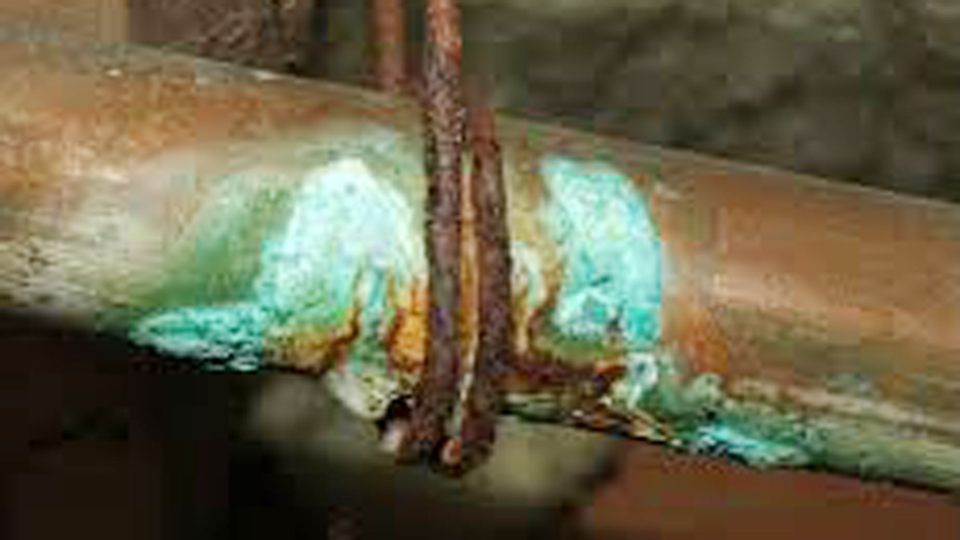
Image by twinlightshomeinspection
Water Chemistry: The Primary Driver of Copper Degradation
Water quality dictates most copper corrosion in domestic and light commercial systems. Multiple interacting factors determine whether protective oxide layers form or break down.
pH, Alkalinity, and Dissolved Oxygen Effects
Low pH water (below 6.5–7.0) dissolves the protective copper oxide layer, leading to uniform corrosion or cuprosolvency. High pH combined with low alkalinity and low dissolved inorganic carbon (DIC) promotes pitting instead of uniform attack. Waters with high chlorine or chloramine residuals accelerate pitting in high-pH, low-alkalinity conditions.
Dissolved oxygen is essential for most corrosion cells. Stagnant water allows oxygen differentials that drive localized pitting. Fresh aerated flow helps stabilize protective films, while dead legs or infrequent use create aggressive micro-environments.
Chlorides, Sulfates, and Disinfectants
Municipal chloramines and sulfites, added for bacterial control, correlate with increased pitting in certain regions. High chloride levels promote breakdown of passive films. Sulfate-reducing bacteria under deposits generate hydrogen sulfide, further attacking copper.
Hard water with high calcium can form scale that traps corrosives against the pipe wall, creating concentration cells. Soft, aggressive water lacks buffering minerals that would otherwise moderate attack.
Types of Copper Pipe Corrosion Welders Encounter
Different corrosion mechanisms produce distinct failure modes that guide repair strategy.
Type 1 Pitting (Cold Water Pitting)
Type 1 pitting occurs primarily in cold water lines below 40°C (104°F). It often links to residual carbon films from manufacturing (less common in modern BS EN 1057 pipe) or installation debris. Pits form deep, narrow tunnels that cause sudden pinhole leaks while most of the pipe remains intact.
Type 2 Pitting (Hot Water Pitting)
Type 2 appears in hot water systems, typically above 60°C (140°F). It associates with soft water, high pH, and low bicarbonate. Pits are wider and often accompanied by more general wall thinning.
Erosion-Corrosion and Flow-Related Damage
High-velocity water, especially with entrained air or particulates, mechanically removes protective films at elbows, tees, and reducers. Turbulence from burrs left during cutting or improper joint alignment accelerates this. Velocities above 5–8 ft/s in smaller pipes increase risk significantly.
Flux-Induced and Installation-Related Corrosion
Excessive or aggressive soldering flux left in the system creates highly localized pitting near joints. Poorly wiped joints or carbonized flux residues initiate attack. Deburring failure and excessive solder also contribute.
Microbiologically Influenced Corrosion (MIC)
Biofilms and iron-reducing or sulfate-reducing bacteria create differential cells under deposits. Anaerobic conditions in stagnant sections worsen this. Welders often see green or black deposits with characteristic pitting patterns.
Galvanic and Stray Current Corrosion
Contact with dissimilar metals (steel, galvanized pipe) in conductive water creates galvanic couples. Stray electrical currents from poor grounding or nearby DC sources drive electrolysis, producing rapid pitting where current leaves the pipe.
Diagnosing Corrosion Before Repair
Accurate diagnosis prevents repairing symptoms while ignoring root causes.
Visual and Physical Inspection
Look for green verdigris (copper carbonate/oxide), blue water staining, or localized pitting. Cut sections for internal examination. Pinholes often appear on the bottom or sides depending on mechanism.
Water Analysis
Test pH, alkalinity, hardness, chloride, sulfate, disinfectant residual, and bacterial load. Compare against known thresholds for copper stability.
System History
Note water source (municipal vs. well), age of installation, recent changes in treatment, and usage patterns (stagnation periods).
Welding and Brazing Techniques for Corroded Copper Pipe Repair
Welders repairing copper must address both the immediate leak and the surrounding compromised material.
Preparation Is Critical
Cut out all visibly corroded sections plus a generous margin (at least 6–12 inches beyond obvious damage). Clean to bright metal using emery cloth or wire brush. Remove all flux residue and oxidation. Deburr thoroughly to prevent future erosion sites.
For pinhole repairs in otherwise sound pipe, some professionals use specialized techniques, but replacement of affected runs is usually superior for longevity.
Brazing vs. Soldering Decisions
Use brazing (with silver-bearing alloys like BAg-5 or BCuP) for higher strength and heat resistance in repaired sections, especially hot water lines.
Brazing temperatures (1100–1500°F) require careful heat control to avoid annealing or distorting thin remaining walls. Oxy-acetylene or air-acetylene torches work well; TIG brazing offers precision on larger repairs.
Soldering (95/5 tin-antimony or lead-free) suits standard plumbing repairs but demands meticulous flux removal to prevent re-initiating corrosion.
Key Parameters
- Joint clearance: 0.002–0.005″ for capillary action.
- Heat uniformly to avoid cold joints.
- Purge with nitrogen when possible to reduce internal oxidation.
- Post-repair flush thoroughly to remove all flux and debris.
Material Selection for Repairs
Match or exceed original pipe wall thickness. Type L or K copper is standard; consider thicker walls in aggressive waters. For extreme conditions, evaluate alternatives like PEX or stainless, but maintain compatibility at transitions to avoid new galvanic issues.
Prevention Strategies Welders Can Implement
Installers and repair technicians influence long-term performance through execution details.
- Deburr every cut end meticulously.
- Use minimal effective flux and clean excess immediately.
- Avoid excessive heat during joining.
- Install dielectric unions or isolation where dissimilar metals meet.
- Recommend whole-house filters, pH adjustment, or corrosion inhibitors (orthophosphate, silicates) for aggressive water.
- Design systems to minimize dead legs and ensure adequate flow velocities (typically 2–5 ft/s for copper).
Proper grounding of the entire plumbing system reduces stray current risks.
Advanced Considerations for Professional Welders
In high-stakes commercial or industrial repairs, consider electrochemical monitoring or sacrificial anodes in specific applications. Understand that copper’s protective patina takes time to form—new installations are particularly vulnerable during commissioning if water stagnates.
When welding near existing copper, control heat input to prevent sensitization or stress corrosion cracking in adjacent areas. For large-scale replacements, phased work with proper flushing between sections maintains water quality.
Real-World Application Insight
Successful long-term repairs require matching the fix to the dominant corrosion mechanism identified through inspection and water analysis. Replacing a small pinhole section without addressing low pH or high chlorides simply moves the failure point.
Professional welders who integrate material science, water chemistry, and precise joining techniques deliver systems that outperform standard plumbing repairs.
The advanced insight: treat every copper repair as an opportunity to upgrade local system design—better flow dynamics, isolation from electrical issues, and compatibility with actual water chemistry extend service life far beyond the original installation.