MIG Welding with Flux Core Wire and Shielding Gas combines the benefits of gas-shielded welding with the enhanced arc characteristics and deposition rates associated with flux-cored consumables.
Understanding how this process works is important because wire selection, shielding gas composition, and machine settings directly influence penetration, arc stability, spatter levels, and overall weld quality.
Incorrect setup can lead to porosity, inconsistent fusion, excessive cleanup, and costly rework, particularly in structural fabrication and production environments.
Many welders encounter confusion when choosing between self-shielded and gas-shielded flux core options or when optimizing parameters for specific materials and joint designs. Knowing when and how to use flux-cored wire with external shielding gas helps improve productivity while maintaining weld integrity and meeting inspection requirements.
I’ll explain the process fundamentals, performance advantages, application considerations, and setup factors that affect real-world welding results.
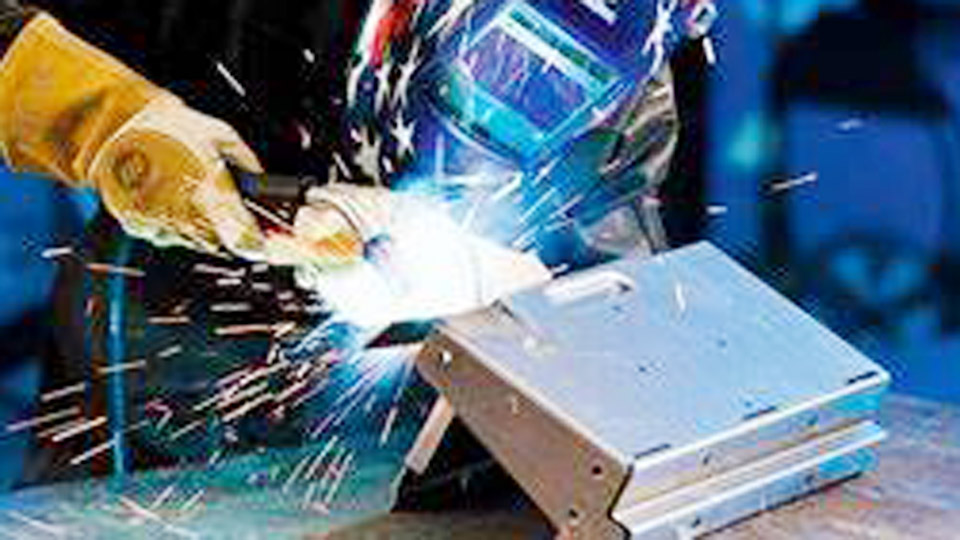
Image by norsemensafety
Gas-Shielded Flux Core vs. Self-Shielded and Solid Wire MIG
Gas-shielded flux core wires contain flux that provides deoxidizers, arc stabilizers, and alloying elements, while an external shielding gas protects the weld pool from atmospheric contamination. This dual protection produces smoother arcs, lower spatter, and reduced slag compared to self-shielded wires.
Key Process Differences
Polarity: Most gas-shielded flux core wires (E71T-1 types) run on DCEP (DC Electrode Positive), unlike self-shielded wires that typically require DCEN. Incorrect polarity causes unstable arcs, poor penetration, and excessive spatter.
Shielding Gas: Common choices are 75% Argon/25% CO2 (C25) for smoother arcs and less spatter, or 100% CO2 for deeper penetration and lower cost. Dual-rated wires (C/M designations) work with both. C25 mixtures often improve bead appearance and reduce cleanup time.
Deposition and Heat: Flux core wires run hotter with higher deposition rates than solid MIG wire of the same diameter. A 0.045″ wire can deposit 8–12 lbs/hour at 250 amps, outperforming solid wire in heavy fabrication.
When Dual Shield Excels
Dual shield shines on material thicker than 1/4 inch, where solid MIG may lack penetration and self-shielded flux core produces more slag and spatter. It handles rusty or scaled surfaces better than solid wire while offering superior out-of-position performance with proper technique.
Selecting the Right Flux Core Wire and Equipment
Wire Classifications and Diameters
E71T-1 wires dominate for all-position mild steel welding. Choose 0.035″ for thinner materials and out-of-position work, 0.045″ for general fabrication (most versatile), and 1/16″ or larger for high-deposition flat and horizontal fillets.
Look for low-hydrogen designations (H8 or better) for critical applications to minimize cracking risk.
Drive Rollers and Tension
Use knurled (grooved) drive rollers sized for flux core wire to prevent crushing the tubular wire. Set drive roll tension lower than for solid wire—tight enough to feed consistently but loose enough to stop the wire by pinching it firmly with your fingers. Excessive tension flattens the wire and causes feeding issues.
Contact Tips and Nozzles
Slightly oversized contact tips (e.g., 0.045″ wire in a 0.052″ tip) help with flux core to reduce burnback. Maintain a 3/4″ to 1″ stickout—longer than standard MIG—to allow proper flux activation and gas coverage.
Optimal Machine Settings for MIG Welding with Flux Core Wire and Shielding Gas
Settings depend on wire diameter, material thickness, position, and gas type. Always fine-tune based on sound (smooth crackle or hiss) and bead appearance.
Voltage, Wire Speed, and Amperage Guidelines
Typical starting parameters for E71T-1 wire with C25 gas (DCEP polarity):
| Material Thickness | Wire Diameter | Voltage (V) | Wire Feed Speed (IPM) | Approx. Amperage |
|---|---|---|---|---|
| 1/8″ – 3/16″ | 0.035″ | 20–24 | 200–350 | 140–220 |
| 1/4″ – 3/8″ | 0.045″ | 23–27 | 250–450 | 180–280 |
| 1/2″ + (multi-pass) | 0.045″–1/16″ | 25–29 | 300–600 | 250–350+ |
Higher voltage widens the arc and flattens the bead; lower voltage narrows it and increases convexity. Increase wire speed to raise amperage and deposition.
For 100% CO2, add 1–2 volts to maintain arc stability.
Gas Flow Rates
Set 25–35 CFH for most indoor applications. Too low causes porosity; too high creates turbulence and draws in air. Test in your environment—wind or drafts require higher flow or screens.
Inductance and Trim Control
On machines with inductance or arc trim, moderate settings reduce spatter. Too much inductance can cause a sluggish arc; too little increases spatter.
Welding Techniques for Consistent Results
Torch Angles and Travel Speed
Use a drag (trailing) angle of 10–15 degrees for most positions with dual shield. Push angles work in some vertical-up scenarios but drag generally provides better shielding and slag flow.
Travel speed should allow the puddle to follow the arc without getting ahead. Watch the leading edge of the puddle to maintain consistent bead width.
Stringer vs. Weave Beads
Stringer beads suit most dual-shield applications for better penetration control. Limited weaving (no more than 2–3 times wire diameter) helps fill wider joints or vertical positions without trapping slag.
Multi-Pass Strategies
On thick sections, use stringers with slight overlap. Clean slag thoroughly between passes—dual shield produces less slag than self-shielded but still requires attention. Back-gouge roots when full penetration is critical.
Position-Specific Considerations
Flat and Horizontal Positions
These allow highest parameters and fastest travel. Focus on consistent stickout and steady travel for flat, smooth beads with excellent tie-in.
Vertical Welding
Reduce parameters slightly (1–2 volts and 50–100 IPM wire speed). Use a slight push or drag with triangular motion if needed to control the puddle. Vertical-up typically yields best results with dual shield.
Overhead Welding
Tighten parameters further and maintain short, consistent stickout. Gravity pulls the puddle, so faster travel and good drag angle prevent undercut and rollover.
Troubleshooting Common Issues in Gas-Shielded Flux Core Welding
Porosity and Worm Tracks
Causes include insufficient gas coverage, excessive stickout, contaminated base metal, or wind. Shorten stickout to 3/4″, increase gas flow, and ensure clean metal. Short stickouts can also contribute if the gas envelope collapses.
Excessive Spatter
Wrong gas (try C25 instead of CO2), incorrect voltage/wire speed balance, or high inductance. Adjust voltage until the arc sounds smooth with minimal crackle.
Lack of Fusion or Penetration
Increase amperage, shorten stickout, or improve joint preparation. Ensure proper torch angle to direct heat into the joint.
Slag Inclusions
Inadequate cleaning between passes or improper bead technique. Dual shield slag is easier to remove than self-shielded but still requires chipping and wire brushing.
Wire Feeding Problems (Birdnesting, Burnback)
Check drive rolls, tension, liner condition, and contact tip. Replace tips regularly as flux core is more abrasive.
Material and Joint Preparation Best Practices
Remove mill scale, rust, oil, and paint from the weld area for best results, though dual shield tolerates more contamination than solid MIG. Bevel thick plates for better access and fusion. Use proper fit-up—gaps should be minimal to control burn-through.
Advanced Applications and Performance Optimization
For high-productivity work, pair dual shield with pulsed MIG capabilities if available. This reduces heat input while maintaining high deposition. In structural steel, E71T-1 wires often meet AWS D1.1 requirements with proper qualification.
Monitor heat input for code work: calculate as (Voltage × Amperage × 60) / Travel Speed (ipm). Stay within qualified ranges to preserve mechanical properties.
Decision-Making Summary for MIG Welding with Flux Core Wire and Shielding Gas
Choosing between self-shielded flux core, dual shield, or solid MIG depends on material thickness, environment, and required weld quality. Dual shield delivers the best combination of penetration, appearance, and productivity for most indoor shop fabrication on steel thicker than 3/16 inch.
Prioritize matching wire classification to gas type, maintaining optimal stickout, and fine-tuning parameters to the sound and puddle behavior rather than fixed charts.
The real mastery comes from understanding how shielding gas interacts with the flux to control manganese and silicon recovery in the weld metal. Slight changes in CO2 percentage can meaningfully affect toughness and cracking resistance—test and qualify your exact combination for demanding applications.
FAQ
Can I use shielding gas with regular self-shielded flux core wire?
Yes, but it provides little benefit and wastes gas since the wire generates its own shielding. Save gas for dual-shield (gas-shielded) wires designed for external protection.
What is the best shielding gas for flux core MIG welding?
75/25 Argon/CO2 offers the best balance of arc stability, reduced spatter, and bead appearance for most E71T-1M wires. Use 100% CO2 for maximum penetration or when cost is primary.
How does stickout differ from solid wire MIG?
Flux core with gas typically uses 3/4″ stickout versus 3/8″–1/2″ for solid MIG. Longer stickout allows flux to activate properly and maintains gas coverage.
Is dual shield better than self-shielded for indoor welding?
Yes, for most indoor applications. It produces less spatter, smoother beads, easier slag removal, and better mechanical properties due to dual protection. Self-shielded remains ideal for outdoor or windy conditions.
(Word count: approximately 2,250)