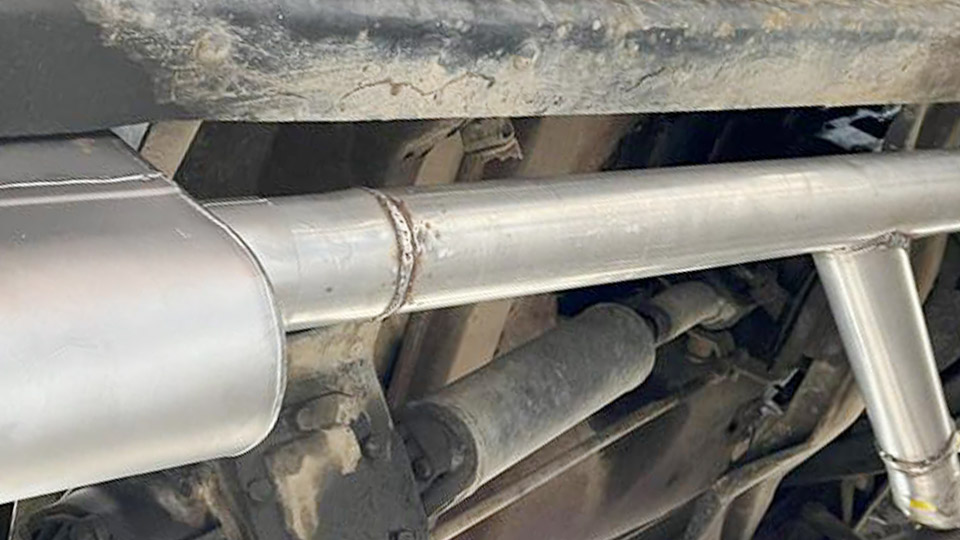
Knowing how to weld stainless steel to mild steel is essential when a project requires the corrosion resistance of stainless steel and the strength or lower cost of carbon steel.
While joining these dissimilar metals is common in fabrication, maintenance, and industrial repair, it also introduces challenges such as differing thermal expansion rates, dilution of the weld metal, loss of corrosion resistance, and the risk of cracking if the wrong filler or welding parameters are used.
Proper heat input, joint preparation, filler metal selection, and shielding gas all play a critical role in producing a sound, durable weld that can pass inspection and perform reliably in service.
Understanding these factors helps reduce weld defects, minimize rework, and improve overall weld quality. With the right approach, you can create strong, dependable stainless-to-mild-steel joints for a wide range of applications.
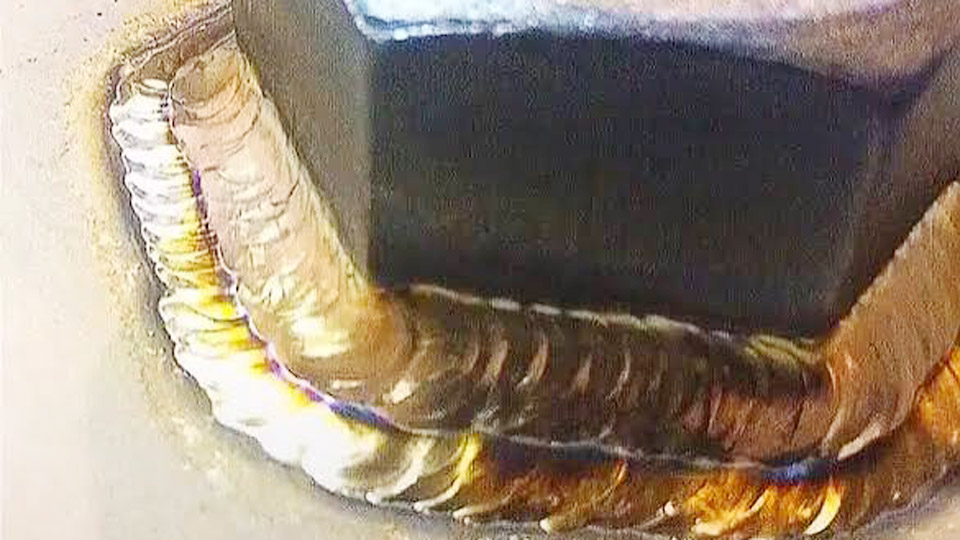
Image by weldingpros
Understanding the Challenges of Dissimilar Metal Welding
Metallurgical Differences Between Stainless and Mild Steel
Stainless steels (typically austenitic 304 or 316) contain high chromium (16-18%) and nickel (8-12%), creating a passive oxide layer for corrosion resistance. Mild steel (carbon steel) has low alloy content, higher thermal conductivity, and different expansion rates.
Direct fusion without compensation causes dilution: mild steel carbon migrates into the stainless pool, promoting martensite formation or chromium carbide precipitation that destroys corrosion resistance.
Thermal conductivity differs significantly—mild steel dissipates heat faster, risking uneven fusion or burn-through on the stainless side. Coefficient of thermal expansion mismatch can induce residual stresses and cracking during cooling.
When and Why This Joint Matters in Practice
These joints appear in food processing equipment, exhaust systems, architectural elements, pressure vessels, and repair work. Success depends on maintaining austenitic structure in the weld metal for ductility and corrosion performance while achieving adequate penetration and strength on the mild steel side.
Filler Metal Selection: The Critical Decision
Recommended Fillers and Why ER309L Dominates
ER309L (or E309L for stick) is the standard choice for most applications. Its higher chromium (~23%) and nickel (~13%) content compensates for dilution from mild steel, maintaining an austenitic microstructure with 5-10% ferrite to resist hot cracking. The “L” low-carbon variant (<0.03% C) prevents sensitization in the heat-affected zone (HAZ).
Avoid ER308L—it lacks sufficient alloying to handle dilution and risks cracking or rust. For higher strength or elevated temperatures, consider ER312, which offers a more ferritic structure but can be sluggish and more crack-sensitive in some positions. ER309LMo suits marine or chemical exposure with added molybdenum for pitting resistance.
Matching Filler to Process and Application
- TIG/GTAW: ER309L rod (1/16″ or 3/32″ diameter common).
- MIG/GMAW: ER309L wire (0.030″ or 0.035″ for most thicknesses).
- Stick/SMAW: E309L-16 or -17 electrodes.
- FCAW: E309LT-1 for gas-shielded flux-cored work.
Select diameter based on base metal thickness and position. For unknown compositions or high restraint, test ER312 on scrap.
Surface Preparation and Joint Design
Cleaning Protocols to Prevent Contamination
Thorough cleaning is non-negotiable. Remove oxides, oil, grease, paint, and mill scale from both metals using dedicated tools. Use a stainless-only wire brush or flap disc on the stainless side—never cross-contaminate with carbon steel tools, as iron particles embed and cause rust.
Degrease with acetone or approved solvents. For thicker sections, grind bevels to ensure full penetration. In high-corrosion environments, pickle and passivate the stainless after welding.
Joint Configurations for Dissimilar Thicknesses
Butt joints suit aligned thicknesses; fillet joints handle T-connections. For significant thickness differences, bevel the thicker mild steel side and bias heat toward the stainless. Use backing bars or purge where full penetration is required. Tack welds with the same ER309L filler minimize distortion.
MIG Welding Stainless Steel to Mild Steel
Equipment Setup and Shielding Gas Choices
MIG offers speed for production or thicker sections. Set short-circuit or spray transfer mode depending on thickness. Use 98% Ar / 2% CO2 or tri-mix (90% He / 7.5% Ar / 2.5% CO2) for optimal arc stability and reduced spatter on stainless. Standard 75/25 Ar/CO2 works for heavy structural but may compromise cleanliness.
Wire feed speed, voltage, and inductance require tuning: for 0.035″ ER309L on 1/8″ material, typical settings include 18-22V and 200-300 ipm wire speed. Maintain 3/8″ stickout maximum.
Technique and Heat Input Control
Push or forehand technique improves shielding. Travel speed should prevent overheating—aim for consistent puddle control without excessive weaving.
Bias the arc slightly toward the mild steel for balanced fusion while protecting the stainless from excessive heat. Multi-pass welds on thicker material benefit from interpass temperature control below 350°F (175°C) to limit sensitization.
TIG Welding Stainless Steel to Mild Steel
Precision Parameters for Superior Results
TIG provides the highest quality and control, ideal for thin materials, visible joints, or critical applications. Use 100% argon shielding at 15-25 CFH. DCEN polarity with 2% lanthanated or ceriated tungsten (1/16″ or 3/32″). Amperage: 50-120A for thin sections, adjusted via foot pedal for puddle control.
Add filler rod (ER309L) with minimal dipping to avoid contamination. Maintain a tight arc length (1/16″ or less) and use gas lens for better coverage.
Advanced Techniques: Pulse and Back Purging
Pulse TIG (e.g., 1-2 Hz, 50-70% background) reduces heat input and distortion. Back purge the stainless side with argon for root passes in pipe or tank work to prevent sugaring and ensure corrosion resistance. This process excels for achieving stacked-dime aesthetics and minimal HAZ.
Stick Welding and Other Processes
When Stick (SMAW) Makes Sense
Stick welding suits field repairs or thick sections where portability matters. E309L electrodes (3/32″ or 1/8″) on DCEP. Maintain short arc, drag technique if applicable, and remove slag between passes. It tolerates less-than-ideal conditions but produces more spatter and requires post-cleaning.
Flux-cored (FCAW) with E309LT-1 offers higher deposition rates outdoors with appropriate gas shielding.
Heat Management, Distortion, and Post-Weld Considerations
Strategies for Controlling Heat Input
Stainless steel’s lower thermal conductivity concentrates heat, while mild steel pulls it away. Techniques include:
- Back-step or skip welding sequences.
- Intermittent stitching on long seams.
- Copper or aluminum chill bars/heat sinks.
- Preheating mild steel (100-150°C) for thick, restrained joints to reduce cracking risk.
Monitor interpass temperatures and use low heat input (e.g., 0.5-1.5 kJ/mm).
Post-Weld Cleaning and Heat Treatment
Remove heat tint with dedicated stainless cleaners, pickling paste, or mechanical abrasion to restore the passive layer. For critical service, post-weld heat treatment (PWHT) around 600-630°C can relieve stresses and improve ductility, though it’s often unnecessary for austenitic stainless to mild steel.
Inspect for defects using dye penetrant or visual checks. In corrosive environments, consider buttering the mild steel with stainless layers before final joining.
Common Welding Parameters Table
| Process | Thickness | Wire/Rod | Voltage/Amps | Gas | Travel Speed |
|---|---|---|---|---|---|
| MIG | 1/8″ | 0.035″ ER309L | 19-22V / 150-250A | 98%Ar/2%CO2 | Moderate |
| TIG | <1/8″ | 1/16″ ER309L | 60-120A | 100% Ar | Slow, controlled |
| Stick | >1/4″ | 1/8″ E309L | 90-140A | N/A | Steady drag |
Adjust based on machine, position, and joint. Always test on scrap.
Real-World Decision Making for Your Projects
Choose MIG for speed on structural work, TIG for precision and appearance, and stick for field repairs. Factor in service environment: food-grade or marine demands stricter cleaning and possibly higher-alloy fillers.
Thickness, position, and equipment availability drive final process selection. For high-restraint or cyclic loading, prioritize low heat input and proper sequencing.
Performance-based Takeaway
The strongest joints result from deliberate filler selection (ER309L), meticulous preparation, and process-specific heat control that balances fusion without compromising the stainless corrosion barrier. Master these, and dissimilar welds perform reliably under demanding conditions—often outperforming expectations in mixed-material fabrications.
An advanced insight: In high-temperature or cyclic applications, consider nickel-based fillers like ERNiCr-3 for buttering to further mitigate expansion stresses and enhance long-term integrity.
FAQ
Can you weld stainless steel to mild steel without special filler?
No. Using standard mild steel or 308L filler leads to dilution-induced cracking or loss of corrosion resistance. ER309L (or equivalent) is required to maintain weld pool chemistry.
What gas is best for MIG welding stainless to mild steel?
98% argon / 2% CO2 or tri-mix gases provide stable arcs, good penetration, and clean beads. Avoid high-CO2 mixes that oxidize the stainless excessively.
Does welding stainless to mild steel require preheating?
Usually not for thin sections, but preheat mild steel to 100-150°C for thick or restrained joints to reduce cracking risk. Control interpass temperature carefully.
How do you prevent rust at the weld joint?
Dedicate tools to stainless, clean thoroughly, use low-carbon filler, remove heat tint post-weld, and passivate. Proper shielding and minimal heat input are essential.