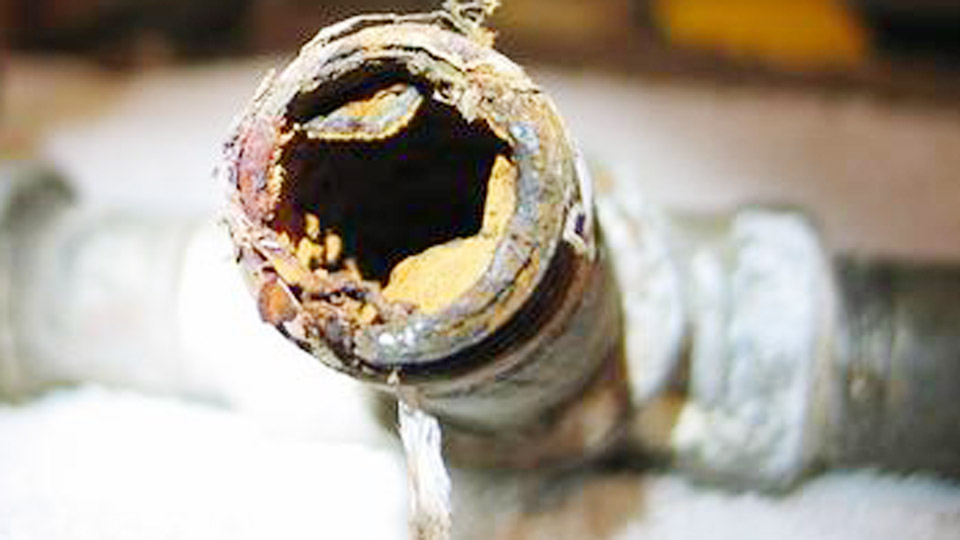
Green discoloration or pitting appearing on the exterior of copper pipes after soldering, brazing, or exposure in damp spaces creates immediate uncertainty for anyone working with the material.
The question of what causes corrosion on the outside of copper pipes determines whether the issue is cosmetic surface oxidation or an active mechanism that will produce pinholes and leaks.
External attack differs fundamentally from internal water-chemistry problems; it is driven by moisture, residual installation chemicals, insulation interactions, soil contact, and electrochemical effects.
For welders, plumbers, and fabricators who join copper tubing, recognizing these mechanisms prevents failed repairs, recurring leaks in HVAC or process lines, and unnecessary full-system replacements.
Correct identification of the external driver allows targeted mitigation rather than repeated joint work that only masks the real problem.
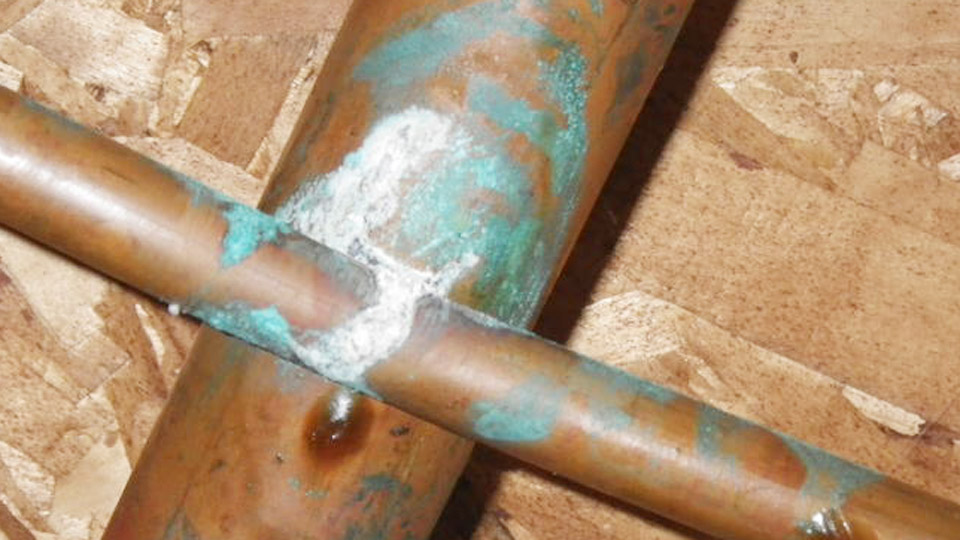
Image by nachi
Moisture and Atmospheric Exposure Leading to Verdigris
Condensation and Humidity as Primary Drivers
Copper reacts with oxygen, moisture, and carbon dioxide to form copper carbonate—the familiar blue-green verdigris. On cold-water lines the temperature differential with surrounding air produces continuous condensation.
In basements, crawl spaces, utility rooms, or near exterior walls this moisture film remains long enough for the reaction to progress beyond the initial brownish oxide layer. The resulting patina is often uniform and adherent. In many cases it functions as a barrier that slows further oxidation.
When humidity stays chronically high or ventilation is poor, the layer thickens and can become powdery or flaking, indicating the protective quality has been compromised.
Differentiating Benign Patina from Active Surface Attack
A dry, even green film that does not stain surrounding materials or produce wet spots is typically stable. Localized wet green deposits, especially accompanied by white mineral residues or actual water droplets, signal that moisture is reaching the copper continuously—often from a small leak or from insulation that has become saturated.
In these conditions the oxidation rate accelerates and can transition into localized pitting if additional corrosive agents are present. Inspection under good lighting and after wiping the surface clean reveals whether the attack is purely atmospheric or linked to another source.
Formicary Corrosion Under Insulation Systems
Organic Acids from Phenolic Foam and Moisture
Formicary (ant’s-nest) corrosion is a specific external mechanism that produces microscopic, interconnecting tunnels within the copper wall. It develops when phenolic foam insulation releases formic or other carboxylic acids in the presence of moisture.
The acids form copper complexes that oxidize, expand, and crack the metal, allowing deeper penetration. Because the attack occurs under the insulation, the first visible sign is often wet or dripping lagging rather than obvious pipe surface damage.
Once the insulation is removed the copper appears dull, purple-blue, or discolored; the tunnels themselves are visible only under magnification.
Risk Factors in Chilled Water and Refrigeration Lines
This form of corrosion appears most frequently on chilled-water or refrigeration tubing where continuous condensation supplies the necessary moisture. Mains cold-water lines can also be affected if phenolic foam is used without an intact vapor barrier.
Failure can occur within nine months to two years under favorable conditions. Prevention centers on ensuring insulation is installed dry, with continuous vapor barriers, and that cut ends or joints are sealed.
When repairing or replacing sections, residual phenolic foam must be completely removed and replaced with a compatible, non-acid-releasing material.
Installation Residues and Flux Effects on External Surfaces
Excess Soldering Flux Left on Joints
Flux used for soldering or brazing is acidic by design. When excess flux remains on the exterior of joints after the heat source is removed, it continues to attack the copper in the presence of moisture. The result is localized green staining or pitting concentrated at fittings rather than along the straight pipe runs.
Cold-water lines are more susceptible because hot water tends to dissolve and flush residual flux more effectively. Incomplete cleaning after joining is a frequent contributor to early external corrosion at soldered or brazed connections.
Cleaning Requirements After Joining Copper
Thorough mechanical cleaning and flushing of both interior and exterior joint areas after soldering or brazing removes the residual acid. Wire brushing followed by wiping with a suitable solvent or cleaner, then a final water flush, reduces the risk.
On systems that will see limited flow after installation, extra attention to exterior flux removal is required because residual acid will not be diluted by continuous water movement. Inspection of older joints for concentrated green deposits at the fillet often points back to this installation factor.
Soil Contact and Underground External Corrosion
Aggressive Soil Chemistry and Concentration Cells
Copper buried in soil is generally resistant, yet certain conditions produce external attack. Acidic soils, high chloride or sulfate content, cinders, fertilizer residues, or decaying organic matter increase corrosivity.
Differences in soil composition, moisture, or oxygen access along the pipe length create concentration cells: one section becomes anodic and corrodes while another acts as the cathode.
Poor drainage keeps the soil electrolyte active. In these environments external pitting or general thinning can develop over years, eventually producing leaks that appear without obvious internal water-chemistry problems.
Galvanic Coupling with Dissimilar Metals
Direct contact between copper and more anodic metals such as steel or iron in a moist soil or concrete environment accelerates corrosion of the less noble metal and can also affect the copper surface at the interface. Dielectric unions or proper isolation prevent the electrochemical couple.
When repairing underground or slab-embedded lines, verifying isolation from ferrous components is essential to stop ongoing external attack.
Electrical and Stray-Current Contributions
Grounding Practices and DC Interference
Copper piping is sometimes used as part of an electrical grounding path. While alternating current generally produces limited corrosion, direct current (stray currents from nearby sources or improper grounding arrangements) can drive rapid external metal loss at the point where current leaves the pipe.
Corrosion appears on the outside surface rather than the interior because the surrounding soil or concrete provides a more conductive return path than the water inside the tube.
Measurement of pipe-to-soil potential and inspection for localized external pitting near grounding connections help identify this mechanism.
Practical Identification During Repair Work
When external corrosion is found near electrical bonds or in areas with known DC sources (rail systems, industrial equipment, cathodic protection systems for other structures), electrical interference must be considered.
Isolation, proper bonding, or cathodic protection adjustments may be required in addition to pipe repair. Simply replacing the corroded section without addressing the current path leads to recurrence.
Decision Framework for Assessing External Copper Corrosion
External corrosion ranges from harmless atmospheric patina to mechanisms that produce through-wall leaks. Moisture-driven verdigris is the most common and often requires only improved ventilation or insulation.
Formicary attack under phenolic foam, residual flux at joints, aggressive soil contact, galvanic couples, and stray DC currents represent progressive threats that demand material removal, isolation, or system redesign.
When green deposits appear after soldering or brazing work, prioritize flux cleanup and joint inspection. On insulated or buried lines, remove covering materials to examine the actual copper surface rather than relying on external appearance alone.
Advanced practice includes documenting insulation type, soil conditions, and electrical continuity before selecting replacement materials or protective coatings, ensuring the repair addresses the root electrochemical or chemical driver rather than the visible symptom.