Choosing the wrong electrode or heat input when joining stainless steel to carbon steel produces cracked, corroded, or distorted welds that fail inspection or service. The core differences between stainless steel and carbon steel drive every practical decision on filler metal, amperage, travel speed, and joint design.
These differences appear in thermal conductivity, expansion rates, alloying elements, and corrosion behavior—factors that directly control weld pool fluidity, residual stress, and long-term integrity.
Understanding the numbers and metallurgy prevents the common failures of undercut on carbon, hot cracking on stainless, or galvanic corrosion at the transition zone.
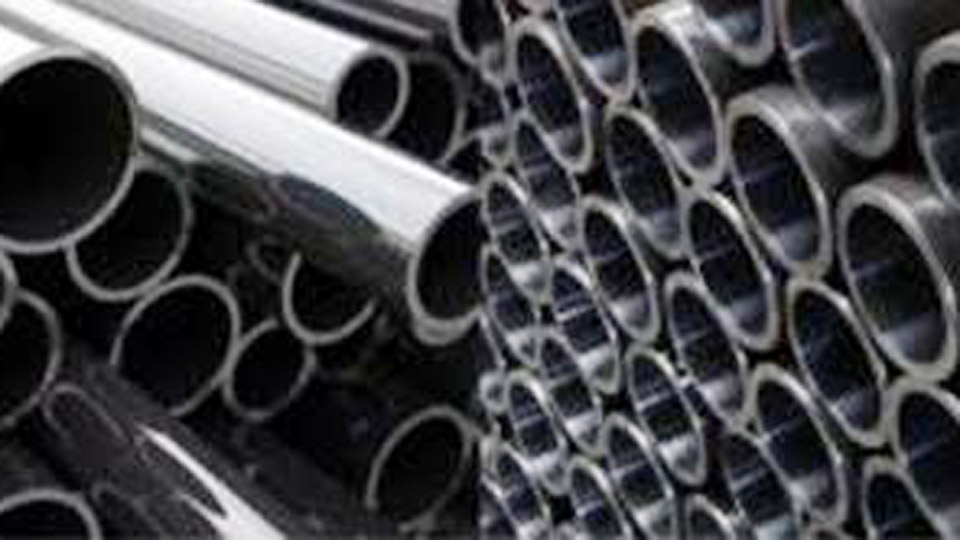
Image by vmtcnc
Composition and Microstructure That Dictate Weld Behavior
Carbon steel is an iron-carbon alloy with carbon typically ranging from 0.05 % to 0.30 % for structural grades (A36, mild steel) and higher for medium- and high-carbon variants. Trace manganese and silicon are present for deoxidation, but chromium and nickel remain negligible. The microstructure is ferritic or ferritic-pearlitic at room temperature and magnetic.
Stainless steel requires a minimum of 10.5 % chromium to form the passive chromium-oxide film. Austenitic grades (304, 316) add 8–12 % nickel and keep carbon below 0.08 % (or 0.03 % in L grades). Ferritic stainless steels contain 11–18 % chromium with little or no nickel and remain magnetic.
Martensitic grades carry higher carbon and can be hardened by quench-and-temper. These alloying differences change melting range, fluidity, and solidification mode of the weld metal.
How Chromium and Nickel Alter the Weld Pool
Chromium raises electrical resistivity and lowers thermal conductivity. Nickel stabilizes the austenitic structure, increases ductility, and improves resistance to hot cracking when ferrite is controlled.
Carbon steel fillers lack these elements; stainless fillers contain them in measured amounts that must match or exceed the base metal to preserve corrosion resistance and avoid dilution problems.
Carbon Content and Its Effect on Hardness and Cracking
Higher carbon in the base metal or filler raises hardenability. When stainless is welded to carbon steel with an under-alloyed filler, carbon migration can create hard, brittle zones in the heat-affected zone (HAZ) on the carbon side or chromium carbides on the stainless side. Low-carbon “L” grades and matching low-carbon fillers minimize this risk.
Thermal Properties That Control Distortion and Heat Input
Austenitic stainless steel conducts heat at roughly one-third the rate of carbon steel (approximately 15 W/m·K versus 45 W/m·K). The coefficient of linear thermal expansion is also higher—about 16–17 × 10⁻⁶ /°C for 304/316 versus 11–12.5 × 10⁻⁶ /°C for carbon steel.
The combination produces greater localized heat buildup and larger expansion during welding, followed by higher residual stress on cooling.
Distortion Differences in Practice
Carbon steel dissipates heat quickly, allowing higher amperage and faster travel speeds with less warpage. Stainless retains heat, so the same amperage produces a larger HAZ and more angular distortion.
Successful stainless welding therefore uses lower heat input—shorter arcs, faster travel, stringer beads, and sometimes copper backing or chill bars—while carbon steel tolerates broader parameters.
Preheat and Interpass Temperature Decisions
Carbon steel often requires preheat based on thickness and carbon equivalent to avoid hydrogen cracking. Austenitic stainless rarely needs preheat; excessive interpass temperature actually increases the risk of sensitization and distortion.
When joining the two metals, preheat is normally applied only to the carbon-steel side and kept modest so the stainless does not overheat.
Weldability and Filler Metal Selection
Carbon steel is generally more forgiving. Common electrodes (E7018, ER70S-6) produce fluid puddles and easy slag removal. Stainless demands tighter control of heat input, shielding-gas purity, and cleaning to avoid contamination that destroys the passive layer.
Matching Filler for Similar-Metal Joints
- Carbon-to-carbon: E7018, ER70S-6, or equivalent.
- Austenitic stainless-to-stainless: ER308L / E308L for 304, ER316L / E316L for 316.
- Ferritic stainless: specialized low-hydrogen or matching chromium fillers with restricted heat input to limit grain growth.
Dissimilar Joints: Carbon Steel to Stainless Steel
The standard solution is a 309L or 309LSi filler. The higher chromium and nickel content, combined with controlled ferrite, accommodates dilution from the carbon-steel side without forming a fully austenitic, crack-sensitive weld metal.
Over-dilution still produces hot cracking, especially in single-pass fillets; therefore travel speed and weave width must limit carbon pickup. Avoid using plain carbon-steel filler on stainless or pure 308 filler on carbon-to-stainless joints.
Mechanical Properties and Service Performance
Tensile strength ranges overlap, yet yield strength and ductility differ. Typical A36 carbon steel yields around 36 ksi with tensile strength of 58–80 ksi. Austenitic 304 yields near 30–40 ksi but reaches 70–90 ksi tensile with far higher elongation.
Stainless retains toughness at cryogenic temperatures where carbon steel becomes brittle. Conversely, carbon steel can be heat-treated to higher hardness levels than most austenitic stainless grades.
Corrosion Resistance in Welded Assemblies
Carbon steel relies on coatings or cathodic protection. Stainless relies on the chromium-oxide film. Once the passive layer is broken by contamination (iron particles from grinding carbon steel with the same wheel) or by sensitization (chromium-carbide precipitation in the HAZ), stainless loses its advantage and rusts preferentially.
Dissimilar joints create galvanic couples in conductive environments; the carbon-steel side becomes the anode and corrodes preferentially unless the joint is isolated or the stainless side is protected by design.
Practical Welding Parameter Adjustments
Amperage for a given electrode diameter is typically lower on stainless than on carbon steel because of the reduced thermal conductivity. Arc voltage may need slight increases to wet the more viscous stainless pool.
Shielding gas for GMAW on stainless is often 98 % argon + 2 % oxygen or CO₂, or tri-mix, while carbon steel commonly uses 75/25 argon-CO₂. TIG on stainless requires pure argon and careful back-purging on root passes to prevent sugaring.
Cleaning and Contamination Control
Carbon-steel joints tolerate light mill scale when using cellulosic or iron-powder electrodes. Stainless requires oxide-free surfaces; any carbon-steel brush or grinding disc transfers iron particles that later rust. Dedicated stainless tools and solvents are mandatory. After welding, stainless often receives passivation to restore the chromium-oxide film—unnecessary on carbon steel.
Cost, Availability, and Application Decisions
Carbon steel is significantly less expensive and widely stocked in structural shapes. Stainless commands a premium driven by nickel and chromium content and is chosen only when corrosion resistance, hygiene, or high-temperature oxidation resistance justify the cost.
In mixed fabrications the decision is often to use stainless only where the environment demands it and transition to carbon steel with 309L filler where strength and economy dominate.
Wrapping Up
Selecting between the two metals—or joining them—requires matching the thermal, chemical, and mechanical differences to the service conditions. Lower heat input, correct filler (especially 309L for transitions), and strict contamination control produce sound welds; ignoring the expansion and conductivity gap produces residual stress and premature failure.
Advanced fabricators further reduce risk by designing joints that minimize constraint and by verifying ferrite content in the dissimilar weld metal to stay within the crack-resistant window.
FAQs
Can you weld stainless steel to carbon steel?
Yes. Use ER309L or E309L filler to accommodate dilution and prevent hot cracking. Limit heat input and clean both sides thoroughly.
Why does stainless steel warp more than carbon steel when welding?
Austenitic stainless has roughly one-third the thermal conductivity and 50 % higher thermal expansion, so heat concentrates and the metal expands and contracts more, increasing distortion.
What filler metal should I use for 304 stainless to mild steel?
ER309L or E309L (or 309LSi for GMAW). Do not use 308 or carbon-steel fillers for the transition joint.
Is carbon steel stronger than stainless steel?
It depends on the grades. Many carbon steels have higher yield strength; austenitic stainless usually offers higher tensile strength, better ductility, and superior toughness at low temperatures.