Even with voltage and wire feed speed locked in correctly, many MIG welds still produce heavy spatter, a harsh crackling arc, or a bead that refuses to wet the toes. That frustration often traces directly to inductance.
What is inductance on a MIG welder is the control that governs how quickly welding current rises every time the wire shorts into the puddle during short-circuit transfer.
It determines whether the arc feels soft and fluid or hard and aggressive, how much metal is ejected as spatter, and how the bead profile forms.
On machines with an adjustable inductance knob or menu setting, this single parameter lets operators refine arc behavior without changing primary heat inputs.
Understanding and dialing it correctly turns marginal welds into clean, controllable deposits across sheet metal, structural plate, and positional work.
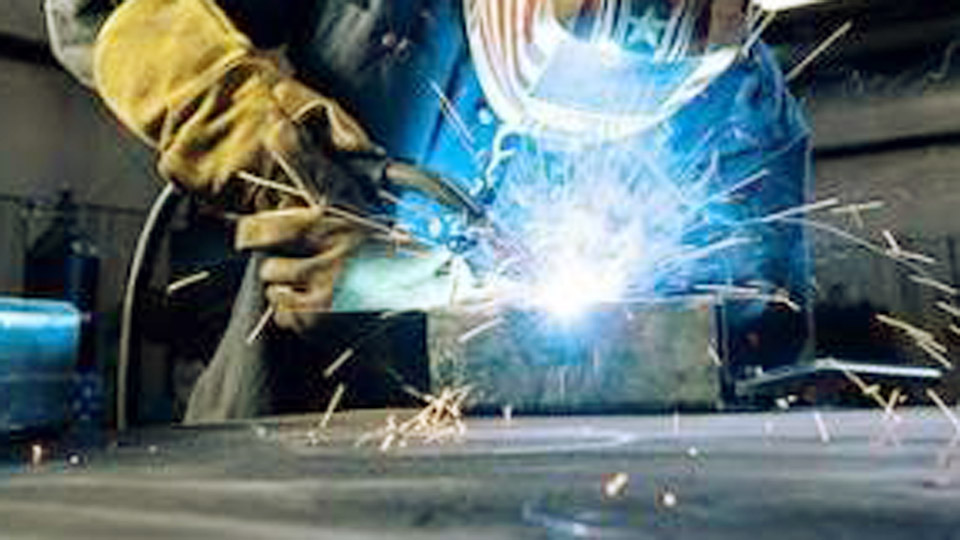
Image by midlandtool
How Inductance Limits Current Rise During Short Circuit
In short-circuit (dip) transfer the electrode wire repeatedly touches the weld pool, voltage collapses near zero, and current attempts to surge. Without inductance the rise would be nearly instantaneous, melting the bridge with explosive force and throwing spatter.
Magnetic Field Opposition in the Welding Circuit
Inductance is created by coils or electronic simulation in the power source. Rising current builds a magnetic field that induces an opposing voltage. This opposition slows the rate of current increase after each short.
The result is a controlled ramp rather than a spike. Higher inductance extends the time required to reach peak current; lower inductance allows a steeper ramp.
Arc Time and Short-Circuit Frequency Changes
Because current rises more slowly under high inductance, each short lasts longer and the overall short-circuit frequency drops. Arc-on time within the cycle increases, delivering heat to the puddle over a longer interval.
Low inductance raises frequency, producing more frequent but shorter, more violent transfers. These timing shifts alter puddle fluidity and droplet detachment without changing the set voltage or average amperage.
High Versus Low Inductance: Arc Feel and Bead Results
The practical difference appears immediately in arc sound, spatter volume, and bead shape.
Soft Arc Behavior at High Inductance Settings
High inductance produces a quieter, smoother arc with reduced crackle. Spatter drops noticeably because the wire tip melts and detaches more gently. The puddle becomes more fluid, wetting the toes and forming a flatter, wider bead profile.
This setting improves appearance on fillet and lap joints where smooth fusion lines matter. Excessively high values can make the arc feel lazy; the wire may stub into the pool if current cannot climb fast enough to clear the short.
Hard Arc Behavior at Low Inductance Settings
Low inductance yields a sharp, high-frequency crackle and a more focused, diggy arc. Current climbs rapidly, pinching the wire off abruptly. Spatter increases and the bead tends to be narrower with higher crown.
Some operators prefer this response for tight joints or when a stiffer arc helps maintain direction. Too little inductance produces the classic “popcorn” spatter and unstable transfer that leaves slag or metal islands on the plate.
| Characteristic | High Inductance | Low Inductance |
|---|---|---|
| Current rise rate | Slow | Fast |
| Short-circuit frequency | Lower | Higher |
| Arc sound | Soft, continuous | Sharp, crackling |
| Spatter level | Reduced | Increased |
| Puddle fluidity | Higher, more wet-out | Lower, faster freeze |
| Bead profile | Flatter, wider toes | Narrower, more crowned |
| Typical feel | Soft / buttery | Hard / aggressive |
Where Inductance Control Matters Most in Practice
Inductance exerts its strongest influence in short-circuit transfer. That mode dominates thin-material work, all-position welding, open-root passes, and situations requiring moderate heat input.
Short-Circuit Transfer Applications
Sheet metal, automotive panels, and structural roots rely on short-circuit cycles. Adjustable inductance lets the operator match transfer dynamics to joint geometry and fit-up. On open roots, moderate-to-high settings help the puddle bridge gaps without excessive spatter.
In vertical-up or overhead positions, the ability to soften or stiffen the arc improves puddle control without altering voltage or wire speed.
Limited Influence in Spray and Globular Transfer
Once parameters enter true spray transfer (higher voltage, argon-rich gas, continuous arc), short circuits largely disappear. Inductance still exists in the circuit but produces only secondary smoothing effects. Globular transfer shows intermediate sensitivity.
Operators running pulsed MIG may still find the control useful for refining pulse response, yet the primary benefit remains in conventional short-circuit work.
Matching Inductance to Thickness, Gas, and Position
No universal number exists; scales differ by manufacturer (0–100 %, soft-to-hard, or numeric microhenry ranges). Relative guidelines based on observed behavior work across most machines.
Thin Gauge and Automotive Sheet Decisions
On material thinner than 16 gauge, higher inductance softens the arc and spreads heat, reducing the chance of burn-through while still achieving fusion. The more fluid puddle helps fill minor gaps without overheating the base metal.
Start near the upper third of the available range and lower only if the arc becomes too sluggish or starts to stub.
Medium Plate and Structural Fabrication Choices
For 1/8 in to 1/4 in mild steel, mid-range settings usually balance wetting and control. Fillet welds benefit from enough inductance to flatten the toes without losing the directed force needed for consistent leg size.
When using 100 % CO₂ (inherently harsher than C25 mixes), raise inductance to compensate for the more aggressive arc chemistry and keep spatter manageable.
Positional and Root-Pass Considerations
Vertical-up and overhead work often favor mid-to-high inductance so the puddle remains controllable yet fluid enough to wet. Very low settings freeze metal faster but increase spatter cleanup.
On open-root pipe or plate, a slightly lower setting can help maintain a keyhole while still allowing the operator to raise inductance for the fill and cap passes.
Diagnosing and Correcting Inductance from Arc Feedback
Primary voltage and wire-speed settings should be established first. Only then adjust inductance while watching and listening.
Visual and Auditory Indicators of Incorrect Settings
Heavy, sticky spatter combined with a sharp, high-pitched crackle points to insufficient inductance. Increase the setting until the arc quietens and spatter drops.
Wire stubbing, a lazy arc that fails to clear the short, or a bead that sits high without toe fusion indicates excess inductance; reduce it. The goal is a consistent hissing or soft frying sound with minimal metal ejection and clean toe fusion.
Interaction with Stick-Out and Travel Speed
Longer stick-out adds resistance and effectively alters current delivery; inductance must sometimes be re-tuned after changing contact-tip-to-work distance. Faster travel speeds pair well with slightly higher inductance to maintain wetting; slower travel may require a lower setting to avoid an overly fluid pool that sags out of position.
Practical Decision Sequence for Shop Use
Lock voltage and wire feed for the material thickness and joint. Run a short test bead on matching scrap. Observe spatter, arc sound, and bead shape. Raise inductance if the arc is harsh or spatter is excessive. Lower it if the wire stubs or the puddle lacks directed force.
Once the transfer stabilizes, lock the value and note gas type, wire diameter, and position for future reference. Modern inverter machines often simulate inductance electronically, so the same numerical setting can feel different across brands; treat published percentages as relative starting points rather than absolute values.
Wrapping Up
Correct inductance selection converts an acceptable short-circuit process into a low-spatter, controllable arc that matches the joint requirements. On machines offering the control, treat it as a primary fine-tuning tool after voltage and wire speed are set.
Advanced operators further refine performance by combining high inductance with reduced wire speed on vertical-up work, achieving smooth deposits at parameters that would otherwise produce stubbing or excessive build-up.
FAQS
What does the inductance setting do on a MIG welder?
It controls the rate of current rise after each short circuit in short-circuit transfer, softening or hardening the arc, reducing or increasing spatter, and changing puddle fluidity and bead profile.
Should I use high or low inductance for thin metal?
Higher inductance is generally preferred. It softens the arc and improves wetting, helping avoid burn-through while still achieving fusion on sheet and light gauge material.
Does inductance affect spray transfer MIG welding?
Its influence is minimal. Spray transfer maintains a continuous arc with little or no short-circuiting, so current-rise control has limited effect compared with short-circuit mode.
How do I know if my MIG inductance is set too high?
The arc feels lazy, the wire may stub into the puddle, and fusion at the toes can suffer. Reduce the setting until the arc clears cleanly and the bead wets properly.