Cast iron repairs fail when the surface is contaminated, the crack is unstable, or the wrong bonding method is used. Knowing how to JB Weld cast iron correctly is important because improper preparation or curing can lead to leaks, weakened structural support, and repeat repairs under heat or vibration.
Unlike fusion welding, epoxy-based repair products reduce the risk of thermal distortion and cracking, making them useful for engine blocks, exhaust components, machinery housings, and non-structural cast iron parts.
The challenge is getting the bond to hold under real operating conditions. Surface porosity, oil saturation, and uneven crack geometry can all reduce adhesion strength if they are not handled properly before application.
Understanding cleaning methods, temperature limits, cure time, and load expectations helps prevent premature failure and unnecessary rework. I’ll explain the practical repair process, where JB Weld performs well on cast iron, and the situations where a full weld repair is still the better option.
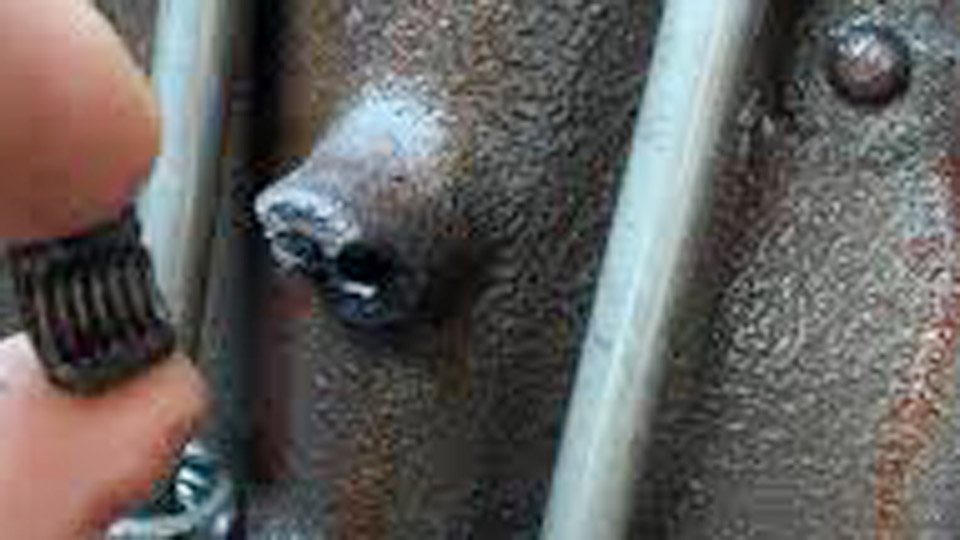
Image by r/metalworking
Why Cast Iron Repair Demands Specific Approaches
Cast iron’s microstructure makes fusion welding challenging. Rapid heating and cooling create hard, brittle zones prone to cracking. JB Weld bypasses these issues as a two-part steel-filled epoxy that cures at room temperature and forms a mechanical and chemical bond.
It achieves tensile strength around 3,960–5,020 PSI when fully cured, with heat resistance up to 500–600°F (260–316°C) for Original formula in continuous or short-term exposure.
This makes it viable for many automotive and industrial cast iron repairs, though not a full substitute for welding in high-stress, high-temperature, or pressurized environments.
Choosing the Right JB Weld Product for Cast Iron
Original JB Weld (Twin Tubes) remains the go-to for most cast iron repairs. Its steel powder filler enhances strength and machinability, and the 24-hour full cure develops maximum properties. Use it for structural fills, crack repairs, or rebuilding missing sections on low-to-moderate heat parts.
JB Weld SteelStik or KwikWeld works for faster setups. SteelStik (putty stick) excels for vertical or overhead repairs because it stays in place without sagging. KwikWeld sets in 4–6 hours but offers slightly lower ultimate strength.
High-temperature variants like ExtremeHeat target exhaust manifolds or areas exceeding 600°F. These prioritize heat resistance over peak strength, so evaluate operating temperatures carefully.
Match the product to expected service: Original for general repairs, putty forms for quick or awkward-position fixes, and specialized high-heat formulas where needed.
Comparing Repair Methods: JB Weld vs. Traditional Welding
JB Weld advantages:
- No risk of inducing new cracks.
- No preheating or post-weld heat treatment required.
- Minimal equipment (mixing surface, applicator, abrasives).
- Machinable after cure for drilling, tapping, or grinding.
- Effective on oily or contaminated cast iron with proper cleaning.
Limitations:
- Lower strength than a proper nickel rod weld or braze.
- Heat limit around 500–600°F continuous.
- Performs best in compression or shear; tensile loads need reinforcement.
- Not ideal for high-pressure fluid containment without backup.
For critical engine blocks under combustion pressure, many professionals prefer pinned and welded repairs or replacement. JB Weld often serves as an effective interim or permanent fix for water jackets, non-pressurized cracks, or cosmetic/structural reinforcement.
Surface Preparation: The Foundation of a Strong Bond
Surface prep determines 80% of success with any epoxy on cast iron. Porous, contaminated cast iron harbors oil, carbon, and oxides that prevent adhesion.
Mechanical cleaning steps:
- Grind or burr out cracks into a U or V groove for better filler penetration and surface area.
- Remove all rust, scale, paint, and loose material with a wire wheel, flap disc (36–60 grit), or coarse sandpaper.
- Roughen surrounding areas to 60-grit profile for mechanical grip.
Chemical degreasing:
- Wipe thoroughly with acetone or lacquer thinner. Avoid alcohol or petroleum residues.
- Soap and water works as a secondary option if solvents are unavailable, followed by complete drying.
- For heavily contaminated parts (engine blocks), multiple solvent washes plus heat (200–250°F) to draw out embedded oils prove effective.
Dry the part completely. Any moisture weakens the bond. On porous cast iron, apply a thin first coat as a primer, let it tack, then build with full mixture.
Application Techniques for Different Cast Iron Repairs
Repairing Cracks in Cast Iron
- Prepare the groove as described.
- Mix equal parts resin and hardener thoroughly (uniform gray color, minimum 3–5 minutes).
- Force mixed JB Weld into the groove using a putty knife or gloved finger, eliminating air pockets.
- Build slightly proud of the surface for machining.
- For deep cracks, apply in layers with 1–2 hours between for partial cure, or use putty form.
Cure at room temperature (70°F+) for 15–24 hours. Warmer temperatures (up to 100–120°F) accelerate curing and improve properties without exceeding limits.
Rebuilding Broken or Missing Sections
Use SteelStik or thickened Original for larger voids. Form temporary dams with wax or tape if needed. Reinforce large breaks with mechanical fasteners (drilled and tapped rods or plates) plus epoxy for hybrid strength. Many repairs combine JB Weld with backing plates or stitching for high-load areas.
Sealing Porous Areas or Small Holes
Thin the mixture slightly with a drop of acetone if needed for better penetration into porosity. Multiple thin applications outperform one heavy coat.
Curing, Finishing, and Machining JB Weld on Cast Iron
Full cure takes 15–24 hours at 70°F; strength continues developing for several days. Test hardness with a fingernail or light file—fully cured material resists easy scratching.
Post-cure finishing:
- Grind or file excess with standard abrasives.
- Drill and tap cured JB Weld like mild steel (use sharp bits, moderate speed).
- Paint or powder coat for corrosion protection.
Heat curing (oven or heat lamp at 100–150°F for several hours) enhances cross-linking and heat resistance for demanding applications.
Real-World Performance and Limitations
JB Weld repairs on cast iron succeed in engine blocks (water jackets), exhaust manifolds (moderate heat), stove parts, machinery bases, and antique restorations. Vibration resistance is good once cured, and it handles thermal cycling within limits.
Failures typically trace to:
- Inadequate surface prep.
- Applying to high-pressure/high-heat zones (e.g., combustion chambers).
- Insufficient cure time before loading.
- Pure tensile stress without mechanical reinforcement.
For exhaust manifolds, monitor temperatures—gases run hotter than surface metal, but sustained 500°F+ risks degradation. Test repairs under operating conditions when possible.
When to Choose JB Weld vs. Other Options
Select JB Weld for:
- DIY or field repairs without welding gear.
- Parts where distortion or cracking risk is unacceptable.
- Temporary fixes pending professional welding.
- Non-structural or low-load cosmetic restorations.
Consider professional welding or brazing for:
- High-pressure fluid systems.
- Critical structural components under heavy cyclic loads.
- Environments consistently exceeding 500°F.
Hybrid approaches—mechanical pinning plus JB Weld—often deliver the best of both for borderline cases.
Advanced Considerations for Professional Results
Skilled users create keyed repairs by drilling staggered holes along cracks for mechanical interlock before applying epoxy. Layering different JB Weld formulations (primer coat then filled topcoat) optimizes penetration and build-up. For machinable surfaces, ensure full cure and use appropriate feeds/speeds to avoid chipping the epoxy-metal composite.
In high-vibration environments, combine with fiberglass cloth reinforcement on the backside for added tensile strength.
Key Decision Takeaway
JB Weld provides a practical, high-strength cold repair for cast iron when applied with rigorous surface preparation and matched to service conditions. It won’t replace every weld, but it solves many otherwise expensive or impossible fixes with proper technique.
For demanding applications, test samples under simulated loads and temperatures to validate performance before committing critical parts.
FAQ
How strong is JB Weld on cast iron compared to the original material?
Fully cured Original JB Weld reaches 3,960+ PSI, strong enough for many non-critical repairs but generally weaker than sound cast iron or a proper weld. Use mechanical reinforcement for high loads.
Can JB Weld repair cracked cast iron engine blocks?
Yes, for water jacket or non-combustion cracks with proper prep and cure. It is not recommended for combustion chamber or high-pressure oil galleries without professional evaluation and possible hybrid reinforcement.
What temperature can JB Weld on cast iron handle?
Original formula withstands 500°F continuous and 600°F short-term. Use ExtremeHeat variants for higher temperatures, but verify exact product ratings against your application’s peak and sustained heat.
Does cast iron need preheating before applying JB Weld?
No. Room temperature application works best. Preheating the part mildly (100–150°F) aids oil removal and speeds curing but is not required.