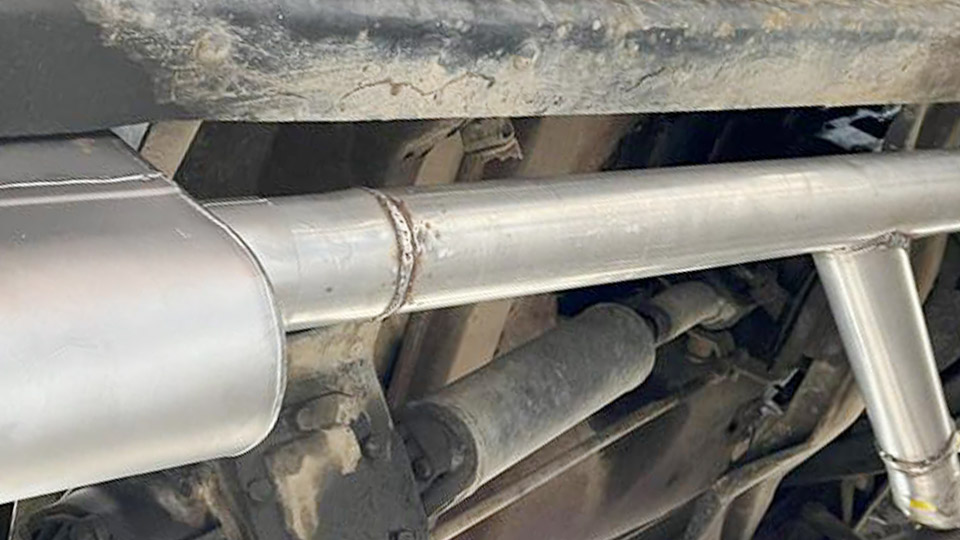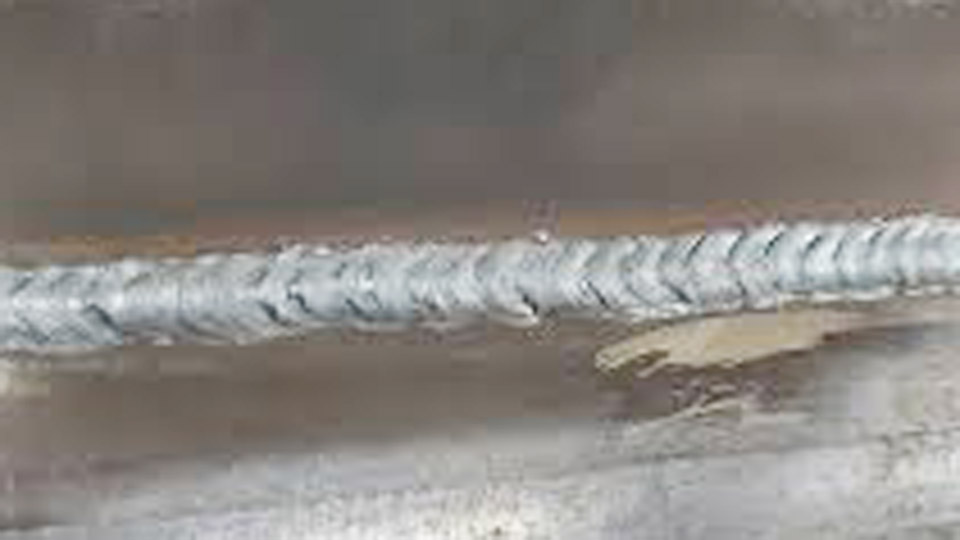
Overhead welding is one of the most demanding welding positions because the weld is performed from the underside of a joint, requiring the welder to work against gravity.
If you are wondering what is overhead position in welding, it refers to a welding position where molten metal must be controlled above the welder, making puddle management, arc stability, and heat control far more critical than in flat or horizontal welding.
Understanding this position is important because poor technique can lead to excessive spatter, lack of fusion, slag inclusions, uneven bead profiles, and weld defects that may fail inspection or require costly rework.
Overhead welding is commonly encountered in structural steel fabrication, pipeline construction, shipbuilding, and maintenance work where components cannot be rotated into easier welding positions.
By understanding how the overhead position works, the challenges it creates, and the techniques used to produce sound welds, welders can improve weld quality, reduce defects, and perform safely in real-world fabrication and repair environments.
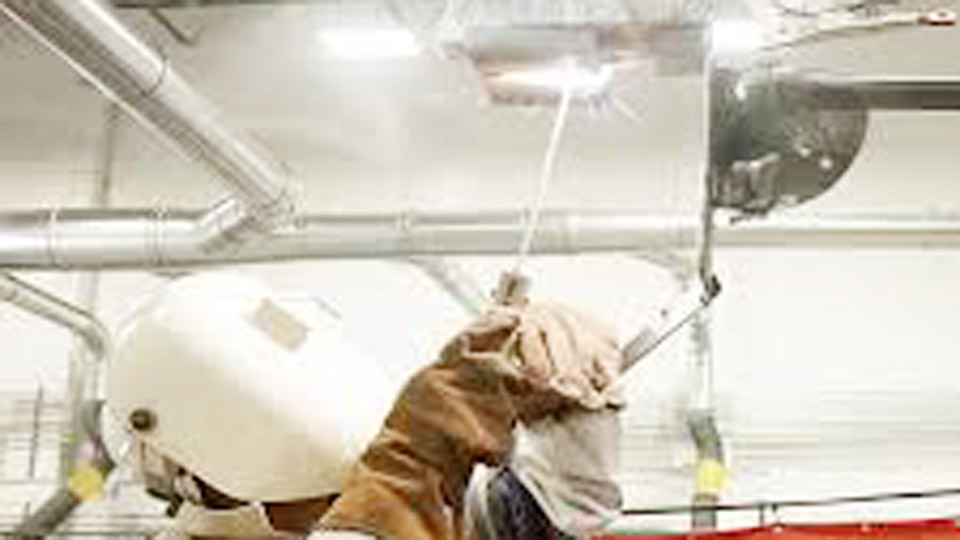
Image by yeswelder
Understanding the Overhead Welding Position (AWS Definitions)
AWS and ASME Position Classifications
The American Welding Society (AWS) classifies the overhead position as welding on the underside of a nearly horizontal plane. For groove welds, the plate or pipe axis sits at 0° ±15° from horizontal, with the weld face below. Fillet welds follow similar orientation, designated as 4F.
This differs from flat (1G/1F), horizontal (2G/2F), and vertical (3G/3F). Qualification in 4G typically qualifies a welder for flat, horizontal, and overhead production work under many codes, though some applications require separate testing.
Why Gravity Dominates Weld Pool Behavior
In overhead welding, gravity pulls the molten metal downward toward the welder. Surface tension must hold the puddle against the joint long enough for solidification. Higher heat input makes the puddle more fluid and prone to dripping or sagging, creating convex beads with poor toe fusion.
Lower heat keeps the puddle smaller and more manageable but risks lack of fusion if travel speed or technique falters.
Key Challenges in Overhead Position Welding
Weld Pool Control and Bead Shape
The primary difficulty is preventing the puddle from falling. A large, fluid puddle sags at the toes or drips entirely. Welders counteract this by maintaining a small, controlled puddle through reduced amperage/voltage, faster travel speeds, and deliberate manipulation techniques.
Convex bead profiles are common because gravity encourages buildup in the center. Proper technique produces acceptable convexity while ensuring good sidewall and toe fusion.
Physical Demands and Visibility
Welders often work lying on their back, kneeling, or in cramped positions with arms extended upward. This causes rapid fatigue in shoulders, neck, and wrists. Visibility suffers because the helmet and torch/electrode obstruct the view, and spatter falls directly downward.
Heat and fumes rise toward the welder’s face, increasing discomfort and requiring excellent ventilation.
Process-Specific Difficulties
Different welding processes respond uniquely to the overhead position due to arc force, deposition rate, and shielding characteristics.
Overhead Welding Techniques by Process
SMAW (Stick) Overhead Welding
Stick welding remains popular for overhead work due to its portability and all-position capability, especially with electrodes like E6010, E7018, or iron powder variants.
Electrode Angles and Manipulation
Maintain a 10-15° drag angle (electrode trailing) with a work angle near 90° to the joint. Use a tight arc length—about 1/8 inch or less—to maximize arc force pushing metal into the joint. Short stringer beads or slight weaving (no more than 2-3 times electrode diameter) help control the puddle. Pause slightly at the toes to wash in fusion without overheating the center.
Amperage Settings
Reduce settings 10-20% compared to flat position. For 1/8″ E7018 on 1/4″ plate, typical ranges fall between 90-120 amps. Higher diameters require proportional adjustment but emphasize control over raw power. Fast-freeze electrodes (E6010/E6011) suit root passes; low-hydrogen types work better for fill and cap passes.
GMAW (MIG) Overhead Welding
MIG demands short-circuit or pulsed spray transfer for best results overhead. Globular transfer creates too much spatter and poor control.
Machine Settings and Wire Stickout
Set parameters slightly cooler than flat position—often 85-95% of flat settings. For 0.035″ ER70S-6 wire on mild steel, voltage around 18-22V and wire feed speed adjusted for short-circuit transfer works well. Keep stickout short (3/8″ to 1/2″) for better arc control and reduced voltage drop.
Travel Technique
Use a slight push or neutral gun angle (90° work angle, 10-15° travel angle). Employ a “cursive e” or tight zigzag motion to allow the puddle to freeze at the edges while maintaining forward progress. Travel speed must stay fast enough to prevent rollover but slow enough for penetration.
GTAW (TIG) Overhead Welding
TIG offers superior control but requires excellent torch and filler hand coordination. Use a tight arc (1/16″ or less) and small-diameter filler rod (1/16″ or 3/32″).
Pulse settings help significantly—peak current for penetration, background for puddle control. Add filler metal in small dabs during the background cycle when the puddle shrinks. Maintain a 15-20° torch angle pushing forward.
Joint Preparation and Setup for Overhead Success
Groove vs. Fillet Joint Considerations
Groove Welds (4G): Use a wider root opening (1/8″ to 3/16″) and appropriate bevel angles (30-35° per side) to allow better access and fusion. Backing bars or ceramic tape can support the root if accessible.
Fillet Welds (4F): Leg sizes often need slight increase in design to compensate for potential convexity. Multi-pass techniques with stringers build volume without overheating a single pass.
Material Thickness and Position Limits
Overhead work on thin material (<1/8″) becomes extremely difficult due to burn-through risk. Thicker sections (1/4″+) provide more heat sink and tolerance. Always consider preheating on thicker or high-carbon steels to reduce cracking risk.
Parameter Adjustments and Real-World Decision Making
Welders must adjust heat input dynamically. General rules include:
- Reduce amperage/voltage 10-20% from flat position equivalents.
- Increase travel speed to control puddle size.
- Use smaller diameter consumables for better control (e.g., 0.030″ wire instead of 0.045″).
- Monitor interpass temperatures—overheating makes subsequent passes harder to control.
Example Parameter Table for Mild Steel (Approximate)
| Process | Material Thickness | Electrode/Wire | Amps/Volts | Travel Technique |
|---|---|---|---|---|
| SMAW | 1/4″ | 1/8″ E7018 | 95-115 | Stringer, slight weave |
| GMAW | 1/4″ | 0.035″ ER70S-6 | 18-21V, 180-280 ipm | Cursive e, push angle |
| GTAW | 1/4″ | 1/16″ filler | 90-130A (pulsed) | Dab filler, tight arc |
These values serve as starting points—test on scrap matching the exact joint, material, and position.
Equipment and Consumable Choices
Power Sources and Polarity
Constant current (CC) machines suit SMAW and GTAW; constant voltage (CV) for GMAW. Inverter machines with good arc force and hot start features improve performance in out-of-position work. DC electrode positive (DCEP) remains standard for most processes overhead.
Consumables for Overhead
- Stick: Low-hydrogen (EXX18) for structural; cellulosic for root passes needing deep penetration.
- MIG: ER70S-6 or similar with argon/CO2 mixes (75/25 common). Smaller diameters improve control.
- TIG: Pure argon shielding, 2% thoriated or lanthanated tungsten (3/32″ diameter).
Common Defects in Overhead Welding and Prevention
Lack of fusion at toes often results from insufficient heat or poor manipulation. Undercut appears from excessive travel speed or incorrect angles. Porosity stems from poor shielding or contaminated surfaces—critical overhead because gravity pulls contaminants into the puddle more easily.
Prevention focuses on clean base metal, consistent technique, and proper parameter balance. Visual inspection during welding helps catch issues early.
When to Choose or Avoid Overhead Position
Designers and fabricators should rotate assemblies into flat or horizontal positions whenever possible for higher deposition rates, better quality, and reduced welder fatigue. Use overhead only when necessary—fixed structures, field repairs, or complex geometries.
In qualification testing, 4G positions test a welder’s skill under maximum challenge. Passing 4G often indicates capability across multiple positions.
Advanced Techniques for Professional Results
Experienced welders combine processes: TIG root for quality, MIG fill for speed. Pulsed MIG or waveform-controlled machines dramatically improve puddle control by alternating high and low energy phases.
For critical applications, back-gouging and multiple passes with thorough cleaning between layers ensure soundness. Some welders use gravity-assisted techniques by angling the workpiece slightly when code and fit-up allow.
Decision-Making Summary for Overhead Welding Performance
Successful overhead welding comes down to deliberate control of heat input, puddle size, and travel dynamics rather than raw power. Choose parameters and techniques that keep the molten pool small and responsive to surface tension while delivering adequate penetration and fusion. Test settings on scrap in the actual position before committing to production.
Elite welders treat the overhead position as a precision exercise in timing—knowing exactly when the puddle has enough fluidity for fusion but not enough to sag. This balance of thermal management and arc manipulation separates procedure-compliant welds from truly reliable ones under load.
FAQ
How hard is overhead welding compared to other positions?
Overhead ranks as the most physically and technically demanding due to gravity fighting puddle control. With proper settings and practice, it becomes manageable, though it always requires more concentration than flat or horizontal work.
What voltage and wire speed for MIG overhead welding?
Start 10-15% lower than flat position settings. For 0.035″ wire on mild steel, typical ranges include 18-21 volts with wire speeds producing short-circuit transfer. Prioritize short stickout and test adjustments on scrap.
Can beginners learn overhead welding effectively?
Yes, but start with thicker material and stringer beads on practice coupons. Master flat and horizontal first, then progress to vertical before full overhead. Consistent short arc length and travel speed matter most initially.
Does overhead welding require different qualifications?
Yes. Many codes require separate 4G testing for qualification. Passing 4G generally qualifies welders for flat, horizontal, and overhead production, but check specific code requirements for the project.