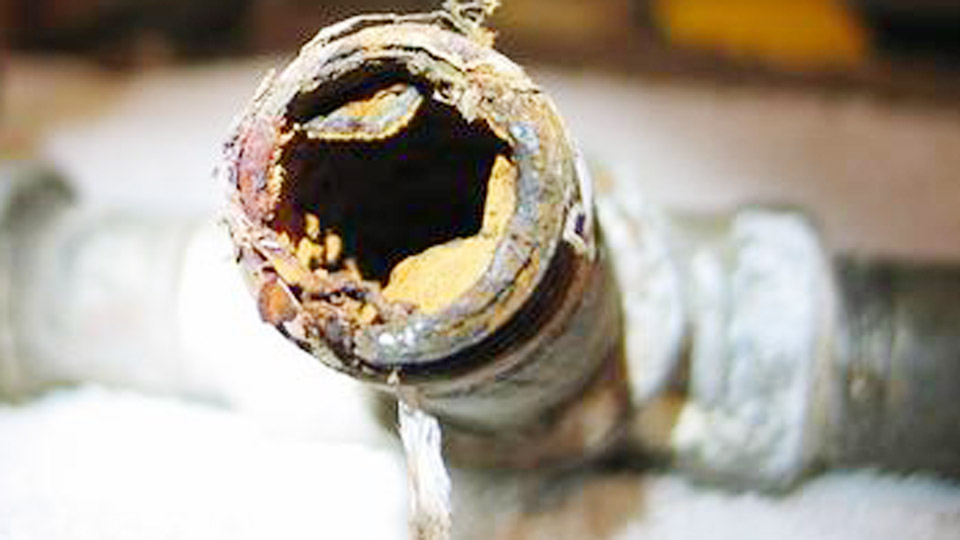
Many welders and HVAC technicians encounter leaking joints or weakened connections in copper systems under pressure, vibration, or high temperatures. Brazing copper to copper addresses this by creating joints stronger than the base metal in many cases, capable of withstanding demanding conditions where soldering falls short.
This process matters for plumbing, refrigeration, and custom fabrication because it produces leak-proof, durable bonds without melting the copper itself.
Proper technique delivers joints with excellent conductivity, corrosion resistance, and mechanical strength. This guide provides precise settings, material choices, and decision-making details for DIY enthusiasts, students, and professionals.
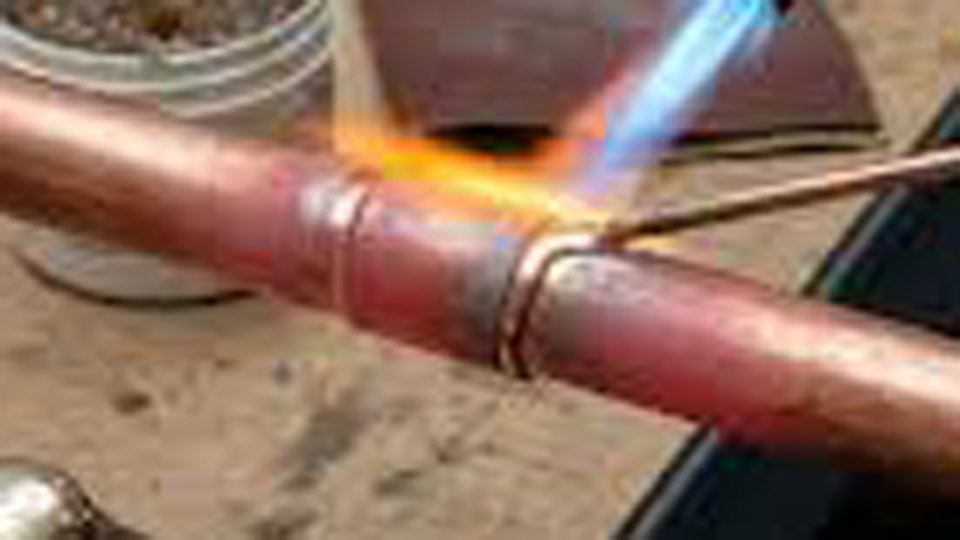
Image by kindle-tech
Brazing vs. Soldering Copper: Key Technical Differences
Brazing and soldering both use filler metal but differ fundamentally in temperature and resulting joint properties.
Temperature Ranges and Filler Behavior
Soldering occurs below 840°F (449°C), using tin-based fillers that create capillary joints suitable for low-pressure water lines. Brazing operates above 840°F, typically 1,100–1,500°F (593–816°C) for copper, using phosphorus-copper or silver-bearing alloys.
This higher heat produces stronger, more heat-resistant joints that handle pressure, thermal cycling, and vibration better.
The filler in brazing wets and flows via capillary action but forms a metallurgical bond closer to the base metal’s properties. Phosphorus-copper alloys (BCuP series) self-flux on clean copper, simplifying the process compared to soldering’s flux requirements.
Strength and Application Suitability
Brazed copper-to-copper joints often exceed the tube’s strength when overlap meets AWS guidelines (minimum 3x wall thickness for full strength). Brazing suits HVAC refrigerant lines, high-pressure plumbing, and assemblies exposed to elevated temperatures. Soldering works for domestic water but risks failure in high-heat or pressurized refrigerant systems.
Joint Clearance Impact: Optimal clearance for brazing copper is 0.002–0.005 inches (0.05–0.13 mm). Tighter gaps (down to 0.001 inches) maximize strength with self-fluxing alloys, while wider gaps reduce capillary action and shear strength.
Material Selection for Copper-to-Copper Brazing
Choosing the right consumables directly affects flow, strength, and cost.
Filler Metals: BCuP Alloys and Silver Content
For copper-to-copper, phosphorus-bearing alloys dominate:
- Stay-Silv 5 or equivalent (BCuP-3): 5% silver, good for general use with slightly looser fits. Solidus ~1,190°F, liquidus ~1,500°F.
- Stay-Silv 15 or Dynaflow (BCuP-5): 15% or equivalent silver content. Excellent flow, ductility, and strength. Dynaflow offers similar performance to Stay-Silv 15 at lower cost. Solidus ~1,190°F, liquidus ~1,470–1,480°F.
Higher silver improves ductility and gap-filling but raises cost. Use 15% equivalents for critical HVAC work. Avoid alloys with high phosphorus on ferrous metals, as they form brittle intermetallics.
Flux Requirements
Phosphorus in BCuP rods makes them self-fluxing on copper-to-copper, dissolving surface oxides. Apply flux sparingly or not at all on identical clean copper. Use white flux (e.g., Stay-Silv White) for copper-to-brass or when oxidation risk is high. Over-fluxing can trap residue and weaken joints.
Torch and Gas Choices
- Oxy-acetylene: Versatile with precise control. Use neutral to slightly carburizing flame for copper to minimize oxidation.
- Air-acetylene or Propane/MAPP: Sufficient for smaller diameters. Turbo tips increase heat output for larger pipes.
- Tip size: Match to pipe diameter (e.g., larger for 1-inch lines). Overly large tips risk overheating.
Nitrogen purging setup is essential for HVAC—more on this later.
Joint Design and Preparation
Joint geometry and cleanliness determine success.
Designing Effective Lap Joints
Lap (socket) joints are standard for tubing. Overlap should be at least 3x the thinner member’s wall thickness for full strength. For 0.065-inch wall tube, aim for ~0.2 inches minimum overlap, though fitting cups often provide more.
Butt joints are weaker and harder to align; avoid them for pressure applications. T-joints and saddles require careful heat distribution.
Surface Preparation Steps
- Cut square with a tube cutter; deburr inside and out.
- Clean mating surfaces with emery cloth, nylon pads, or wire brush to bright metal. Remove oxides, oils, and dirt. Extend cleaning slightly beyond the joint area.
- Fit parts with proper clearance—test dry fit. Clean fittings internally too.
- For HVAC, assemble and prepare for nitrogen flow before heating.
Preparation must occur same-day to prevent re-oxidation.
Step-by-Step Brazing Process for Copper Tubing
Execute with focus on heat control and filler placement.
Setup and Purging
Assemble joint fully. For closed systems like refrigeration, flow dry nitrogen (2–5 SCFH) through the line to displace oxygen and prevent internal scale. This is critical—internal oxides flake and clog filters, TXVs, and compressors over time.
Purge before and during brazing; maintain low flow to avoid blowing out filler.
Heating Technique
Heat the tube first, then move to the fitting. Use a sweeping or figure-8 motion for even distribution. Target dark cherry red (~1,300–1,400°F). Flux (if used) turns clear and watery as indicator.
Apply heat to the broader mass; the copper conducts to the joint. Touch filler rod to the joint—the base metal heat should melt it, not the flame directly. Feed rod to allow capillary draw into the gap. Build a small fillet for added strength and inspection.
For larger pipes, heat alternately around the circumference. Avoid dwelling in one spot to prevent burn-through or annealing (which softens drawn copper).
Cooling and Cleanup
Allow natural cooling; do not quench, as it can crack joints or stress the metal. Remove flux residue with hot water and a brush or wire wheel once cool.
Heat Management and Temperature Control Challenges
Copper’s high thermal conductivity demands steady technique.
Flame Adjustment and Movement
Slightly carburizing flame reduces oxidation on copper. Keep the inner cone 1/4–1/2 inch from the surface. Continuous movement prevents hot spots. Larger diameters or thick fittings require more total heat input but the same careful distribution.
Monitor color: Dull red to cherry indicates proper range. Overheating (>1,500°F locally) melts copper or creates excessive annealing.
Managing Distortion and Annealing
Brazing anneals the heat-affected zone, reducing hardness of drawn copper tubing. Design supports or account for this in pressure-rated systems. Use heat sinks or wet rags on nearby sensitive areas (e.g., valves with seals).
Troubleshooting Brazing Issues in Copper
Poor Flow or Incomplete Penetration
Causes: Dirty surfaces, wrong clearance, insufficient heat, or no/poor purge. Solution: Re-clean, verify fit, ensure nitrogen flow, and reheat evenly.
Cracking or Porosity
Often from rapid cooling, contamination, or overheating. Phosphorus alloys are forgiving but require clean conditions.
Oxidation and Scale
Internal scale signals inadequate purging. External heavy oxide means improper flame or flux.
Inspect visually for uniform fillet and use pressure testing (nitrogen) plus leak detection.
Applications: HVAC, Plumbing, and Fabrication
In HVAC, brazing copper linesets ensures refrigerant containment under pressure and temperature swings. Use 15% silver equivalents and mandatory nitrogen purge.
Plumbing high-temp or steam lines benefit from brazed strength. Custom fabrication (e.g., manifolds, coils) leverages brazing’s ability to join complex shapes without distortion common in welding.
For dissimilar metals (copper to brass/steel), adjust flux and filler—silver alloys and dedicated flux become necessary.
Post-Brazing Inspection, Testing, and Quality Control
Visually check for continuous fillet, no voids, and smooth transition. Pressure test with nitrogen to 300–500+ psi depending on system. For refrigeration, pull vacuum and check for holds.
Destructive testing on samples (sectioning) confirms penetration in production setups. Document rod type, purge use, and settings for traceability.
Advanced Techniques for Professional Results
Induction Brazing: Precise, repeatable heat for production. Ideal for consistent joint quality without flame.
Controlled Atmosphere: Furnace brazing eliminates flux needs and oxidation entirely.
Alloy Selection Nuances: For vibration-prone areas, higher ductility alloys (more silver) perform better. Test joint strength per application.
Final Thoughts
Mastering nitrogen purge and precise heat balance separates adequate from exceptional work. Pro-level insight: In high-cycle HVAC systems, a well-purged, properly overlapped brazed joint with Dynaflow or Stay-Silv 15 routinely outlasts the tubing itself, as the capillary fill creates a joint whose failure point shifts to the annealed base metal—engineer overlap and support accordingly for maximum system longevity.
FAQ
What is the best brazing rod for copper to copper?
Stay-Silv 15 or Dynaflow (6% silver equivalent) provide excellent flow, strength, and cost-effectiveness for most applications. Use for HVAC and high-reliability joints.
Do you need flux when brazing copper to copper?
No, BCuP phosphorus alloys are self-fluxing on clean copper. Flux is optional or used lightly for insurance in dirty environments or copper-to-brass.
Why use nitrogen when brazing copper lines?
It prevents internal oxidation and scale formation, which flakes off and damages refrigeration components like compressors and valves. Industry best practice for HVAC.
How hot does copper need to be for brazing?
Reach approximately 1,300–1,450°F (cherry red). The base metal melts the rod—avoid direct flame on the filler. Use flux behavior or color as guide.