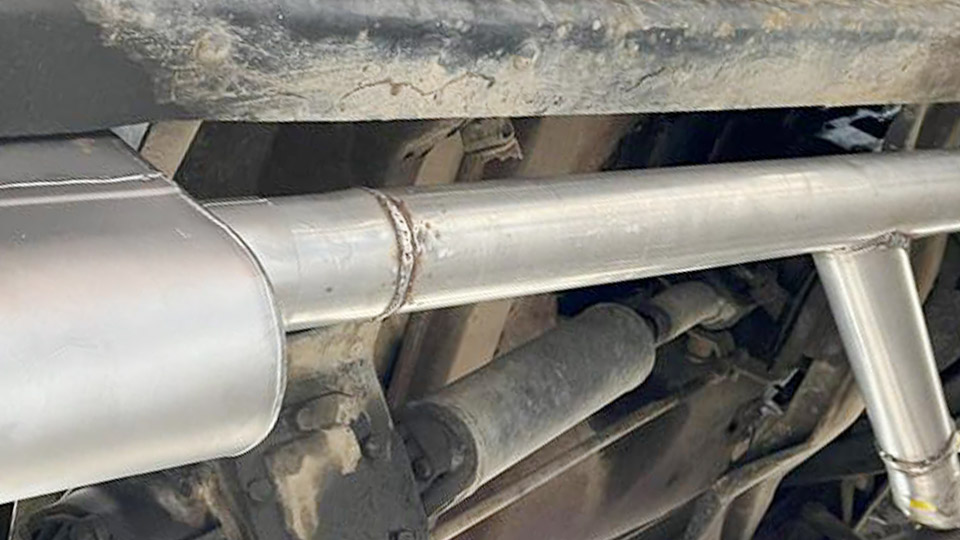
Applying the wrong cleaner or leaving acid on stainless steel for too long can damage the metal’s protective passive layer, causing discoloration, surface etching, or even corrosion over time.
While certain acids are effective for removing rust, weld discoloration, and mineral deposits, they must be used correctly and neutralized afterward to avoid permanent damage.
The cleaning method also depends on the type of acid, the stainless steel grade, and the severity of the contamination.
Whether you’re maintaining food-grade equipment, restoring welded stainless steel, or cleaning household fixtures, understanding the proper procedure helps preserve the metal’s corrosion resistance and finish.
With the right techniques and safety precautions, you can remove acid residue effectively while keeping stainless steel clean, durable, and protected.
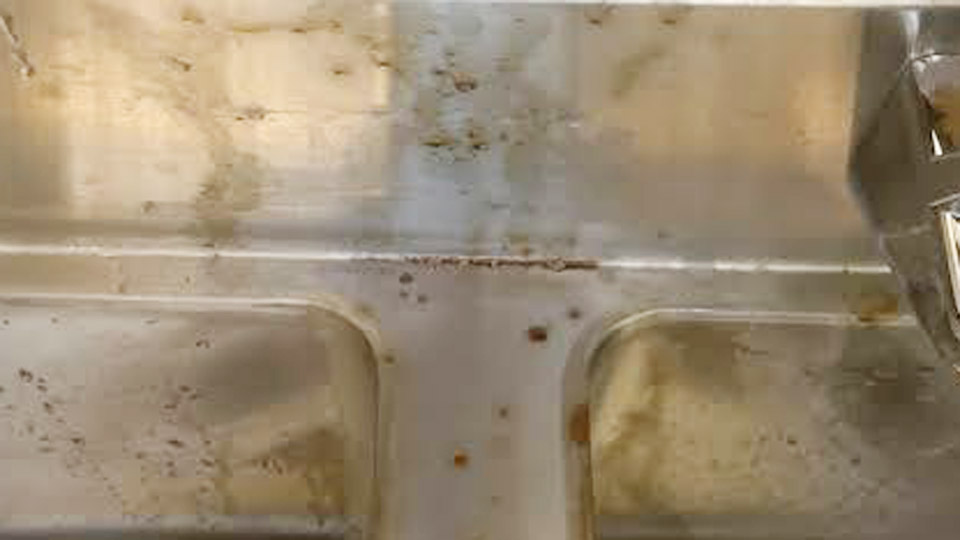
Image by r/CleaningTips
Why Heat Tint Must Be Removed Before Any Acid Contact
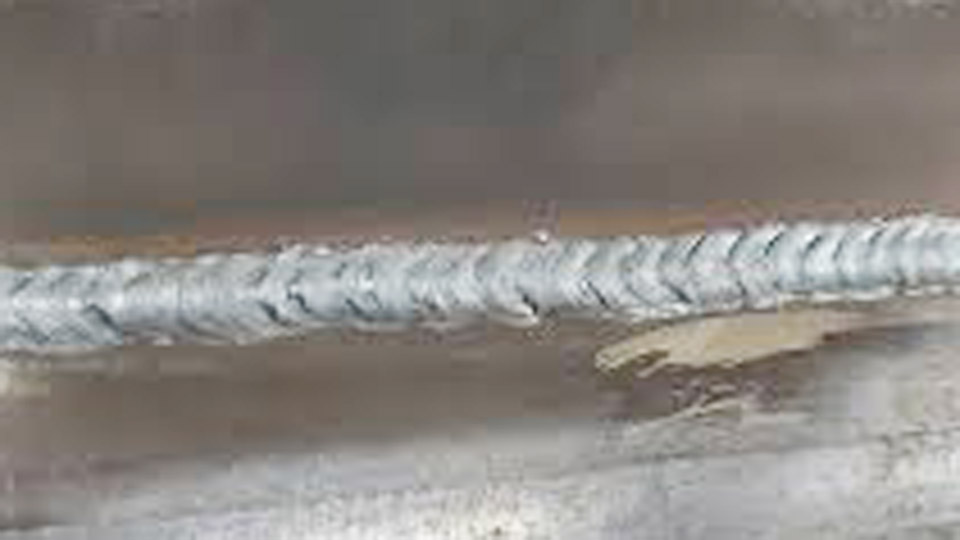
Heat tint is not cosmetic. During welding, chromium migrates from the near-surface zone into the growing oxide scale. The metal immediately beneath the tint is left chromium-depleted. In aqueous service that depleted layer becomes the preferred site for pitting or crevice corrosion.
Chromium Depletion Thresholds That Matter
Pale straw or light yellow tint may still leave enough chromium for mild atmospheres. Dark blue, purple, or black tint indicates measurable depletion. Industry guidance for drinking-water and food-contact fabrications requires removal of any tint darker than pale yellow, followed by acid pickling.
Structural or high-temperature applications can sometimes tolerate residual light tint because oxidation will occur in service anyway. The decision is driven by the service environment, not appearance alone.
Mechanical Pre-Cleaning Before Acid
Heavy scale and slag should be removed mechanically first. A stainless-only wire brush, clean aluminum-oxide disc, or glass-bead blast opens the surface so the acid can attack uniformly.
Using a carbon-steel brush or contaminated disc embeds free iron that the subsequent acid treatment must then remove. Mechanical work is most effective while the weld is still warm and the oxides are less adherent.
Selecting the Right Acid System for Stainless Welds
Not every acid is suitable. Hydrochloric or sulfuric acid attacks the passive film and can initiate pitting; they belong on carbon steel, not stainless. The standard industrial choice remains a nitric-hydrofluoric mixture, usually supplied as a ready-to-use paste or gel.
Nitric-Hydrofluoric Paste Composition and Limits
Typical pickling pastes contain roughly 15–25 % nitric acid and 3–8 % hydrofluoric acid by weight, thickened so they stay on vertical or overhead welds. Nitric acid dissolves the chromium-rich oxide and helps re-passivate; hydrofluoric acid removes the chromium-depleted metal layer beneath.
Contact times are deliberately limited—normally 15 to 60 minutes—because longer exposure etches the surface and can open grain boundaries. The paste must never be applied to metal above approximately 40 °C; heat accelerates gas evolution and reduces control.
Safer Chemical Alternatives When HF Is Restricted
Citric-acid formulations (often with ammonium bifluoride) remove free iron and light oxides without the extreme toxicity of hydrofluoric acid. They require longer times or elevated temperature and are less aggressive on heavy heat tint. Phosphoric-acid-based electrolytes used in electrolytic weld-cleaning systems are milder still and leave no fluoride residues.
These options become the practical choice for shops that lack the PPE, ventilation, and waste-handling infrastructure required for HF pastes.
Applying and Removing Pickling Paste Without Leaving Residues
The quality of the final surface is determined more by the rinse and neutralization steps than by the paste itself.
Surface Preparation That Controls Uniform Action
The weld zone must be free of oil, marking ink, and shop dirt. A dedicated stainless degreaser or alkaline cleaner is applied and rinsed before the paste. Any organic film creates a barrier that produces uneven pickling and dark patches. After degreasing, the metal is allowed to reach ambient temperature.
Controlled Contact and Immediate Rinse Discipline
Paste is stirred, then brushed or rolled in a continuous layer thick enough to remain wet for the full dwell time. Once the prescribed interval is reached, the surface is rinsed with high-volume clean water before the paste can dry. Dried paste leaves fluoride salts that are difficult to remove later.
High-pressure water is preferred where geometry allows; otherwise multiple low-pressure rinses with agitation are used. All rinse water is collected—never discharged to drains untreated.
Neutralization Chemistry That Stops Residual Attack
After the bulk rinse, a mild alkaline neutralizer (sodium carbonate, sodium bicarbonate, or proprietary paste) is applied to raise the surface pH above 7. Some systems use a dedicated neutralizing gel that is left for several minutes and then rinsed again.
Final verification can be a simple pH paper check or a conductivity rinse with deionized water for critical applications. Incomplete neutralization leaves microscopic acid pockets that later cause rust staining or pitting under coatings or in humid storage.
Electrolytic Cleaning as a Controlled Alternative to Paste
Electrolytic systems apply a low-voltage current through a phosphoric or citric electrolyte delivered by a carbon-fiber or stainless brush. The weld zone becomes the anode and the oxide layer dissolves under controlled electrochemical attack.
When Electrolytic Cleaning Outperforms Paste
On thin sheet, sanitary tubing, and accessible fillet welds the method removes heat tint in seconds rather than minutes and produces a bright, uniform finish with minimal metal removal.
It generates far less hazardous waste and requires only standard PPE for mild acids. Geometry limits its usefulness: deep crevices, large tanks, and complex internal welds remain better suited to paste or immersion pickling.
Process Variables That Affect Surface Finish
Current density, dwell time under the brush, and electrolyte concentration determine whether the surface is merely cleaned or lightly polished. Over-aggressive settings can leave a white etched appearance; under-settings leave residual blue tint. Most commercial units allow the operator to switch between cleaning and polishing modes by changing polarity or voltage.
Decision Factors for Food, Pharmaceutical, and Structural Work
The required cleanliness level is set by the end use, not by the welding process.
Hygienic Surfaces and Residual Fluoride Limits
Food and pharmaceutical fabrications demand both complete heat-tint removal and zero detectable fluoride or free iron. After chemical cleaning, a final passivation step with nitric or citric acid is often specified, followed by multiple deionized-water rinses.
Surface roughness after treatment must still meet the original Ra requirement; aggressive pickling that increases roughness can create new bacteria harbors.
Structural and Architectural Stainless
Exterior architectural work prioritizes appearance and long-term atmospheric corrosion resistance. Light mechanical finishing followed by a mild nitric passivation or electrolytic clean is frequently sufficient. Full HF pickling is reserved for heavily oxidized joints that cannot be dressed mechanically.
High-Temperature Service Exceptions
In continuous high-temperature environments the passive film will reform in service. Removing every trace of heat tint is less critical, and mechanical cleaning alone may be accepted to avoid acid handling.
Verifying That the Surface Is Truly Passive Again
Visual absence of color is not proof of passivation. Free-iron tests (ferroxyl or copper-sulfate) detect residual iron contamination. For critical components a copper-sulfate test or electrochemical polarization measurement confirms that the chromium oxide film has reformed. Any positive free-iron indication requires re-cleaning and re-passivation before the part is released.
Wrapping Up
Proper acid cleaning of stainless welds restores the chromium-rich surface that gives the alloy its value. The critical technical decisions are matching the acid system to the service environment, controlling contact time, and verifying complete neutralization and passivation.
When those steps are executed without shortcut, the weld zone performs as well as the parent plate; when any step is skipped, the corrosion clock starts the moment the part leaves the shop.
FAQ
Can I use muriatic acid to clean stainless steel welds?
No. Hydrochloric acid (muriatic) attacks the passive chromium oxide film and initiates pitting. It is suitable only for carbon steel descaling.
How long should pickling paste stay on a stainless weld?
Most commercial pastes specify 15–60 minutes depending on temperature, oxide thickness, and grade. Always follow the product data sheet; exceeding the time risks over-etching.
Is citric acid strong enough to remove heavy heat tint?
Citric formulations remove free iron and light oxides effectively but are slower and less aggressive on dark blue or black heat tint. Heavy scale usually still requires mechanical dressing or a nitric-HF paste first.
What happens if residual pickling acid is left on the surface?
Residual acid continues to etch the metal, creates fluoride contamination, and prevents the passive film from reforming. The result is delayed rust staining or localized corrosion once the part enters service.