Choosing between an inverter and a traditional transformer welder often starts with frustration: the lightweight inverter produces a smoother arc and draws less power, yet it overheats or fails after months of dusty site work while the heavy old machine keeps running.
Understanding the real advantages and disadvantages of inverter welders prevents costly mismatches between machine design and job conditions. Efficiency numbers, duty-cycle ratings, and electronic sensitivity translate directly into daily output, electricity cost, and downtime.
The decision affects everything from running 6010 pipe roots on a generator to multi-pass structural work in a fixed bay.
Accurate comparison of weight, input current, arc response, and repair complexity lets welders select the power source that matches material thickness, duty demand, and environment without guessing.
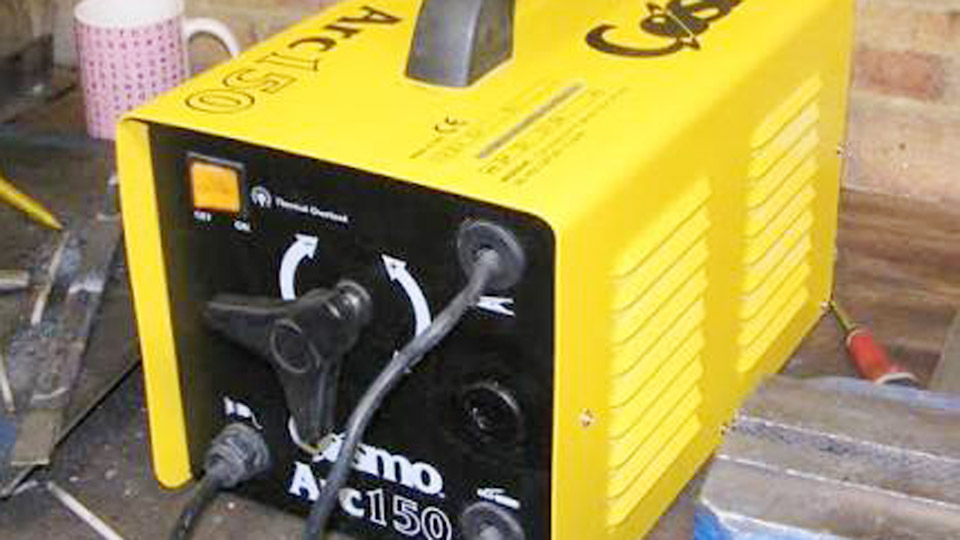
Image by mig-welding.co.uk
Portability and Input Power Requirements in Daily Use
Inverter designs convert incoming AC to high-frequency power before stepping it down, allowing far smaller magnetic components. This changes how the machine moves and what circuit it needs.
Weight and Footprint Differences That Affect Job Sites
A typical 200 A inverter weighs 15–35 lb and fits on a shoulder strap or small cart. Equivalent transformer machines often exceed 100–150 lb and require a wheeled cart or fixed mounting.
Field fabrication, farm repair, and multi-story structural work benefit immediately because the operator can carry the power source to the joint instead of dragging long leads that increase voltage drop. Storage also improves: several inverters fit where one transformer once occupied floor space.
Line Current Draw and Circuit Breaker Sizing
Inverters routinely deliver 200 A output while drawing 25–35 A on 240 V. Transformer units commonly pull 45–60 A for the same output. Lower input current allows use of smaller generators, existing 30 A or 50 A circuits, and dual-voltage (120/240 V) models that run from household outlets for light stick or TIG work. The reduced draw also lowers the risk of nuisance breaker trips during long fillet sequences.
Arc Stability, Control Features, and Multi-Process Capability
High-frequency switching and microprocessor regulation give inverters faster response to arc-length changes than 60 Hz magnetic designs.
Hot Start, Arc Force, and Anti-Stick Behavior
Most inverters add a brief current boost at arc initiation (hot start) and increase current when the arc shortens (arc force). These functions reduce sticking with low-hydrogen electrodes such as 7018 and improve performance on rusty or painted steel.
Anti-stick circuitry drops output when the electrode freezes, protecting both the rod and the operator. Transformer machines rely almost entirely on operator technique for the same control.
Thin-Material and Out-of-Position Performance
Precise low-amp control (often down to 5–10 A) produces stable arcs on 16–20 gauge sheet and stainless without burn-through. Pulse options on many TIG-capable inverters further reduce heat input.
Vertical-up and overhead stick welding benefit from consistent arc force that keeps the puddle from sagging. Transformer arcs tend to be softer and less responsive at the low end of the range.
Single-Machine Process Switching
Many inverters combine stick, TIG (DC or AC/DC), and MIG/flux-cored in one chassis. Changing processes requires only process selection and polarity or gas adjustments rather than swapping entire power sources. This matters for shops that move between structural stick, aluminum TIG, and production MIG without maintaining three separate machines.
Duty Cycle Ratings and Continuous Welding Capacity
Duty cycle measures how long the machine can run at a given amperage before thermal protection intervenes, usually expressed over a 10-minute period at 40 °C ambient.
Typical Ratings at Rated Output
Mid-range 200 A inverters commonly claim 60 % duty cycle at maximum output (6 minutes on, 4 minutes off). Higher-end units reach 100 % at 150–180 A. Classic transformer stick welders often rate 20–30 % at similar amperages.
The difference appears during multi-pass groove welds or long horizontal fillets where the inverter continues while the transformer forces cooldown stops.
Real-World Impact of Cooling Design
Forced-air cooling and smaller heat sinks allow inverters to recover faster once the thermal switch resets. However, restricted airflow from clogged filters or high ambient temperatures quickly erodes the published duty-cycle advantage.
Transformer machines dissipate heat more slowly but tolerate higher ambient temperatures with less risk of electronic failure.
Environmental Sensitivity, Reliability, and Repair Reality
Electronic power stages introduce failure modes absent from simple magnetic designs.
Dust, Moisture, and Thermal Stress
IGBT modules, capacitors, and control boards degrade when conductive dust bridges traces or moisture causes corrosion. Shops with grinding dust, outdoor exposure, or high humidity require regular filter cleaning and protective covers.
Transformer welders tolerate the same environments with little more than occasional coil cleaning. Extreme cold can also affect inverter electronics more than passive magnetic cores.
Generator Compatibility and Power Quality
Many inverters demand clean sine-wave or inverter-generator power. Dirty power from older engine-driven units can damage input rectifiers or cause intermittent faults. Transformer machines generally accept wider voltage swings and harmonic distortion without complaint.
Clean-power generators or line conditioners become additional cost items when pairing inverters with site generators.
Repair Cost and Service Life Expectations
Board-level or IGBT failures often cost $300–1,000 in parts plus labor. Specialized diagnostics are required. Quality industrial inverters last 8–15 years under professional use when maintained; budget consumer units may fail in 3–7 years.
Transformer machines frequently remain serviceable for 20–40 years with simple coil or rectifier repairs. Warranty length and local service network therefore matter more for inverters than for transformers.
Long-Term Cost Comparison Beyond Purchase Price
Initial price no longer dominates the decision for most users.
Energy Consumption Over Time
At 85–93 % efficiency versus 50–70 % for many transformers, an inverter can reduce electricity use by 30–40 % for the same weld output. A shop running 10 hours per week at 150 A may save several hundred dollars annually. Lower input current also reduces demand charges on commercial accounts.
Consumable and Productivity Effects
Stable arcs and adjustable arc force reduce electrode sticking and spatter, lowering rod waste and post-weld cleanup time. Higher duty cycle shortens total job time on multi-pass work. These gains offset higher purchase prices within one to three years for moderate-to-heavy users.
Resale and Obsolescence
Inverter technology continues to advance (silicon-carbide switches, improved thermal management). Older units lose value faster than rugged transformer machines that retain utility for basic stick work decades later.
Situations Where Transformer Welders Retain Clear Advantages
Certain environments and workloads still favor magnetic designs.
High-Dust or High-Abuse Environments
Structural shops with constant grinding, shipyards, and pipeline spreads often keep transformers because electronic failures create more downtime than the weight penalty. Simple construction also allows field repair by general electricians.
Heavy Continuous Stick Welding on Thick Plate
When duty cycle is already high and the machine never moves, the lower purchase cost and extreme durability of a transformer can outweigh efficiency gains. Some operators also prefer the “feel” of a soft transformer arc for certain cellulosic electrodes.
Budget-Constrained Basic Stick Work
Entry-level transformers remain the lowest-cost path to reliable 150–225 A stick capability when portability and multi-process features are unnecessary.
Selecting an inverter delivers measurable gains in portability, energy use, arc control, and process flexibility for most DIY, mobile, and mixed-process shops. The same electronics that enable those gains demand cleaner environments, careful generator matching, and acceptance of potentially higher repair costs.
Match the machine to the dominant working conditions—dust level, mobility need, duty demand, and available power quality—rather than assuming newer technology is universally superior.
Advanced operators further improve inverter longevity by installing remote amperage controls and maintaining strict filter and cooling schedules, turning the electronic sensitivity into a manageable variable instead of a failure mode.