Many experienced welders reach a plateau when they try to move into nuclear work. Standard AWS structural or pipe certifications open doors in fabrication and construction, yet nuclear sites reject applicants who lack ASME Section IX qualifications, documented procedure adherence, and the ability to pass rigorous background screening.
Learning how to become a nuclear welder matters because the work involves pressure-retaining components under ASME Section III rules, where every weld faces radiographic or ultrasonic inspection and carries regulatory accountability.
Incorrect assumptions about entry requirements waste years of practice time and delay higher-paying, code-driven careers in power generation and naval nuclear programs.
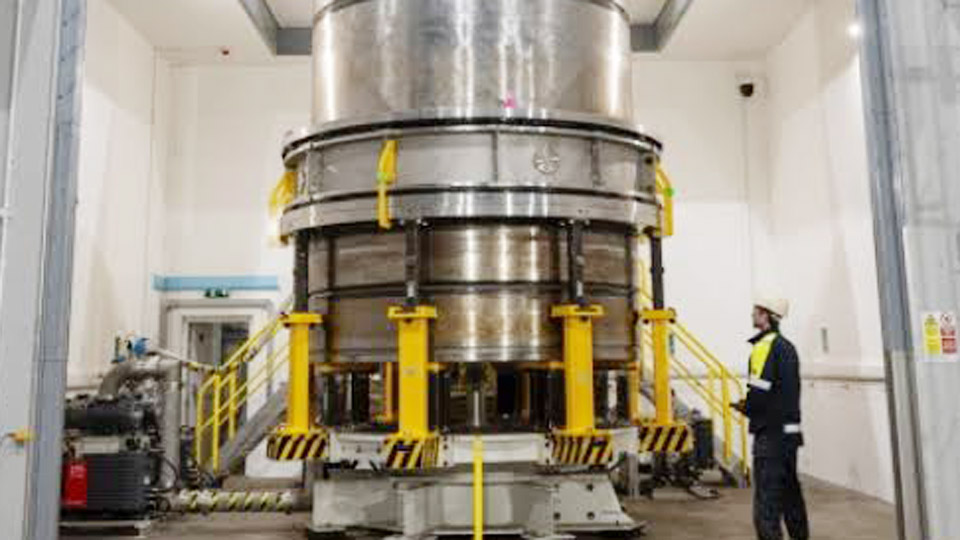
Image by newatlas
What Nuclear Welding Requires Beyond Ordinary Code Work
Nuclear welding operates under tighter quality systems than general structural or even most pressure-vessel applications. The governing framework centers on ASME Boiler and Pressure Vessel Code Section III for nuclear facility components and Section IX for welder and procedure qualification.
ASME Section III and N-Stamp Fabrication Rules
Section III defines material, design, fabrication, examination, and certification requirements for Class 1, 2, and 3 nuclear components. Welders employed by N-stamp holders must follow approved Welding Procedure Specifications (WPS) that have been qualified under Section IX.
The Authorized Nuclear Inspector provides third-party oversight. Performance qualifications are not transferable across employers without revalidation in many cases, and records must remain current.
Inspection and Acceptance Criteria Differences
Every critical weld undergoes nondestructive examination—typically radiographic testing (RT) or ultrasonic testing (UT)—with acceptance criteria stricter than AWS D1.1 or API 1104. Visual inspection alone is insufficient. Welders must produce deposits free of porosity, lack of fusion, and slag inclusions that would pass less stringent codes but fail nuclear acceptance.
Process and Position Emphasis
GTAW (TIG) and SMAW dominate many nuclear applications, especially on stainless and low-alloy steels in pipe and tube. The 6G fixed-pipe position remains a frequent qualification requirement because it demonstrates all-position capability on heavy-wall material. Orbital GTAW appears in specialized tube work.
Building the Welding Foundation Employers Expect
Nuclear programs rarely hire pure beginners. Most postings list two to five years of prior industrial welding experience as a practical minimum.
High School Diploma or GED as the Baseline
A high school diploma or equivalent is the formal education floor. No bachelor’s degree is required for the welder role itself. Community-college welding technology certificates or trade-school programs accelerate skill development but do not replace hands-on hours.
Practical Experience Thresholds
Employers look for documented time on structural, pipe, or pressure-vessel work using the processes they employ. Experience logging multi-pass welds, reading fabrication drawings, and working under written procedures carries more weight than classroom hours alone. Military welding experience, particularly Navy nuclear programs, often translates directly.
Skill Metrics That Matter in Screening
Consistent ability to pass performance tests on schedule 40 or schedule 80 carbon or stainless pipe in 5G or 6G positions, clean root passes with open-root techniques, and controlled heat input on thin-wall stainless are recurring evaluation points. Metallurgical awareness—especially of sensitization risks in stainless—separates candidates.
Certifications and Qualification Tests Required for Nuclear Access
Certifications function as gatekeepers. Performance qualification under ASME Section IX is the core technical requirement.
AWS Certified Welder as the Entry Credential
The AWS Certified Welder program is performance-based and requires no formal prerequisite courses. Testing occurs at an Accredited Test Facility. While not nuclear-specific, it establishes a verifiable baseline that many contractors recognize before sponsoring further qualifications.
ASME Section IX Performance Qualification
Section IX qualifications are process-, material-, and position-specific. A common path is qualification on carbon steel pipe using GTAW root and SMAW fill in the 6G position, followed by stainless qualifications.
The employer or test facility administers the test; the resulting record (WPQ) belongs to the welder but remains valid only under the conditions of the original qualification or as extended by the employer’s program.
Additional Credentials That Improve Employability
Familiarity with NQA-1 quality systems, radiation-worker training, and basic NDT methods strengthens applications. Certified Welding Inspector (CWI) credentials open inspection and oversight paths later. Naval nuclear work may reference NAVSEA technical publications and additional security layers.
Security Clearance, Background Checks, and Site Access
Technical skill alone does not grant entry. Nuclear facilities enforce personnel security and fitness-for-duty rules.
Background Investigation Scope
Expect criminal-history, employment, education, and financial reviews. Drug screening is standard and often repeated. U.S. citizenship is required for most commercial nuclear and all naval nuclear positions. Disqualifying factors include certain felony convictions, recent drug use, and unresolved financial issues that raise reliability concerns.
Unescorted Access and Fitness-for-Duty
Once hired, workers must complete site-specific training, radiation-protection modules, and behavioral observation programs. Maintaining unescorted access requires ongoing compliance. Clearance processing can take months; applicants with clean records and complete documentation move faster.
Naval Versus Commercial Nuclear Differences
Naval shipyards and submarine programs impose higher clearance levels and often prefer candidates with prior military or defense-contractor experience. Commercial power plants focus on NRC-regulated access and utility-specific programs.
Training Paths and How to Select the Right One
Multiple routes exist; the optimal choice depends on prior experience, finances, and timeline.
Trade School and Community College Programs
Six- to twelve-month certificate programs cover process fundamentals, blueprint reading, and basic code welding. Costs typically range from $5,000 to $20,000. Look for programs that prepare students for AWS and ASME performance tests rather than purely theoretical instruction.
Union Apprenticeships
United Association (pipefitters) and Boilermaker apprenticeships combine paid on-the-job training with classroom instruction over three to five years. These routes often include nuclear-related work opportunities and strong placement into outage and construction crews.
Employer-Sponsored and Contractor Routes
Experienced welders sometimes enter through industrial contractors that maintain nuclear qualifications. The contractor sponsors the Section IX tests and site access training after hiring. Military transition programs and specialized nuclear welding scholarships at certain technical colleges provide additional entry points.
Compensation Ranges and Advancement Decisions
Pay reflects the combination of skill scarcity, overtime during outages, and clearance status.
Current Pay Benchmarks
Base rates for qualified nuclear welders commonly fall between $60,000 and $100,000 annually, with total compensation rising substantially through overtime, per diem, and hazard differentials during refueling outages. Naval nuclear and specialized pipe work frequently exceed these figures. Geographic location, union status, and exact qualification portfolio drive variation.
Career Progression Options
Experienced nuclear welders move into lead roles, procedure qualification, welding supervision, or inspection. Adding CWI or NDT Level II credentials supports transitions into quality assurance. Some advance into welding engineering support roles after additional technical study, though the pure welder track itself remains high-demand.
Wrapping Up
Nuclear welding demands precise alignment of technical qualification, documented experience, and personal reliability. Prioritize ASME Section IX performance credentials in the processes and positions used on nuclear components, maintain a clean background record, and accumulate verifiable industrial hours before applying.
The welders who succeed treat every performance test as a formal procedure rather than a skill demonstration—recording parameters, controlling heat input, and producing radiographs that pass without repair. That discipline separates those who merely hold a welding card from those who work inside the nuclear quality system.