Many welders fail certification tests or get restricted job access because they treat position numbers as abstract labels instead of physical constraints on the molten pool.
Welding positions explained correctly show how gravity, joint orientation, and weld progression dictate heat input, travel speed, and electrode angle.
A 3G vertical test does not automatically authorize overhead production work, and a 1G rotated pipe coupon never proves fixed-position skill.
Position determines whether the weld metal stays in place or runs, how slag freezes, and whether the joint meets code acceptance criteria for structural steel or pressure piping.
Understanding the exact geometry behind each designation prevents under-qualification and wasted practice time.
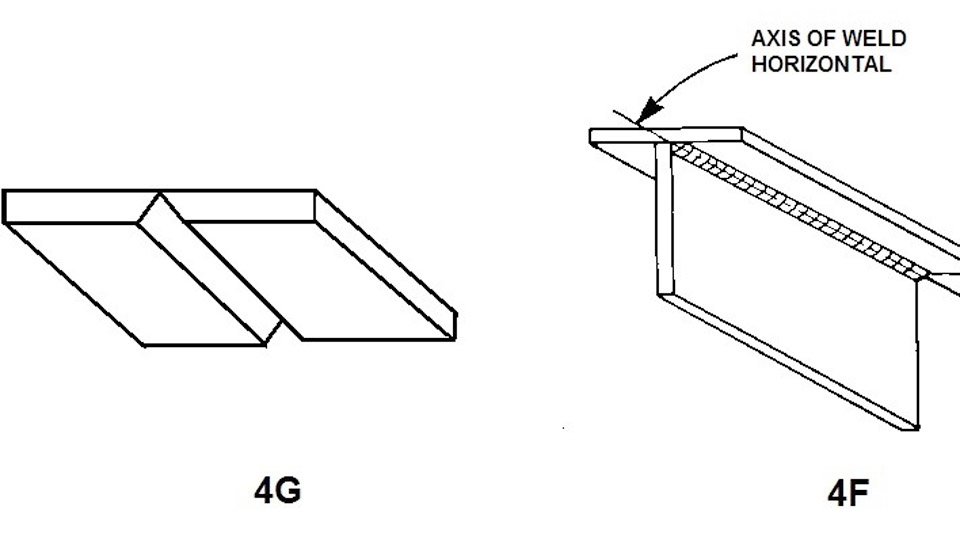
Image by in/hatim-el-hafidhi
How AWS Position Numbers and Letters Define the Joint
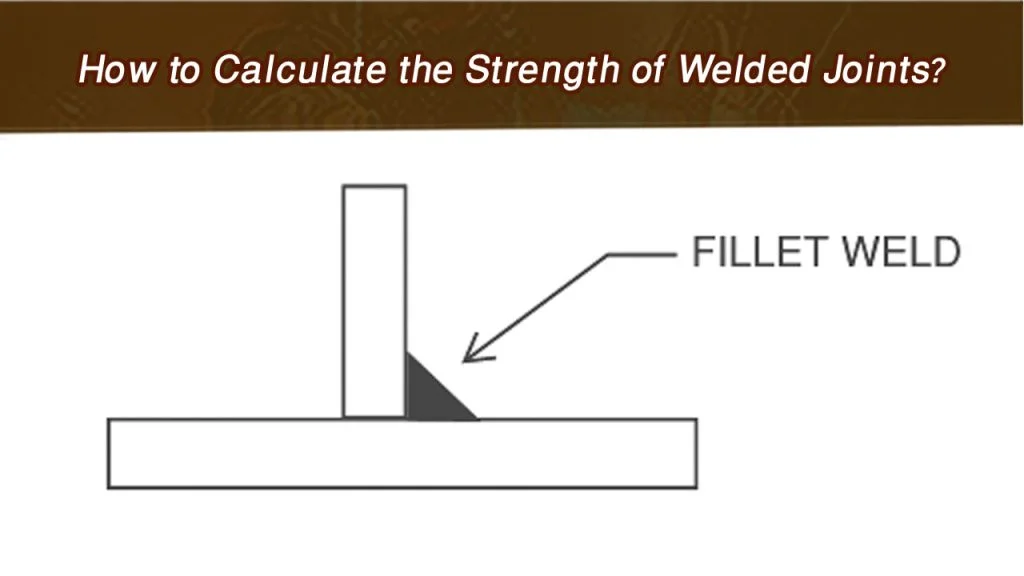
The number indicates orientation relative to gravity. The letter distinguishes joint type: G for groove (butt) welds and F for fillet welds. These designations appear on procedure qualification records, welder performance qualification records, and WPS documents under AWS D1.1 and ASME Section IX.
Groove versus Fillet Designations in Practice
Groove positions (1G–6G) test full-penetration capability on prepared edges. Fillet positions (1F–5F) evaluate leg size, throat, and fusion on T-joints, lap joints, or socket connections. Passing a 3G groove coupon does not qualify fillet work in the same orientation; separate tests or specific code tables are required.
Many structural shops demand both 3G and 3F because vertical fillet welds appear more frequently on beams and columns than vertical grooves.
Fixed versus Rotated Pipe Distinctions
Rotated pipe positions keep the weld axis in one orientation relative to the welder. Fixed positions force the welder to change body position and torch angle continuously around the circumference. This difference drives the higher skill demand of 5G and 6G.
Plate Positions: Gravity Effects on the Weld Pool
Plate positions apply to linear joints on flat or formed plate. Each increases the component of gravity acting against the molten metal.
1G and 1F Flat Position Control
The plate lies horizontal. Welding occurs from above so gravity pulls the pool downward into the joint. High deposition rates are possible; spray-transfer GMAW and submerged-arc processes operate efficiently here.
Most entry-level tests and shop fabrication start in 1G because bead contour and penetration are easiest to control. Qualification in 1G covers only flat production work.
2G and 2F Horizontal Position Demands
The plate stands vertical while the weld axis runs horizontal. Gravity pulls the pool toward the lower side of the groove or fillet, creating risk of undercut on the upper toe and excessive reinforcement or overlap on the lower toe.
Travel speed must stay consistent and electrode angle slightly adjusted upward to counteract sag. Horizontal fillets appear constantly on structural steel; many fabricators require 2F qualification early.
3G and 3F Vertical Position Progression Choices
Both the plate and weld axis are vertical. Progression can be uphill or downhill. Uphill (PF in ISO terms) demands lower amperage, shorter arc, and often a weave or triangular pattern to support the pool against gravity.
Downhill (PG) allows higher travel speeds but risks incomplete fusion if heat input drops too low. Structural codes frequently specify uphill for critical vertical joints. Passing 3G typically qualifies flat and horizontal positions as well under AWS D1.1 tables.
4G and 4F Overhead Position Heat Management
The plate is horizontal and welding occurs from underneath. Gravity pulls the entire pool away from the joint. Amperage is reduced, arc length kept short, and travel speed increased relative to flat welding to freeze the metal before it drips.
Overhead fillet welds on the underside of beams or tank floors are common; 4G qualification proves the ability to maintain fusion without excessive reinforcement or undercut. Combined 3G + 4G testing often qualifies all plate positions.
Pipe Positions: Circumferential Constraints and Skill Escalation
Pipe positions involve circumferential groove or fillet welds. Axis orientation and whether the pipe can rotate define the difficulty.
1G Rotated Pipe Flat Welding
The pipe axis is horizontal and the pipe rotates under the torch so the weld remains in the flat position at all times. Deposition rates stay high and technique mirrors plate 1G. This position is useful for shop fabrication of spools that can be rolled but rarely appears in field qualification because most installed pipe cannot rotate.
2G Horizontal Fixed Pipe
The pipe axis stands vertical and remains fixed. The welder travels around the circumference in a continuous horizontal orientation. Gravity acts sideways on the pool throughout the joint, similar to plate 2G but on a curved surface. Socket welds and certain header connections use this geometry.
5G Fixed Horizontal Pipe Multi-Position Sequence
The pipe axis is horizontal and locked. The welder must progress through flat, vertical, and overhead segments in a single continuous joint. Root pass technique changes with position; many procedures require uphill progression on the vertical portions.
5G testing qualifies a broad range of pipe positions under ASME Section IX because it forces all four basic orientations.
6G Fixed 45-Degree Pipe Mastery Requirement
The pipe axis sits at approximately 45 degrees to horizontal and cannot rotate. Every segment of the circumference presents a compound angle combining elements of flat, horizontal, vertical, and overhead.
The 6G test is the most common all-position pipe qualification for process piping, pipelines, and pressure vessels. A restricted version (6GR) adds a ring or plate near the joint to simulate limited access on T-, Y-, or K-connections in structural tubular work.
Qualification Limits and Production Coverage
Position qualification is not unlimited. AWS D1.1 and ASME Section IX tables define the range of production positions covered by each test coupon.
Plate Qualification Cascades
A 1G test covers only 1G production. A 2G test covers 1G and 2G. A 3G test covers 1G, 2G, and 3G. A 4G test covers 1G and 4G. Passing both 3G and 4G usually qualifies all plate positions. Fillet tests follow similar but separate tables.
Pipe Qualification Cascades
A 1G rotated test covers only rotated flat. A 2G test covers 1G and 2G. A 5G test covers 1G, 2G, 3G, and 4G equivalents on pipe. A 6G test covers all positions. These limits matter when a welder holds only a 3G plate ticket and is asked to weld fixed horizontal pipe.
Technique Variables Forced by Position
Amperage, travel speed, and electrode or gun angle must change with orientation to keep the pool stable and the bead within code dimensions.
Amperage and Heat Input Adjustments
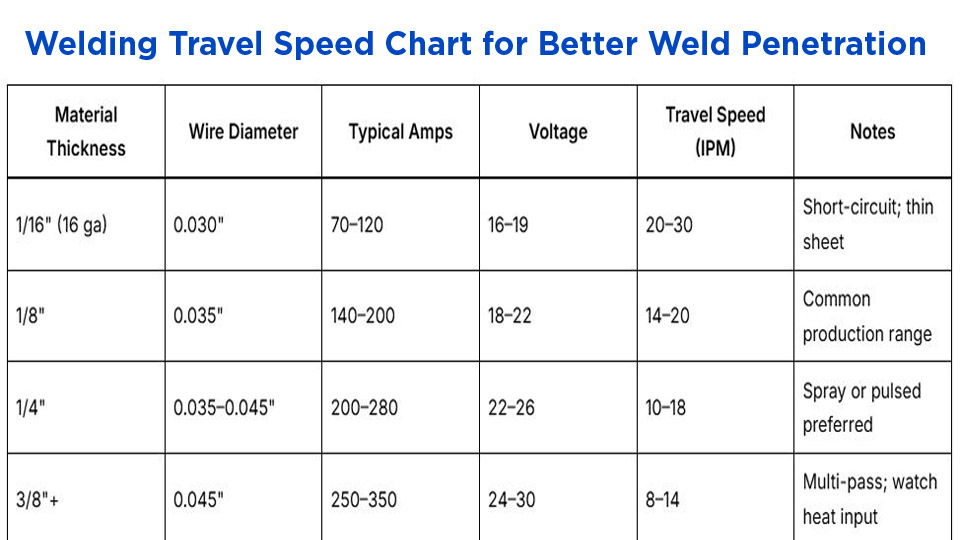
Flat positions tolerate higher current and longer arcs. Vertical and overhead positions require 10–20 % lower amperage on the same electrode diameter to prevent the pool from running. Short-circuit or pulsed GMAW modes become preferable in out-of-position work because the lower average heat input freezes the metal faster.
Travel Speed and Bead Shape Control
Overhead and vertical-up progressions use slower travel to build adequate reinforcement against gravity, while vertical-down uses faster travel to thin the bead. Horizontal positions demand steady speed to avoid undercut on the upper edge.
Electrode and Torch Angle Corrections
In flat work the electrode is nearly perpendicular. Horizontal work tilts slightly upward. Vertical-up often uses a slight push angle with a controlled weave. Overhead work keeps a short arc and a slight drag or neutral angle so the arc force helps support the pool.
Decision Framework for Choosing Practice and Certification Positions
Select the lowest position that covers the actual production joints first, then add higher positions only as required by the employer or code. Shop fabricators who can position work often stay with 1G and 2G for efficiency.
Field structural and piping crews need 3G/4G plate or 5G/6G pipe. When time and consumables are limited, prioritize the single highest position that qualifies the widest range under the governing code table rather than collecting every individual coupon.
Wrapping Up
Position mastery is measured by consistent fusion, acceptable reinforcement, and absence of undercut or porosity under the specific gravity vector of that orientation.
The advanced insight is that the same WPS parameters rarely transfer unchanged from 1G to 6G; heat input and travel technique must be recalibrated for each gravity condition, and the best welders treat every position change as a new set of essential variables rather than a simple body adjustment.
FAQs
What does 6G welding position mean?
The pipe axis is fixed at approximately 45 degrees and cannot rotate. The welder must complete the full circumference through compound angles that combine flat, horizontal, vertical, and overhead conditions.
Does a 3G plate certification cover overhead welding?
No. Under AWS D1.1, 3G covers flat, horizontal, and vertical. Overhead requires a separate 4G test or a combined 3G+4G qualification.
What is the difference between 5G and 6G pipe welding?
5G uses a fixed horizontal pipe; 6G uses a fixed pipe inclined at 45 degrees. Both require multi-position technique, but 6G presents continuous compound angles and is considered the more demanding all-position test.
Which welding position is easiest for beginners?
1G flat on plate or rotated pipe. Gravity assists the weld pool, visibility is best, and higher deposition rates are possible with less risk of undercut or incomplete fusion.