A broken linkage, an undersized shaft, or a field repair often leaves you needing to join two metal rods without welding. The primary keyword question—How to Join Two Metal Rods Without Welding?—arises when a welder is unavailable, the metal is heat-sensitive, the joint must remain reversible, or codes prohibit hot work.
Choosing the wrong method produces loose connections under vibration, sudden tensile failure, or joints that inspectors reject.
Correct selection depends on load type (tension, shear, bending), rod diameter, environment, and whether the connection must be permanent or serviceable.
This guide delivers the technical criteria, real working values, and decision points needed to produce reliable joints without fusion welding.
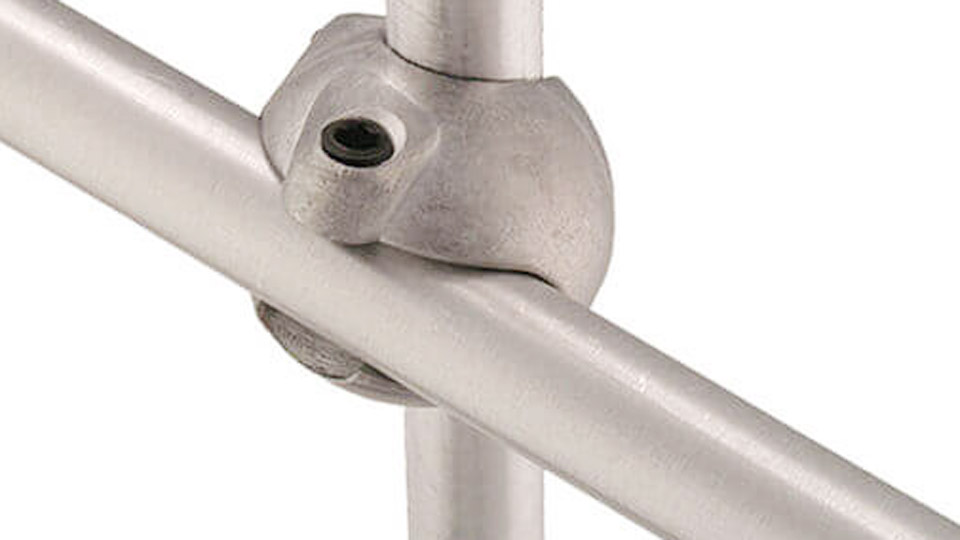
Image by fb/mx.ohaus.com
Which Non-Welding Method Matches Your Load and Service Conditions?
Rod joints fail when the chosen method cannot transfer the applied force or survive the operating environment. Start by classifying the demand rather than reaching for the first available fastener.
Tension-Dominant versus Shear or Combined Loading
Pure tension favors continuous threaded paths or full-engagement sleeves. A coupling nut that engages both rods for at least one full diameter of thread length can approach the tensile capacity of the weaker rod when Grade 5 or Grade 8 hardware is used.
Shear or bending loads require larger contact areas or multiple fasteners so that stress is distributed rather than concentrated at a single hole.
Permanent versus Serviceable Requirements
Bolted and threaded connections remain fully reversible. Epoxy, brazed sleeves, and swaged ferrules are effectively permanent; removal usually destroys the joint or the rod ends. Choose reversibility when future length adjustment or inspection access is required.
Environmental and Inspection Constraints
Outdoor or corrosive service demands galvanized or stainless hardware and, if adhesives are used, formulations rated for moisture and temperature cycling.
In regulated environments (pressure vessels, structural steel under certain codes, explosive atmospheres), mechanical fasteners and approved metal-stitching systems are more readily accepted than field-applied adhesives or torch work.
Threaded Couplers and Coupling Nuts for End-to-End Rod Joins
When both rods can accept threads, a coupling nut is the cleanest high-strength solution.
Thread Engagement and Strength Calculation
Cut or roll threads on each rod end to a length equal to at least one full rod diameter (preferably 1.5 diameters for high-cycle tension). A standard coupling nut is tapped from both ends so the rods meet near the center.
For ½-inch UNC rods, Grade 8 hardware typically yields tensile strengths above 150 ksi; the joint capacity is then governed by the lesser of the rod cross-section or the thread shear area. Always verify that the coupling nut material matches or exceeds the rod grade.
Installation Sequence and Locking Methods
Clean the threads, apply anti-seize or thread-locking compound as required, and screw each rod in until the ends abut or a small gap remains for adjustment. Use jam nuts or a second locking coupler if vibration is present. Right-hand/left-hand combinations allow length adjustment similar to a turnbuckle without rotating the entire assembly.
Bolted Through-Joints and Clevis-Style Connections
When threading is impractical or the rods must remain unthreaded stock, mechanical pinning or bolting through the diameter becomes the practical route.
Single-Bolt Cross-Drilled Joints
Drill a hole slightly larger than the bolt diameter (typically 1/32 inch oversize for clearance) through both rod ends after they are aligned and clamped.
For ½-inch and ⅝-inch mild-steel rods, a Grade 8 bolt of matching diameter with flat washers and a nylon-insert lock nut provides high clamp force.
The joint strength is limited by the shear area of the bolt and the bearing capacity of the rod material surrounding the hole. Multiple bolts in a staggered pattern increase capacity but require careful layout to avoid excessive section reduction.
Clevis and Pin Arrangements
Machine or purchase clevis ends that slip over the rod and are retained by a transverse pin or bolt. This geometry converts the connection into a double-shear pin joint and is common on linkages, actuators, and adjustable braces. Cotter pins or retaining rings prevent the pin from backing out under vibration.
Sleeve, Ferrule, and Compression Systems
A close-fitting external sleeve transfers load through friction, adhesive, mechanical deformation, or a combination.
Slip-Fit Sleeves with Set Screws or Epoxy
A short length of tubing whose internal diameter matches the rod diameter is slid over the abutting ends. Set screws (preferably cup-point) lock the sleeve; for higher strength, fill the annular gap with structural epoxy before assembly.
The sleeve length should be at least two rod diameters on each side of the joint line to develop adequate bond or friction length.
Swaged or Crimped Ferrules
Hydraulic or mechanical swaging tools compress a ductile metal sleeve onto the rods, creating a permanent mechanical interlock.
This method is widely used on wire rope and can be adapted to solid rods when the proper die and sleeve are available. Strength approaches that of the parent metal when the swage is properly executed and inspected.
Structural Adhesives for Metal Rod Joints
Modern two-part epoxies and methyl-methacrylate (MMA) adhesives can develop shear strengths of 2,000–6,000 psi on properly prepared steel, making them viable for moderate loads or as supplements to mechanical fasteners.
Surface Preparation Requirements
Degrease with solvent until a clean cloth shows no residue, then abrade with 80–120 grit to create mechanical tooth. Any remaining oxide or oil film becomes the weak plane.
Apply the mixed adhesive within its working time, clamp or fixture the rods to maintain alignment, and allow full cure (often 24 hours for maximum strength) before loading.
Limitations Relative to Mechanical Methods
Adhesives distribute stress evenly but lose strength at elevated temperatures and can creep under sustained high loads.
They are rarely accepted as the sole load path in critical structural or pressure applications without extensive qualification testing. Use them for non-critical assemblies, vibration damping, or to prevent fretting inside a mechanical sleeve.
Brazing as a Heat-Based but Non-Fusion Alternative
Brazing melts a filler metal (typically silver or brass alloys) that flows by capillary action into a close-fitting joint without melting the base rods.
Joint Design and Temperature Control
Prepare a sleeve or scarf joint with clearances of 0.001–0.005 inch. Clean to bright metal, apply flux, heat the assembly uniformly to the filler’s flow temperature (commonly 1,150–1,400 °F for silver brazes), and allow the filler to wet both surfaces.
Cool without quenching. Properly executed silver-brazed sleeve joints can exceed the tensile strength of many mechanical fasteners while remaining distinct from fusion welding.
When Brazing Is Preferable
Brazing is useful when a permanent, high-strength joint is required and torch access is available, yet base-metal melting or the heat-affected zone of welding must be avoided. It is less suitable for very large sections or field conditions where precise temperature control is difficult.
Decision Matrix for Selecting the Final Method
| Method | Typical Strength Level | Heat Required | Reversible | Best Primary Use Case |
|---|---|---|---|---|
| Coupling Nut | High | No | Yes | Threaded rods, adjustable length |
| Cross-bolted | High | No | Yes | Unthreaded stock, serviceable joints |
| Sleeve + set screws | Medium–High | No | Limited | Quick field repairs |
| Swaged ferrule | High | No | No | Permanent high-load connections |
| Structural epoxy | Medium | No | No | Moderate loads, clean appearance |
| Silver braze + sleeve | Very High | Torch | No | Permanent joints needing high capacity |
Match the table to the actual forces, environment, and inspection requirements of the job. For mixed loading or critical service, combine a mechanical interlock with adhesive or locking compound rather than relying on a single mechanism.
Wrapping Up
Selecting the correct non-welding joint for two metal rods is a matter of matching load path, reversibility, and environmental resistance to the available techniques.
Threaded couplers and properly designed bolted joints deliver the highest serviceable strength for most shop and field work; sleeves and adhesives fill the gaps where appearance or speed matter more than ultimate capacity.
Advanced practice treats the joint as a system—thread engagement length, bearing area, surface preparation, and locking features are calculated together rather than chosen independently—so the finished connection performs as reliably as a well-executed weld under the specific service conditions.
FAQs
Can I join two metal rods with epoxy alone?
Only for light to moderate static loads after thorough surface preparation. Structural epoxies reach 2,000–6,000 psi shear on steel, but they are not substitutes for mechanical fasteners under high tension, impact, or elevated temperature.
What is the strongest way to join threaded rods without welding?
A properly engaged coupling nut (or pair of jam nuts) using hardware of equal or higher grade than the rods. Full thread engagement equal to at least one rod diameter provides near-parent-metal tensile capacity.
How do I join unthreaded steel rods in the field without a welder?
Drill and bolt through both ends, or use a close-fitting sleeve locked with set screws and optionally filled with epoxy. For higher strength, a swaged sleeve or metal-stitching pins can be employed if the tools are available.
Is brazing considered welding when joining metal rods?
No. Brazing melts only the filler metal; the base rods remain solid. It produces a metallurgical bond at lower temperatures than fusion welding and is accepted as a distinct process in most codes and specifications.