You release the MIG gun trigger and the wire keeps pushing out of the contact tip. The drive rolls continue turning, or the spool overruns and dumps loose wire into the feeder compartment. This is the exact failure described by the search term MIG welder keeps feeding wire.
Continuous feed after trigger release wastes electrode, creates immediate bird-nesting risk, and can force an emergency machine shutdown. Left unresolved it damages liners, flattens wire, and turns a simple repair into a multi-pass cleanup.
Correct diagnosis isolates whether the fault is mechanical, electrical, or a combination so the fix restores controlled feed without guessing at voltage or wire-speed settings.
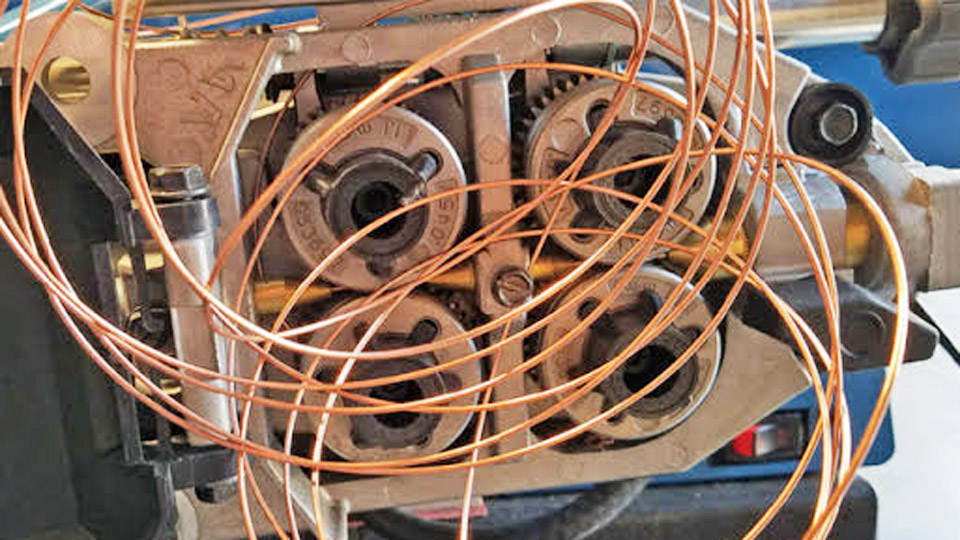
Image by americantorchtip
Why Wire Continues After the Trigger Is Released
The wire-feed circuit is designed as a closed-loop command: trigger closed = motor and gas solenoid energized; trigger open = both circuits drop out. Any path that keeps the command signal active after the switch returns to open produces continuous feed.
Trigger Switch Failures
A microswitch inside the gun handle is the most frequent single-point failure. Spatter dust, grinding grit, or a broken return spring holds the contacts closed. Continuity remains even when the lever is released.
On many Magnum-style and Euro-connector guns the switch sits directly under the lever pivot; a cracked lever or melted plastic pad can also keep the contacts bridged. Replacement of the trigger assembly restores the open circuit and stops the motor within milliseconds of release.
Wiring Shorts in the Gun Cable
Two low-voltage control leads run the full length of the gun cable. Abrasion at the strain-relief, pinching under the handle cover, or internal insulation wear creates a permanent short between the leads. The machine interprets the short as a continuous trigger command.
Flexing the cable while the machine is powered will often change the feed behavior—proof that the short is mechanical rather than a board-level fault.
Machine-Side Electrical Faults That Keep the Feeder Running
Once the gun is ruled out, attention moves inside the power source or feeder.
Stuck Contactor or Relay
Many transformer-based and older inverter machines use a relay or contactor to switch power to the wire-feed motor. Contact tips that have arced repeatedly can weld themselves closed.
The motor then runs as soon as main power is applied, regardless of trigger state. Visual inspection of the relay (burn marks, pitted contacts) plus a continuity check across the load side with the trigger open confirms the diagnosis. Replacement of the relay restores normal dropout.
Control Board or Solenoid Circuit Problems
On machines with solid-state motor control, a failed output transistor or stuck driver on the board can leave voltage applied to the feed motor. Gas solenoids that stick open are more common than motor drivers, but a shared control circuit can keep both functions live.
Board-level diagnosis requires voltage measurements at the motor terminals with the trigger open; any residual voltage points upstream of the motor itself.
Mechanical Factors That Mimic Continuous Feed
Not every case of “wire keeps coming out” is an electrical short.
Excess Drive-Roll Tension
When the pressure arm is cranked far beyond the point of reliable grip, residual spring force and roller inertia can continue to push a short length of wire after the motor stops.
More importantly, excessive tension flattens the wire, increases liner drag, and produces the bird-nest that operators often mistake for continuous motor run. Correct tension is the lightest setting that still feeds without slip when the tip is pressed against a block of wood.
Spool Brake Set Too Loose
The hub brake is intended only to prevent overrun. If the brake spring or friction pad is backed off completely, the spool continues rotating after the drive rolls stop.
Wire piles up between the spool and the inlet guide, creating the visual impression that the machine is still feeding. The correct setting is the lowest tension that stops the spool within one-half turn after trigger release.
How to Isolate the Fault in Under Ten Minutes
A structured sequence separates gun, cable, and machine faults without unnecessary disassembly.
Trigger Continuity and Mechanical Check
Power off and unplug the machine. Open the gun handle and inspect the lever return spring and switch body for debris or damage. With a multimeter on continuity, the switch should read closed only while the trigger is depressed and open the instant it is released. Any residual continuity requires switch replacement.
Gun-Disconnect Isolation Test
Unplug the gun’s control connector or remove the gun entirely from the feeder. If wire feed stops and stays stopped when the machine is powered, the fault is in the gun or its cable. If the motor still runs with the gun disconnected, the problem is internal to the machine—relay, board, or wiring harness.
Drive-Roll and Spool Observation
With the gun reconnected and power on, watch both the drive rolls and the spool during a short trigger pull and release. Rolls that continue spinning after release indicate an electrical hold-in. A spool that freewheels while the rolls stop indicates brake adjustment only.
Decision Points for Component Replacement Versus Adjustment
| Symptom Observed | Most Probable Cause | First Action | Typical Replacement Part |
|---|---|---|---|
| Motor runs with trigger released and gun disconnected | Stuck relay or board driver | Measure residual voltage at motor | Relay or control board |
| Continuity across trigger leads with lever released | Shorted switch or cable | Replace trigger assembly or repair leads | Trigger microswitch or gun |
| Spool continues turning after rolls stop | Loose hub brake | Increase brake friction one click at a time | Hub spring or friction pad |
| Wire pushes a few inches after motor stops | Excessive roll pressure | Back off tension to first reliable grip | None (adjustment) |
| Feed continues only when cable is flexed | Intermittent short in control leads | Inspect strain relief and handle wiring | Control-lead pair or full gun |
Replace the lowest-cost, highest-probability item first. A trigger switch or set of control leads is inexpensive and restores function in most field cases. Board replacement is reserved for confirmed residual voltage after the gun is eliminated.
Preventive Practices That Reduce Recurrence
Keep the gun handle free of grinding dust and spatter by periodic compressed-air cleaning. Avoid sharp bends in the cable that accelerate insulation wear on the control leads.
Set drive-roll pressure only high enough for consistent feed; over-tightening accelerates both wire deformation and liner wear.
Verify spool-brake tension every time a new spool is loaded. These steps keep the electrical command path clean and the mechanical path free of the drag that forces operators to compensate with higher tension or higher wire-speed settings.
Wrapping Up
When a MIG welder keeps feeding wire after trigger release, the root cause is almost always a held-closed command signal or an incorrectly adjusted mechanical brake. Isolating the gun first, then confirming residual voltage or free-spool behavior, leads directly to the correct repair.
Once the command circuit drops out cleanly and the spool stops within a half turn, wire delivery returns to the precise start-stop response required for consistent bead starts and crater fills.
Advanced operators further protect feed reliability by matching liner bore and contact-tip orifice exactly to wire diameter, eliminating the residual drag that can mask or aggravate an electrical fault.
FAQs
Why does my MIG welder keep feeding wire after I release the trigger?
A stuck trigger switch, shorted control leads in the gun cable, or a welded contactor/relay inside the machine keeps the feed-motor circuit closed. Test continuity at the trigger and isolate the gun to locate the fault.
Can drive-roll tension cause continuous wire feed?
Excessive tension can push a short length of wire after the motor stops and will flatten the electrode, increasing liner drag. Set the lightest pressure that still feeds without slip.
How do I stop the spool from overrunning when the trigger is released?
Increase hub-brake tension until the spool stops within one-half turn after the drive rolls halt. Too little brake allows free-spooling; too much creates drag that the rolls must overcome.
Is a control-board failure common when wire keeps feeding?
Board failures are less common than trigger or relay faults. Confirm residual voltage at the motor terminals with the gun disconnected before replacing a board.