Paint left in the weld zone creates porosity, arc instability, and incomplete fusion the moment the arc starts. Many welders discover this only after grinding out a defective bead and realizing the original coating was never fully cleared.
What is the easiest way to remove paint from metal depends on part size, coating thickness, metal type, and available tools, yet the goal remains identical: expose clean base metal within at least one inch of the joint so contaminants cannot enter the weld pool.
Incomplete removal forces rework, wastes filler, and risks code rejection on structural work. Choosing the lowest-effort method that still produces bright metal determines whether the job stays efficient or turns into repeated cleaning cycles.
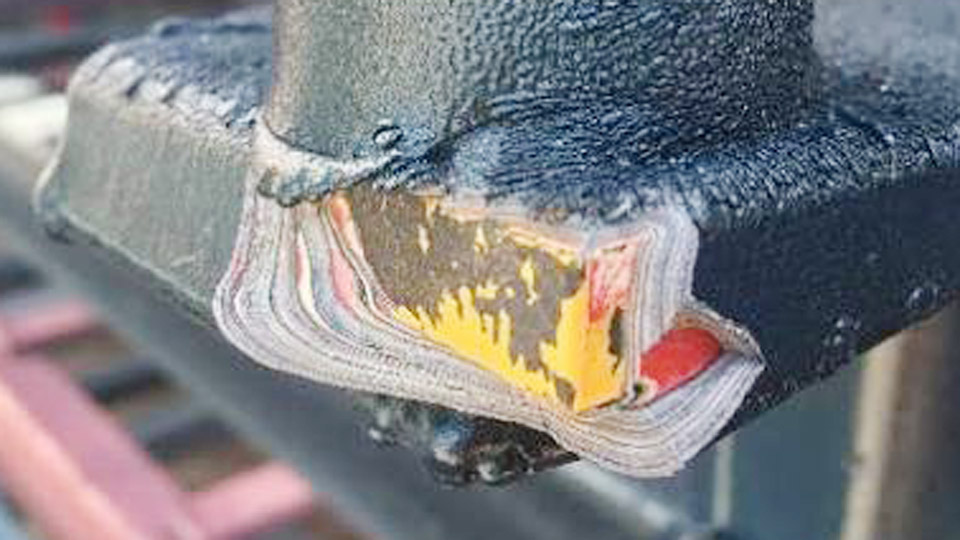
Image by pyroxovens
When Chemical Strippers Require the Least Physical Effort
Chemical paint strippers soften the coating bond so paint lifts with minimal scraping. Gel formulations cling to vertical surfaces and complex profiles better than thin liquids, reducing runoff and wasted product.
Gel Strippers on Intricate or Multi-Layer Coatings
Apply a thick, even coat with a chip brush and allow the manufacturer’s dwell time—typically 15 to 45 minutes depending on paint type and temperature. Oil-based and alkyd coatings usually respond faster than baked enamels or powder coat.
Once the paint wrinkles or lifts, scrape with a plastic or metal putty knife. A second application often finishes heavy build-up. These products reach recesses that grinding wheels cannot access without removing excess base metal.
Residue Management Before Welding
Most strippers leave a chemical film that must be neutralized or thoroughly rinsed. Residual solvents or alkaline residue can generate gas in the weld pool.
After scraping, wash the surface with water or a recommended neutralizer, then wipe with acetone or denatured alcohol until clean rags show no discoloration. Confirm the metal is dry and free of any remaining softened paint before fit-up.
Limitations on Large Flat Surfaces
On long structural members or large plate, chemical application becomes time-consuming and creates significant waste volume. The method shines on railings, brackets, and detailed fabrications where mechanical tools would require multiple disc changes and careful contouring.
Mechanical Removal with Power Tools for Speed on Structural Steel
Angle grinders fitted with the correct disc remove paint, light rust, and mill scale in one operation and leave the bright surface preferred for welding.
Flap Disc and Strip Disc Selection
Start with 40- to 60-grit flap discs or dedicated paint-stripping discs for thick coatings. These cut aggressively yet leave a controllable surface profile. Progress to 80-grit if a smoother finish is needed for subsequent fit-up or visual inspection.
Non-woven strip discs excel at removing paint with less base-metal loss than hard grinding wheels, which is useful on thinner plate where dimensional control matters.
Wire Wheels and Cup Brushes for Contours
Knotted or crimped wire wheels reach into corners, weld beads, and irregular shapes that flat discs miss. Use stainless-steel wire on stainless or aluminum to avoid carbon contamination.
Powered wire brushes remove loose and moderately adherent paint quickly but struggle with tightly bonded multi-layer systems; follow with a flap disc on those areas.
Technique Limits That Prevent Base-Metal Damage
Hold the grinder at a shallow angle and keep it moving. Excessive dwell time or pressure gouges the surface and can thin critical sections.
On carbon steel, remove contaminants within the AWS-recommended one-inch zone around the joint. After mechanical cleaning, solvent-wipe to eliminate residual dust and any oils transferred from the disc or gloves.
Heat Softening for Controlled Scrape-Off on Medium Surfaces
A heat gun softens paint so it scrapes away with far less force than cold mechanical methods.
Heat Gun Distance and Temperature Control
Set the gun to a medium-to-high range and hold it 2 to 6 inches from the surface while moving continuously. Paint typically bubbles or lifts between 500 °F and 600 °F. Scrape immediately with a putty knife while the coating remains soft.
Overheating thin sheet or aluminum risks warping or annealing; thicker structural steel tolerates higher localized heat with less distortion.
Practical Scope and Residual Concerns
Heat works well on flat or gently curved panels such as doors, frames, and equipment housings. It produces less airborne dust than grinding and leaves no chemical residue.
Lead-containing older coatings release hazardous fumes when heated, so test first on pre-1978 material and use appropriate respiratory protection. After scraping, a light abrasive pass and solvent wipe complete the preparation.
Small-Parts Methods That Need Almost No Specialized Equipment
Hardware, hinges, fasteners, and small brackets respond to simple immersion techniques that require only household items or basic shop supplies.
Boiling Water with Baking Soda or Vinegar
Submerge the parts in water containing roughly ¼ cup baking soda or white vinegar per quart. Bring to a simmer—not a rolling boil—for 15 to 45 minutes. The thermal expansion differential and mild chemical action loosen the paint so it peels or scrapes off while still warm.
This approach suits latex and many oil-based paints on small steel or iron items. It does not scale beyond pot size and is ineffective on powder coat or heavily baked finishes.
Follow-Up Cleaning for Weld-Critical Hardware
After removal, rinse thoroughly, dry, and solvent-wipe. Any remaining soft residue will contaminate a subsequent weld if the part becomes part of a joint.
Matching Removal Method to Project Scale and Metal Type
No single technique is easiest across every job. The decision matrix centers on surface area, coating adhesion, substrate sensitivity, and final cleanliness requirements.
| Project Type | Preferred Method | Key Advantage | Primary Limitation |
|---|---|---|---|
| Small hardware / fasteners | Boiling water + soda/vinegar | Minimal cost and tools | Limited to pot-sized items |
| Detailed railings / brackets | Gel chemical stripper | Reaches complex geometry | Requires rinse and neutralization |
| Large flat steel plate/frame | Flap or strip disc on grinder | Fastest bright-metal result | Dust generation; risk of gouging |
| Medium panels / doors | Heat gun + scrape | Low dust, no chemicals | Warpage risk on thin metal |
| Aluminum or thin non-ferrous | Chemical or light non-woven | Avoids aggressive abrasion | Longer process time |
| High-volume or complex shapes | Media blasting (shop level) | Uniform profile and complete removal | Equipment and containment cost |
Carbon steel tolerates aggressive mechanical methods. Aluminum and thinner non-ferrous metals favor chemical or non-woven approaches to prevent scratching or material loss. Powder-coated or multi-layer industrial finishes often need chemical softening followed by light abrasion.
Final Surface Conditioning Before the Arc Starts
Paint removal is only the first stage of weld preparation. Residual dust, oils, or stripper film must still be eliminated.
Solvent Cleaning Sequence
Wipe the cleaned zone with acetone or denatured alcohol using clean, lint-free rags. Change rags frequently so contaminants are not redistributed. Perform this step both before and after any final light abrasion if oil was present initially. Allow full evaporation—solvent trapped under the arc produces porosity identical to paint residue.
Visual and Tactile Inspection Criteria
The prepared surface should show consistent bright metal with no visible paint islands, soft residue, or heavy oxidation. Run a clean white rag across the joint; any color transfer indicates remaining contamination.
On critical work, extend cleaning beyond the immediate joint to prevent nearby paint from melting or outgassing into the weld atmosphere during multi-pass sequences.
Wrapping Up
Selecting the method that matches part geometry and coating type minimizes total labor while guaranteeing the clean surface required for sound fusion. Mechanical grinding with modern strip or flap discs remains the fastest route to bright metal on most structural steel, while gel strippers and heat guns reduce effort on detailed or medium-scale work.
Advanced practice further improves results by combining a non-woven conditioning disc after primary removal; the disc eliminates microscopic residue and creates a uniform micro-profile without measurable base-metal loss, improving both weld quality and subsequent coating adhesion on the finished assembly.
FAQs
What is the fastest way to remove paint from large steel surfaces?
An angle grinder fitted with a 40- to 60-grit flap disc or dedicated strip disc removes paint and light scale faster than chemical or heat methods on flat structural members.
Can chemical paint stripper residue affect welding?
Yes. Any remaining film can generate gas and porosity. Thorough rinsing or neutralization followed by an acetone wipe is required before welding.
Is it safe to weld over remaining paint if it is only light?
No. Even thin residual paint introduces contaminants that cause porosity and incomplete fusion. Complete removal within the weld zone is required for reliable results.
What grit should be used to remove paint without excessive metal loss?
Begin with 40- to 60-grit for heavy coatings, then move to 80-grit or a non-woven strip disc for final cleaning. This sequence balances speed and surface integrity.