Many welders face an empty argon cylinder mid-project or work in remote locations and ask whether they can still run a TIG torch. The short answer to can you TIG weld without gas is no if the goal is a sound, usable weld.
Shielding gas is not optional equipment—it forms the core of the GTAW process. Without it the tungsten electrode oxidizes within seconds, the arc becomes unstable, and the molten pool absorbs oxygen and nitrogen, producing porous, brittle metal.
Understanding exactly why the gas is required, what fails without it, and which processes actually work without external cylinders prevents wasted time, ruined parts, and damaged torches.
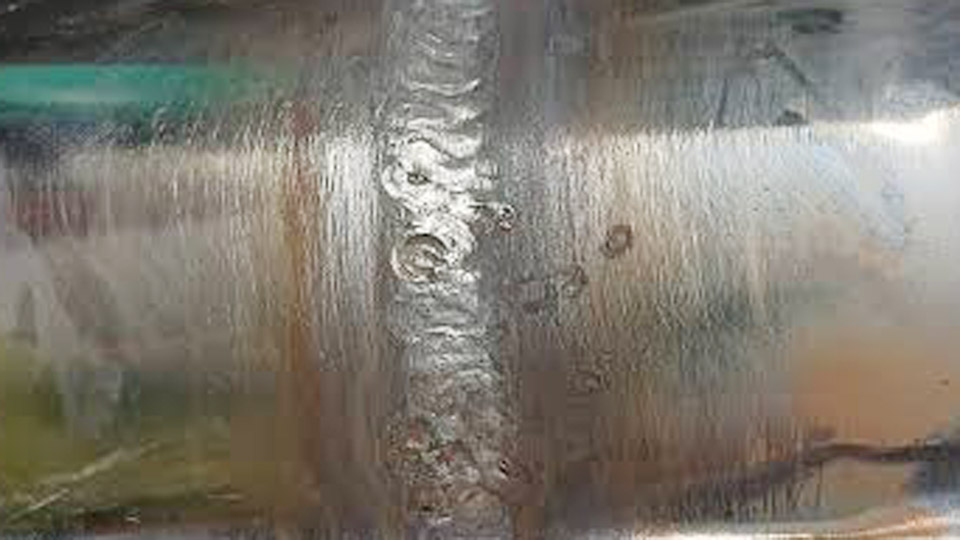
Image by fb/I See You Don’t Know Shit About Welding
What Happens to the Tungsten Electrode When Gas Flow Stops
Immediate Oxidation and Surface Failure
Tungsten reaches 2500–3400 °C under arc current. At those temperatures atmospheric oxygen dissociates and reacts to form tungsten oxides (primarily WO₃). Visible blackening of the tip begins in 1–2 seconds.
The oxide layer disrupts electron emission, causing the arc to wander, stutter, or extinguish. Once contaminated, the electrode must be ground back past the oxidized zone or replaced entirely.
Arc Instability and Torch Overheating
Shielding gas also carries heat away from the collet and nozzle. Without flow the torch body temperature rises rapidly, softening O-rings and potentially melting the collet body.
The absence of laminar gas flow further destabilizes the plasma column, producing a sputtering, noisy arc that cannot maintain consistent length or focus.
Weld Pool Contamination and Mechanical Consequences
Porosity, Oxides, and Nitrogen Absorption
Molten steel, stainless, or aluminum exposed to air forms oxides and traps nitrogen and oxygen as gas pockets. The resulting porosity reduces load-bearing cross-section and creates stress risers.
On stainless the chromium reacts preferentially, leaving the surface susceptible to corrosion. Aluminum oxidizes so rapidly that a continuous oxide skin prevents fusion altogether.
Measurable Strength Loss
Laboratory and field tests show tensile strength reductions exceeding 50 % in gasless TIG deposits compared with properly shielded welds of the same filler and base metal. The welds also exhibit low ductility and poor impact toughness, rendering them unsuitable for any structural or pressure-containing service.
Why Specialized Flux Approaches Still Fail as True Gasless TIG
Flux-Coated Filler Rods for Open-Root Pipe
Certain commercial flux-coated TIG rods (for example nickel-alloy or stainless grades) are designed for open-root pipe joints. The flux generates a protective slag on the backside, eliminating the need for internal purge gas.
The face of the weld, however, still requires external argon flow through the torch to protect the tungsten and the visible weld pool. These rods are not a substitute for shielding gas.
Attempts to Feed Flux-Cored Wire Through a TIG Torch
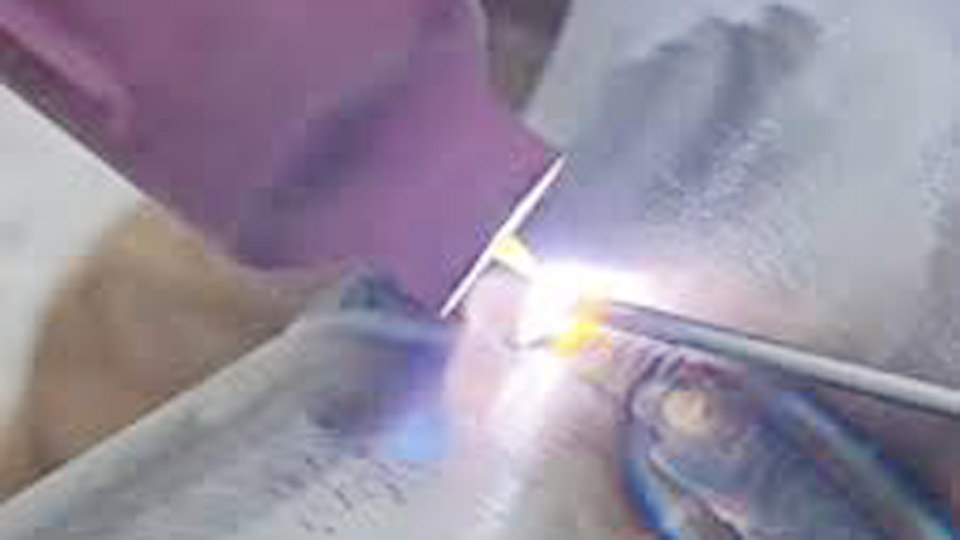
Feeding self-shielded flux-cored wire by hand while running a TIG torch without gas still leaves the tungsten unprotected. Demonstrations consistently show the electrode tip disintegrating within the first few seconds because the flux only shields the pool after it melts; it never envelopes the non-consumable electrode.
Practical Alternatives When Shielding Gas Is Unavailable
Stick Welding (SMAW) for Structural Work
Flux-coated electrodes generate their own shielding atmosphere and slag cover. Amperage ranges for common 1/8-inch electrodes fall between 90–160 A depending on position and thickness. The process tolerates wind, dirty surfaces, and outdoor conditions far better than any attempted gasless TIG method.
Self-Shielded Flux-Cored Arc Welding
Self-shielded flux-cored wire (FCAW-S) feeds continuously and requires no external gas cylinder. Typical polarity is DC electrode negative. Deposition rates exceed stick welding, and the process performs reliably in moderate wind.
Spatter and slag cleanup remain higher than gas-shielded MIG or TIG, but weld integrity is far superior to any gasless TIG experiment.
Multi-Process Machine Strategy
Many modern inverter machines switch between TIG and stick or flux-cored modes with a polarity change and torch swap. Keeping a small selection of stick electrodes or flux-cored spools on hand allows work to continue when the argon supply is interrupted.
Gas Requirements That Make Standard TIG Function Correctly
Argon Flow Rates and Cup Selection
Typical indoor argon flow for a #5 to #8 cup runs 10–20 CFH (approximately 5–10 L/min). Larger cups, longer stick-out, or outdoor drafts require higher flows, sometimes reaching 25–35 CFH. The lowest flow that maintains a clean tungsten and oxide-free bead is preferred; excessive flow creates turbulence that pulls air into the shield.
Pre-Flow and Post-Flow Timing
Pre-flow of 0.5–1 second purges air from the torch before the arc starts. Post-flow of 5–15 seconds (roughly amps divided by 10, or twice the electrode diameter in millimeters) protects the still-hot tungsten after the arc extinguishes. Inadequate post-flow produces the same black oxidation seen when gas is omitted entirely.
Decision Criteria for Choosing the Correct Process
When the work demands clean, low-spatter, high-precision joints on thin or critical material, TIG with argon remains the only viable choice. When the argon cylinder is empty or the job is outdoors in wind, switching to stick or self-shielded flux-cored welding preserves joint integrity without risking electrode destruction or weak deposits.
Attempting to force a TIG torch to run without gas never produces a code-quality or even a serviceable weld; it only consumes tungsten and produces scrap.
The advanced insight is that shielding gas is not merely a consumable—it is an integral part of the heat and plasma management system. Once that system is removed, the process ceases to be GTAW and becomes an uncontrolled arc that damages both the electrode and the workpiece.
Recognizing the boundary between processes early keeps projects on schedule and components within mechanical property requirements.
FAQs
Can you TIG weld aluminum without gas?
No. Aluminum forms a refractory oxide layer almost instantly when molten metal contacts air. Without argon the oxide prevents fusion and the tungsten is destroyed within seconds.
What happens if you try TIG welding steel without argon?
The tungsten blackens and erodes, the arc becomes unstable, and the weld develops deep porosity and oxides that cut tensile strength by more than half. The torch itself can overheat and damage internal components.
Is there any flux that allows true gasless TIG?
No commercial flux fully replaces external shielding gas for the tungsten electrode. Flux-coated rods only protect the backside of open-root pipe joints while argon is still required on the face.
Which process should I use if I have no shielding gas available?
Switch to stick welding with flux-coated electrodes or self-shielded flux-cored wire. Both generate their own shielding and produce structurally sound welds without an external gas cylinder.