An unstable or wandering arc on aluminum often traces directly back to the tungsten tip. Incorrect grinding direction, the wrong electrode alloy, or an oversized ball turns a clean AC cleaning action into arc flicker, tungsten inclusions, and inconsistent oxide removal.
Knowing how to grind tungsten for TIG welding aluminum fixes the root cause before the first bead starts. The tip geometry controls arc focus, heat distribution during the electrode-positive half-cycle, and resistance to melting or contamination.
Modern inverter machines change the old rules, so the grind and final shape must match both the electrode type and the power source. Proper preparation delivers a stable, controllable arc that cleans oxide effectively without excessive electrode erosion or puddle contamination.
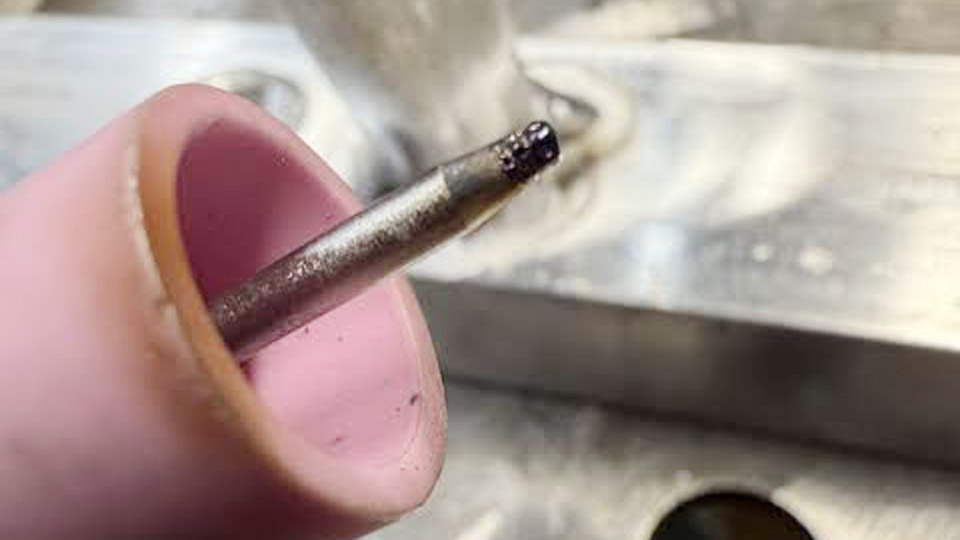
Image by r/Welding
Which Tungsten Electrode Type Works Best for Aluminum AC TIG
Electrode composition decides how the tip behaves under AC heat and whether a controlled ball or a truncated point stays stable.
Pure and Zirconiated Electrodes on Conventional Machines
Pure tungsten (green) forms a clean hemispherical ball readily on older transformer-style AC machines. Zirconiated (white or brown) holds that rounded end better and resists contamination at higher amperage.
Both suit traditional sine-wave or basic square-wave sources where a fully balled tip spreads the arc for even cleaning. Pure tungsten has lower current capacity and contaminates more easily if the arc is interrupted. Zirconiated carries higher amperage before the tip deforms.
Lanthanated and Ceriated Electrodes on Modern Inverters
2% lanthanated (blue or gold) has become the default for most inverter AC TIG machines. It retains a prepared point or small truncated land longer, forms only a modest ball under normal balance settings, and supports higher amperage without excessive melting.
Ceriated (orange or gray) performs similarly at lower currents and gives easy arc starts. These alloys reduce the need for a large deliberate ball and give tighter arc control on thin material or precision joints.
Multi-mix electrodes such as lanthanated-zirconiated blends combine the benefits for shops that switch frequently between aluminum and steel.
Diameter Selection by Amperage Load
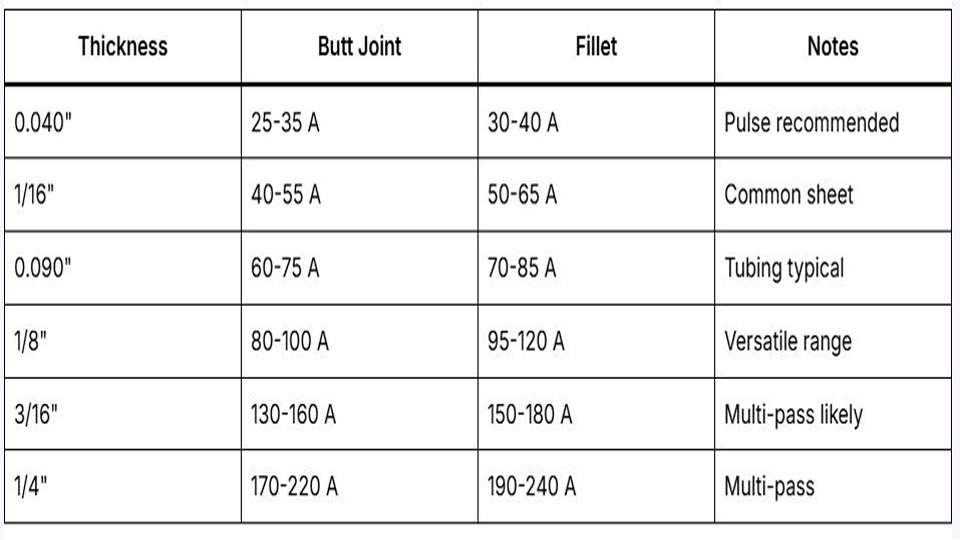
Match diameter to expected current so the tip does not overheat or produce an oversized ball. Use 1/16 in for work under roughly 100–120 A, 3/32 in for the common 100–200 A range, and 1/8 in or larger above 200 A. Undersized electrodes melt back rapidly; oversized electrodes produce a broader, less controllable arc at low amperage.
Correct Grinding Direction and Surface Finish
Grinding marks determine whether the arc stays centered or wanders.
Longitudinal Grind Only
Hold the electrode so its long axis runs perpendicular to the grinding wheel face and the abrasive strokes travel lengthwise along the electrode. Circumferential or “pencil-sharpener” grinding creates helical ridges.
Those ridges cause the arc to spiral or jump, increasing the chance of tungsten inclusions. Longitudinal marks keep electron emission consistent and the arc column straight.
Wheel Choice and Surface Quality
Use a dedicated fine-grit silicon-carbide or diamond wheel reserved only for tungsten. Coarse or contaminated wheels leave deep scratches and transfer foreign particles that later appear as black spots or arc instability.
A smooth, bright finish after grinding reduces starting resistance and helps the ball form symmetrically if one is required. Dedicated tungsten grinders with fixed collets and diamond wheels eliminate most operator variables and produce repeatable angles.
Tip Geometry Decisions for Aluminum
The final shape must balance cleaning action against arc focus and electrode life.
Traditional Balled Tip Requirements
On pure or zirconiated electrodes used with conventional AC machines, a rounded tip is preferred. The ball diameter should stay at or below 1.5 times the electrode diameter. Larger balls become unstable, can drip into the puddle, or cause the arc to wander. A properly sized ball distributes the electrode-positive cleaning force evenly across the oxide layer.
Truncated or Pointed Tips on Inverter Machines
Modern square-wave and advanced AC waveforms allow a sharp or slightly truncated point on lanthanated or ceriated electrodes. The point concentrates the arc for better control on thin sheet or tight joints. A small flat land (approximately 0.010–0.020 in) at the tip improves arc starting and slows tip erosion.
Under typical balance settings the tip usually forms a small, stable radius rather than a large ball. If the ball grows too large, increase electrode-negative percentage or switch to a larger-diameter electrode.
Taper Angle and Length Guidelines
Grind a taper whose length is roughly two to three times the electrode diameter. Common included angles fall between 20° and 45°. Steeper (sharper) angles produce a narrower, more focused arc useful on thin material. Blunter angles tolerate higher amperage and resist melting longer.
Leave a tiny flat on the very end before balling; the flat promotes a centered, symmetrical ball rather than an irregular mushroom.
Controlled Methods to Form the Ball
When a ball is required, the formation process itself must stay controlled.
Pre-Grind Then Let AC Shape the Tip
Grind the longitudinal taper and small land first. Insert the electrode with normal stick-out, set normal aluminum parameters (or slightly higher electrode-positive time), and strike an arc on clean scrap aluminum or copper.
The AC waveform melts the tip into a small ball within a few seconds. This method produces a ball sized to the actual welding current and avoids overheating.
Temporary Polarity or Balance Adjustment
One controlled technique is to switch temporarily to DC electrode positive (or maximum electrode-positive balance on AC) at low amperage while the tip is held above clean copper or aluminum.
Apply current gradually until a small dome forms, then return the machine to normal AC settings. Excessive current or prolonged exposure creates an oversized or lopsided ball that must be re-ground.
Ball Size Limits and Inspection
Inspect the finished tip under good light. The ball must be centered, smooth, and no larger than 1.5 electrode diameters. Black spots, spikes, or an irregular shape indicate contamination or overheating; re-grind and re-form. After balling, allow post-flow argon to cool the tip fully before the next start.
Matching Grind and Tip to Machine Type and Material Thickness
Machine capability and joint thickness dictate the final preparation.
Transformer Versus Inverter Behavior
Older transformer machines with limited balance control favor pure or zirconiated electrodes that form a full ball. Inverter machines with adjustable frequency, balance, and advanced waveforms favor lanthanated electrodes prepared with a taper and small land. Higher AC frequency on inverters further tightens the arc, reducing the need for a large ball.
Thin Sheet Versus Heavy Plate
On thin aluminum (under 1/8 in) a sharper taper and minimal ball keep heat focused and reduce burn-through risk. On thicker sections the blunter preparation or modestly larger ball improves oxide cleaning across a wider area and tolerates the higher current. Always verify that the chosen diameter can carry the required amperage without rapid tip melting.
Stick-Out and Gas Coverage Interaction
Excessive electrode stick-out increases tip temperature and accelerates ball growth or erosion. Keep stick-out short (typically 1/8–1/4 in beyond the cup for most aluminum work) and maintain adequate argon flow and post-flow so the hot tip remains protected while cooling. Poor gas coverage after the arc extinguishes oxidizes the tip and forces more frequent re-grinding.
When and How to Re-Grind Contaminated Tips
Contamination appears as black deposits, irregular melting, or arc instability. Grind away the affected zone completely, restoring a clean longitudinal taper and the intended tip geometry. Never attempt to weld with a contaminated tip; inclusions or porosity follow quickly.
Re-ball or re-form the tip after grinding if the application requires it. Dedicated grinders speed the process and keep angles consistent across multiple electrodes.
Wraapping Up
The correct grind and tip shape for aluminum TIG is decided by electrode alloy, power-source waveform, and joint thickness rather than a single universal rule. Longitudinal grinding, a controlled taper, and a ball no larger than 1.5 electrode diameters (when required) produce a stable cleaning arc and minimize tungsten transfer into the weld.
On modern inverters, a well-prepared lanthanated electrode with a small truncated land often outperforms a traditional large ball in both control and electrode life.
Advanced operators further refine results by matching AC frequency and balance to the prepared tip geometry so the arc remains focused while still providing adequate oxide removal.
FAQs
How do you grind tungsten for aluminum TIG welding?
Grind longitudinally with a dedicated fine wheel to a taper roughly two to three times the electrode diameter, leaving a small flat land. For traditional machines form a controlled ball no larger than 1.5 times the diameter; on modern inverters a pointed or truncated tip on lanthanated tungsten is usually preferred.
Should tungsten be pointed or balled for TIG aluminum?
Traditional pure or zirconiated electrodes on older AC machines use a balled tip. Modern inverter machines perform better with a pointed or slightly truncated tip on 2% lanthanated tungsten that forms only a small natural radius.
What is the best tungsten for TIG welding aluminum?
2% lanthanated is the most versatile choice for modern AC inverter machines. Zirconiated remains strong for higher-amperage work or conventional transformer machines that favor a stable ball.
What angle should you grind tungsten for aluminum?
Common taper angles range from 20° to 45° included. Sharper angles suit thin material and focused arcs; blunter angles handle higher amperage with less tip erosion. Always grind lengthwise.