Many welders assume the clean, slag-free TIG arc is safer than stick or MIG because visible fume is minimal. That assumption creates real problems: unprotected eyes and skin receive intense ultraviolet radiation, confined-space argon builds to oxygen-deficient levels, and stainless work generates hexavalent chromium without the obvious smoke cloud that warns operators.
Is TIG welding dangerous? The answer depends on exposure duration, materials, ventilation, and controls rather than the process itself. Uncontrolled TIG work produces higher UV intensity than shielded-metal-arc welding, measurable ozone, and documented carcinogen exposure that accumulate over years.
Correct decisions on helmet shade, local exhaust, electrode type, and workspace atmosphere reduce those risks to manageable levels for both hobbyists and production welders.
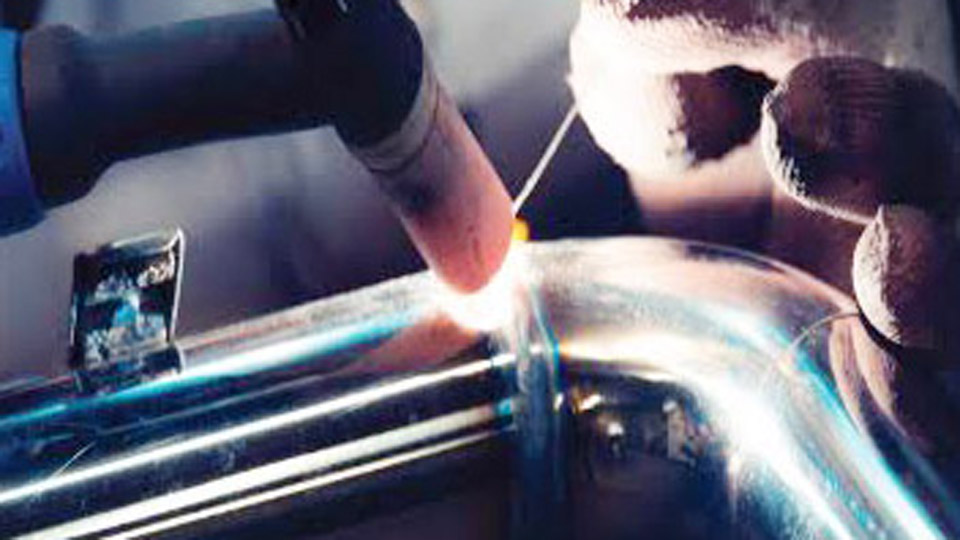
Photo by resizeweld
How Intense Is the UV Radiation From a TIG Arc Compared With Other Processes?
TIG arcs emit ultraviolet radiation across UVA, UVB, and UVC bands because the inert shielding gas (argon or helium) is optically transparent. Stick welding flux generates a partially opaque plasma that attenuates some UV; TIG does not.
Measured UV Output and Exposure Times
Field measurements on aluminum TIG show effective actinic UV irradiance at the eye position ranging from roughly 8 to 38 W/m² depending on current and material. At the upper end, maximum permissible exposure times drop to a few seconds.
Blue-light irradiance can reach 35–67 W/m², again limiting safe unprotected viewing to under a minute. Aluminum and argon produce higher UV than mild steel or helium mixes. Arc ignition with high-frequency start creates a brief but intense UV spike.
Immediate and Cumulative Effects on Eyes and Skin
Seconds of unprotected exposure cause photokeratitis (arc eye): delayed pain, tearing, and the sensation of sand in the eyes that peaks hours later. Repeated exposure raises the risk of cataracts and has been linked by IARC to ocular melanoma.
Skin receives equivalent “welder’s tan” or erythema; chronic exposure increases skin-cancer risk. Reflections from polished stainless or aluminum multiply exposure for the welder and nearby workers.
What Fumes and Gases Does TIG Actually Generate?
TIG produces lower total particulate fume than flux-cored or stick processes, yet the composition and secondary gases create distinct hazards.
Ozone and Nitrogen Oxides Formation
Ultraviolet photons dissociate oxygen and nitrogen in ambient air, forming ozone (O₃) and nitrogen dioxide (NO₂). Ozone generation is highest with aluminum and high-argon mixes. Concentrations sufficient to irritate the respiratory tract can occur several feet from the arc.
Acute symptoms include dry throat, chest tightness, and headache; higher exposures risk pulmonary edema. Because TIG fume is sparse, ozone persists longer than in processes that generate more particulate to catalyze its breakdown.
Metal Fumes From Base and Filler Metal
Mild-steel TIG mainly generates iron oxide. Stainless-steel TIG liberates chromium and nickel oxides, including hexavalent chromium (Cr(VI)), classified as a human carcinogen. OSHA’s permissible exposure limit for Cr(VI) is 5 µg/m³ as an 8-hour time-weighted average.
TIG typically produces lower Cr(VI) concentrations than stick or flux-cored welding on the same alloy, yet measured breathing-zone levels still require control when stainless is welded for extended periods. Aluminum TIG increases aluminum oxide and ozone simultaneously.
Thoriated Tungsten and Grinding Dust
Traditional 2 % thoriated electrodes contain radioactive thorium. Grinding them releases fine radioactive dust that becomes an internal exposure hazard if inhaled. Modern lanthanated, ceriated, or rare-earth electrodes eliminate this risk while providing comparable arc performance.
When Does Argon Create an Asphyxiation Hazard in TIG Work?
Argon is denser than air and odorless. In open shops the continuous flow (typically 10–20 cfh) dilutes harmlessly. In confined or semi-confined spaces the same flow displaces oxygen rapidly.
Confined-Space Displacement Rates
A 4-ft-diameter by 8-ft-high cylinder purged or shielded at 40 cfh can reach oxygen-deficient conditions at breathing height in roughly 1.5 hours under worst-case no-mixing assumptions.
Real leaks around purge dams or continuous torch flow inside tanks, pipe, or vessels accelerate the process. Oxygen levels below 19.5 % produce progressive impairment; levels near 12–14 % can cause rapid unconsciousness without warning.
Required Controls for Enclosed Fabrications
Continuous oxygen monitoring, forced ventilation sized to keep oxygen above 19.5 %, and a standby attendant with retrieval capability are mandatory when TIG is performed inside or on sealed fabrications. Never use oxygen to “sweeten” an atmosphere; enrichment creates extreme fire risk.
How Do Electrical and Thermal Hazards Differ in TIG Versus Other Processes?
Open-circuit voltage on many TIG machines is lower than on stick welders (often 10–40 V versus 50–80 V), reducing secondary-shock severity under dry conditions. High-frequency or lift-arc starts introduce different risks.
High-Frequency Start and Grounding Issues
High-frequency energy can interfere with nearby electronics and, under wet or damaged insulation conditions, increase the chance of secondary contact. Dry gloves, insulated mats, and intact torch leads remain essential. Foot-pedal controls must stay under positive operator control and protected from moisture.
Hot Metal and Tungsten Handling
Tungsten electrodes and the weld zone remain hot enough to cause deep burns long after the arc extinguishes. Post-weld handling without pliers or heat-resistant gloves is a frequent source of injury.
Spatter is minimal compared with MIG or stick, yet the concentrated heat still ignites nearby combustibles if clearance and fire watch are inadequate.
Which Control Measures Actually Reduce TIG Risk to Acceptable Levels?
Risk reduction follows the hierarchy: elimination or substitution first, then engineering, administrative, and PPE.
Local Exhaust Ventilation and Respiratory Protection
Position a fume-extraction nozzle 6–12 inches from the arc so capture velocity removes ozone, metal fume, and any Cr(VI) before they reach the breathing zone.
For stainless or prolonged aluminum work, a P100 or supplied-air respirator supplements LEV when monitoring shows residual exposure. General shop ventilation alone rarely keeps ozone or fine fume below recommended limits during continuous TIG.
Eye, Face, and Skin Protection Specifications
Auto-darkening helmets rated for the current range (shade 8–10 for currents under 50 A, 10–12 for 50–150 A, 12–14 for higher) with UV/IR filtration must be worn before striking the arc. Side shields or secondary safety glasses protect against reflections and delayed arc-eye from nearby work.
Dark, long-sleeved, buttoned clothing minimizes UV reflection inside the helmet and prevents skin burns. Leather or FR-rated gloves and apron complete the barrier against heat and UV.
Electrode and Process Substitutions
Replace thoriated tungsten with lanthanated or ceriated grades. On stainless, select filler metals and parameters that minimize fume generation while meeting code requirements. In confined spaces, evaluate whether a different process or external welding with subsequent assembly reduces the asphyxiation exposure.
Wrapping Up
Decision criteria are quantitative: measure oxygen if argon is used in any enclosed volume; verify shade number against amperage and material; confirm LEV capture velocity or respirator fit factor before starting stainless or aluminum production runs.
When those controls are verified and maintained, residual risk falls within levels accepted for professional fabrication.
When they are omitted, the same process produces acute arc eye within seconds and cumulative carcinogen exposure over years.
Advanced operators treat ozone generation and UV reflection geometry as process variables equal in importance to amperage and travel speed, adjusting torch angle, gas flow, and extraction position in real time to keep both weld quality and exposure within specification.
FAQs
Is TIG welding safer than MIG or stick welding?
TIG produces less total particulate fume than MIG or stick but higher UV intensity and more ozone. Net risk depends on material, ventilation, and PPE rather than process ranking.
What shade lens is required for TIG welding?
Use shade 8–10 below 50 A, 10–12 for 50–150 A, and 12–14 above 150 A. Auto-darkening filters must meet the same UV/IR attenuation standards.
Can argon from TIG welding cause suffocation?
Yes. In confined spaces argon displaces oxygen without odor or warning. Continuous oxygen monitoring and forced ventilation are required.
Does TIG welding on stainless steel produce hexavalent chromium?
Yes. Chromium in stainless converts to Cr(VI) during welding. Local exhaust or respiratory protection is needed to stay below the 5 µg/m³ OSHA PEL.