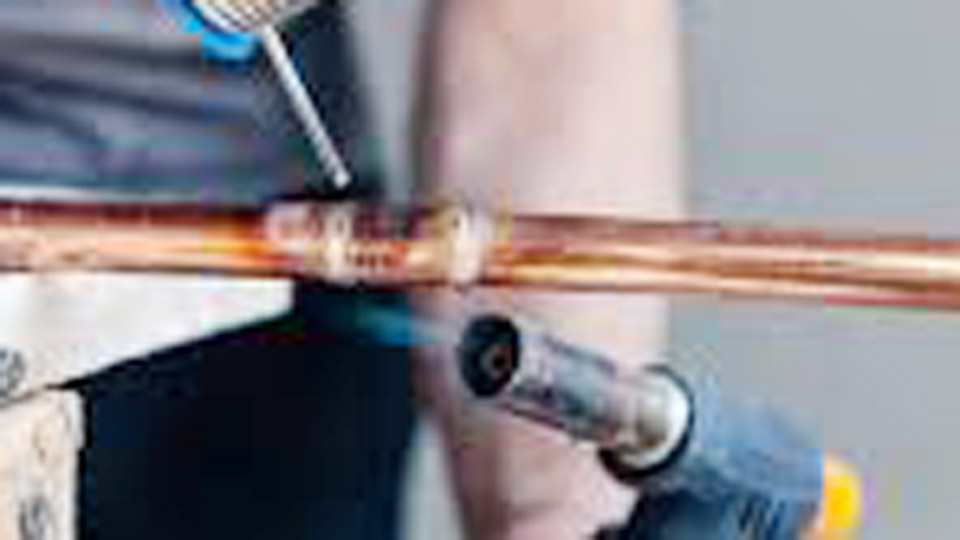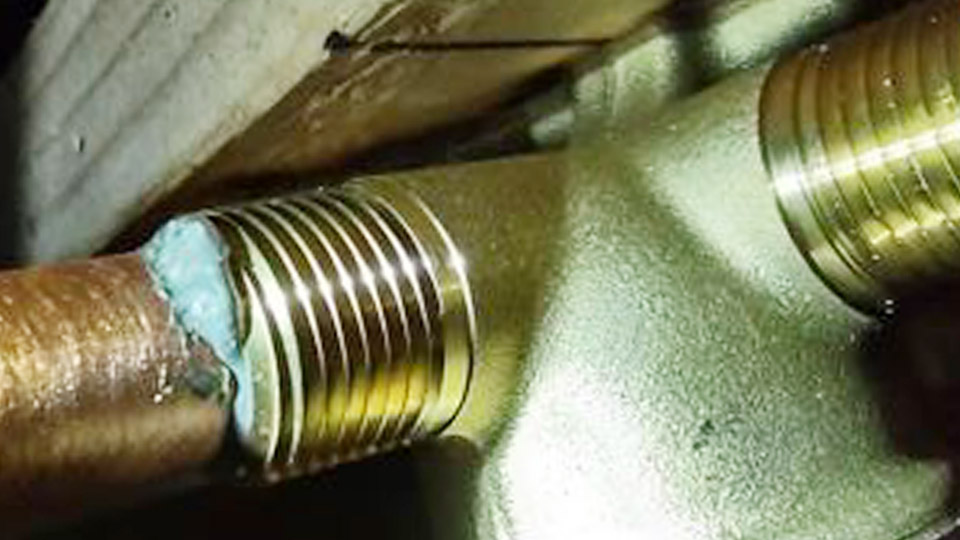
A copper joint that weeps under pressure or fails inspection often traces back to the wrong solder alloy. Choosing the correct type of solder for copper pipe determines whether the joint meets code, resists thermal cycling, and remains safe for potable water.
Lead-bearing solders are banned for drinking-water systems under the Safe Drinking Water Act, and mismatched alloys produce incomplete capillary fill, brittle interfaces, or reduced pressure ratings.
The decision centers on alloy composition, melting range, joint clearance, and service conditions rather than brand preference. Selecting a lead-free solder certified to ASTM B32 and NSF/ANSI 61 ensures both mechanical integrity and regulatory compliance for residential and commercial copper tubing.
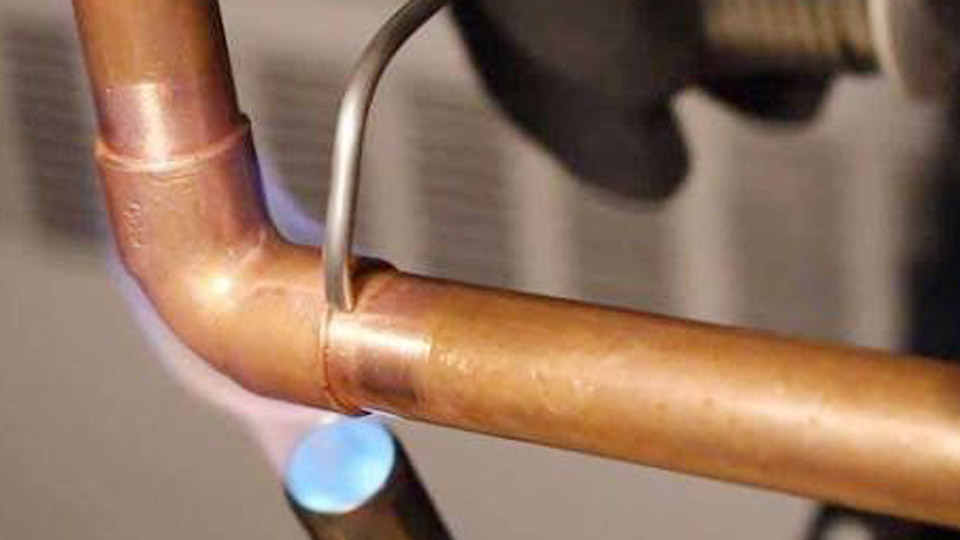
Photo by superiorplumbingjax
Lead-Free Requirements for Potable Copper Pipe Systems
Federal law restricts solder and flux used on potable water lines to a maximum of 0.2 percent lead by weight. Alloys exceeding that limit are prohibited in public water systems and in any facility supplying water for human consumption.
Local plumbing codes typically incorporate the same limit and often require NSF/ANSI 61 certification for health effects and NSF/ANSI 372 for lead content.
Alloys Approved Under ASTM B32 Section 1
Solder compositions listed in Section 1 of ASTM B32 Table 1 are accepted for copper tube and fittings in potable systems. The most widely stocked grades are Sb5 (95 percent tin / 5 percent antimony), tin-copper alloys near 97/3, and various tin-silver or tin-copper-silver-bismuth formulations.
These alloys produce joints rated for the working pressures published in the Copper Tube Handbook when proper joint clearance and flux are used.
Consequences of Using Non-Compliant Solder
Leaded 50/50 or 60/40 solder can leach lead into soft or acidic water, creating a long-term health exposure. Even if the joint holds pressure initially, an inspector can require removal of the entire run.
Electrical solders, whether leaded or lead-free, contain fluxes unsuitable for water service and lack the mechanical properties needed for pressurized tubing.
Comparison of Common Lead-Free Solders for Copper Pipe
Melting range, flow behavior, and joint strength differ enough among the main alloys that the choice affects both installation technique and long-term performance.
95/5 Tin-Antimony (Sb5)
Composition is 95 percent tin and 5 percent antimony. Solidus-to-liquidus range is narrow—approximately 450 °F to 464 °F. The tight window produces rapid capillary action in close-fitting joints and good resistance to vibration and thermal cycling. Tensile strength typically falls near 5,900–6,200 psi.
Many manufacturers caution against use on certain brass alloys because antimony can form brittle intermetallics with zinc. It remains a primary choice for standard copper-to-copper water lines and refrigeration tubing where vibration is present.
97/3 Tin-Copper
Composition is roughly 97 percent tin and 3 percent copper. Melting range is wider—about 440 °F to 572 °F—creating a longer pasty stage that helps fill modest gaps or slightly imperfect fits. Flow is smoother than 95/5 for many operators, and the alloy is widely used for everyday sweating of copper and brass fittings.
Joint strength is adequate for residential pressures but generally lower than higher-silver formulations under extreme thermal stress.
Silver-Bearing and Multi-Element Alloys
Formulations such as tin-copper-bismuth-silver (e.g., Safe-Flo type) begin melting near 420 °F and finish around 460 °F. Tin-silver alloys near 96/4 melt from approximately 430 °F to 475 °F. The lower solidus reduces the risk of burning flux and improves wetting on heat-sensitive components.
Higher silver content increases tensile and shear strength and improves fatigue resistance. These alloys cost more but deliver superior flow and appearance on both copper and many brass valves.
| Alloy Type | Approx. Composition | Melting Range (°F) | Relative Strength | Best Fit Characteristics |
|---|---|---|---|---|
| 95/5 Tin-Antimony | 95 Sn / 5 Sb | 450–464 | High | Tight clearances, vibration, thermal cycle |
| 97/3 Tin-Copper | 97 Sn / 3 Cu | 440–572 | Moderate | Gap filling, general residential work |
| Silver-bearing (e.g., Sn-Cu-Bi-Ag) | Variable + Ag/Bi | 420–460 | High | Easy flow, lower heat input |
| 96/4 Tin-Silver | 96 Sn / 4 Ag | 430–475 | Very high | High strength, fatigue resistance |
Matching Solder to Service Conditions and Joint Geometry
Service temperature, pressure, and joint design dictate which alloy performs reliably.
Potable Cold and Hot Water Lines
For standard residential supply lines operating below 250 °F, any of the ASTM B32 Section 1 lead-free alloys is acceptable when used with ASTM B813 flux. 95/5 or a silver-bearing alloy is preferred where water hammer or frequent temperature swings occur. 97/3 is often chosen for its working range when fittings are not perfectly concentric.
Higher-Temperature or Higher-Pressure Applications
Continuous service above 250 °F or elevated pressure favors either 95/5 or a higher-silver alloy. When temperatures exceed the soft-solder range or when maximum joint strength is required, codes and manufacturer data shift the recommendation to brazing filler metals rather than soft solder.
Refrigeration and HVAC Copper Tubing
Many refrigeration circuits still accept 95/5 or silver-bearing soft solder for low-pressure lines, but high-pressure refrigerant circuits are typically brazed.
Soft-solder joints lack the strength and vibration resistance demanded by modern high-pressure systems. Confirm the equipment manufacturer’s joining specification before selecting soft solder.
Flux Compatibility and Joint Preparation Requirements
Solder selection is incomplete without matching flux and surface condition.
ASTM B813 Flux Requirements
Flux must meet ASTM B813 for soldering copper and copper-alloy tube. Water-soluble fluxes are preferred for potable systems because residual flux is easier to flush and less likely to leave taste or odor. Tinning fluxes that contain powdered solder improve coverage on larger diameters or for less-experienced operators.
Aggressive acid fluxes intended for other metals must be avoided; they can corrode copper or leave residues that contaminate the water system.
Surface Cleanliness and Clearance
Both the tube exterior and fitting interior must be cleaned to bright metal. Joint clearance should remain within the capillary range—typically 0.002–0.005 inch for most soft solders.
Excessive clearance reduces capillary force and produces incomplete fill regardless of alloy. Overheating burns flux and oxidizes the surface, preventing proper wetting even with the correct solder.
Pressure Ratings and Mechanical Performance Differences
Published pressure ratings in the Copper Tube Handbook show that 95/5 and certain lead-free alloys support higher allowable working pressures than traditional 50/50 tin-lead solder at equivalent temperatures. At elevated temperatures the advantage becomes more pronounced.
Silver-bearing alloys generally provide the highest tensile and shear values among soft solders, which translates into better resistance to mechanical shock and cyclic loading. These differences matter most on larger-diameter lines, long vertical runs, or systems subject to water hammer.
Decision Criteria for Selecting the Final Alloy
Start with the regulatory requirement: lead-free, NSF-certified solder for any potable line. Next evaluate joint fit-up. Tight, uniform clearances favor the narrow-range 95/5 alloy. Slightly looser fits or the need for easier flow favor 97/3 or a silver-bearing formulation. When vibration, thermal cycling, or maximum strength is expected, move to a silver-containing alloy.
For non-potable drainage or certain HVAC applications where local code still permits it, older leaded alloys may appear, but lead-free remains the safer default. Always verify the specific product label for ASTM B32 grade, NSF listing, and any manufacturer restrictions on brass or other alloys.
The correct solder for copper pipe is the lead-free alloy whose melting range and strength match the joint geometry and service conditions while satisfying potable-water regulations. 95/5 remains the workhorse for tight copper-to-copper joints under cyclic loads; silver-bearing alloys improve flow and fatigue resistance when heat control or maximum strength is critical.
Once the alloy is chosen, pair it with an ASTM B813 flux and maintain proper clearance—those three factors determine whether the joint will pass pressure testing and remain leak-free for the life of the system. Advanced practice further refines heat input by preheating the fitting rather than the tube, ensuring the solder is drawn into the joint by capillary action instead of being melted on the surface.