Direct fusion welding of copper pipe to aluminum pipe almost always fails. Aluminum melts near 660 °C while copper requires roughly 1085 °C, so the aluminum collapses long before the copper reaches joining temperature.
Even when a temporary bond forms, the large difference in electrochemical potential drives rapid galvanic corrosion that eats the aluminum.
How to join copper pipe and aluminum pipe therefore centers on controlled low-temperature brazing with specialized fillers or on mechanical transition systems that never melt either base metal.
Choosing the wrong approach produces leaks under pressure, brittle fractures, or progressive corrosion that appears months later in HVAC, refrigeration, and process piping.
Correct selection of filler, joint clearance, heat sequence, and post-joint protection determines whether the connection survives service pressures of 20–35 bar and the moisture common in these systems.
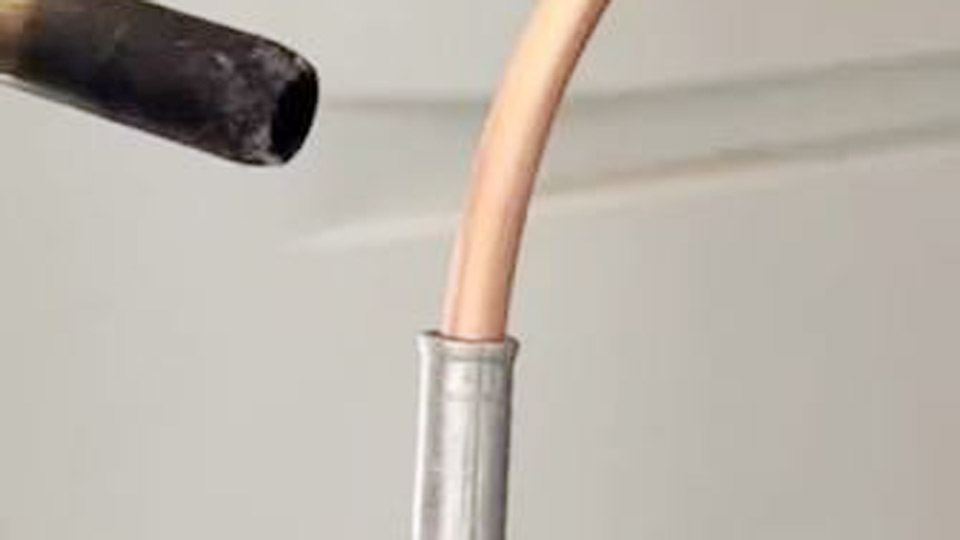
Image by fb/MR AC TECH
Why Standard Welding and Soft Soldering Cannot Work
Copper and aluminum form a classic dissimilar-metal pair that defeats ordinary joining processes.
Melting-Point and Thermal-Conductivity Conflicts
Aluminum’s solidus lies more than 400 °C below copper’s. Any heat source intense enough to wet copper instantly overheats the aluminum, causing burn-through or excessive alloying. Aluminum also conducts heat away faster in thin-wall tubing, so the temperature gradient across the joint becomes extreme.
Operators who attempt conventional oxy-acetylene or TIG welds typically end up with a hole in the aluminum and an unfused copper surface.
Brittle Intermetallic Layers
When molten aluminum contacts solid copper, CuAl₂ and other intermetallic compounds grow rapidly. These phases are hard and brittle; joints that look sound under low load crack under vibration or thermal cycling. Higher brazing temperatures accelerate the growth of the intermetallic layer, reducing shear strength.
Brazing Copper Pipe to Aluminum Pipe with Purpose-Designed Fillers
Specialized zinc-aluminum or aluminum-silicon alloys allow a true metallurgical bond without melting either base metal.
Zinc-Aluminum Versus Aluminum-Silicon Filler Selection
Zinc-rich alloys such as 98Zn/2Al (liquidus approximately 382–392 °C) produce the highest and most consistent shear strength in controlled tests and minimize copper dissolution.
Alloys containing higher aluminum (78Zn/22Al or Al-12Si) flow well but risk greater intermetallic formation and base-metal erosion if temperature is not tightly controlled.
Flux-cored versions of these alloys (commonly marketed for HVAC work) carry non-corrosive flux that activates in the same temperature window, eliminating separate flux application steps in many cases.
Soft solders based on tin-zinc can be used for low-pressure lines but lack the strength required for refrigerant service above roughly 20 bar.
Joint Clearance and Geometry Requirements
Optimum capillary clearance is 0.08–0.15 mm (0.003–0.006 in) per side. Zero clearance traps flux and creates voids; excessive clearance prevents capillary action and leaves incomplete fill.
For tube-to-tube joints the aluminum tube is usually expanded or the copper tube is inserted so that the aluminum remains on the outside; this orientation improves heat transfer during torch work and places the more corrosion-prone metal in a position that can be more easily coated later. Shear depth (overlap length) should equal at least three times the wall thickness of the thinner tube.
Torch Technique and Heat Sequence
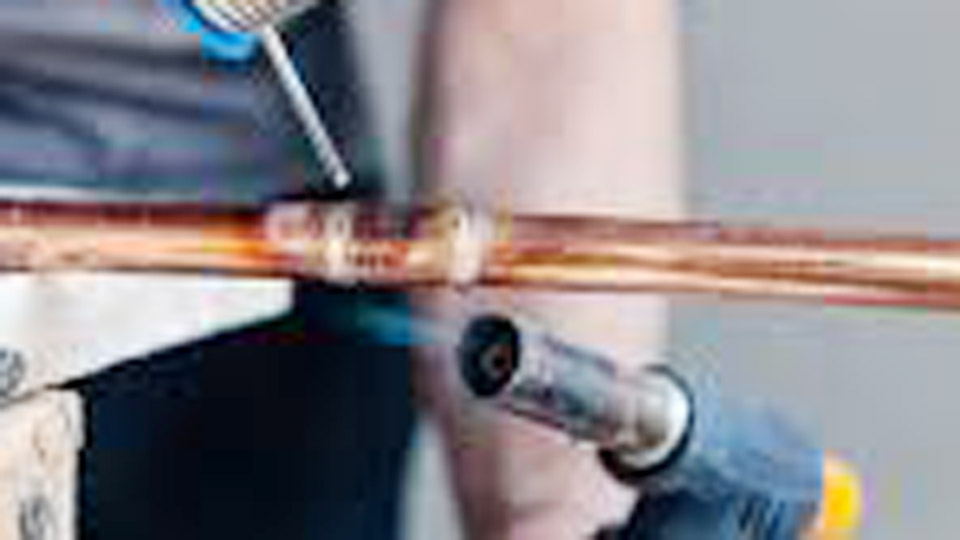
Clean both surfaces to bright metal with a stainless-steel brush dedicated to aluminum and a clean abrasive for copper. Any residual oxide prevents wetting. Position the joint and begin heating the copper side first; copper’s higher thermal mass and conductivity allow it to reach temperature without immediately overheating the aluminum.
Once the copper is hot, sweep the flame across the joint line until the flux becomes fluid and the filler alloy melts and is drawn into the gap by capillary action. Avoid dwelling on the aluminum. After the fillet forms, remove the heat and allow the joint to cool naturally. Quenching can induce cracking in the intermetallic zone.
Mechanical and Solderless Methods That Eliminate Heat
When open flame is prohibited or when long-term galvanic isolation is mandatory, mechanical systems become the preferred route.
Crimp and Lokring-Style Connections
Specialized compression rings (Lokring, Miracle single-ring, and similar pro-press systems) form a permanent metal-to-metal seal by cold deformation. The process requires only deburring of the pipe ends, application of a manufacturer-specified sealant, insertion of the tubes into the fitting, and actuation of a calibrated crimping tool.
Working pressures of 50–70 bar and temperature ranges from –50 °C to +150 °C are routinely claimed. Because no heat is applied, intermetallic formation and residual flux issues disappear. These fittings are widely used in refrigerator and air-conditioner field repairs where flammable refrigerants make hot work undesirable.
Transition Couplings and Dielectric Unions
Factory-made copper-to-aluminum transition pieces are often produced by friction welding or explosion bonding under controlled conditions, then supplied as short spool pieces that the installer simply brazes or presses to each pipe.
Dielectric unions incorporate a non-conductive polymer or ceramic barrier that breaks the electrical path between the two metals, stopping galvanic current even if moisture is present.
These unions are common in plumbing and low-pressure HVAC water lines but must be verified for refrigerant compatibility and pressure rating before use on sealed systems.
Managing Galvanic Corrosion After the Joint Is Made
Even a sound metallurgical or mechanical joint remains vulnerable once moisture appears.
Electrochemical Driving Force
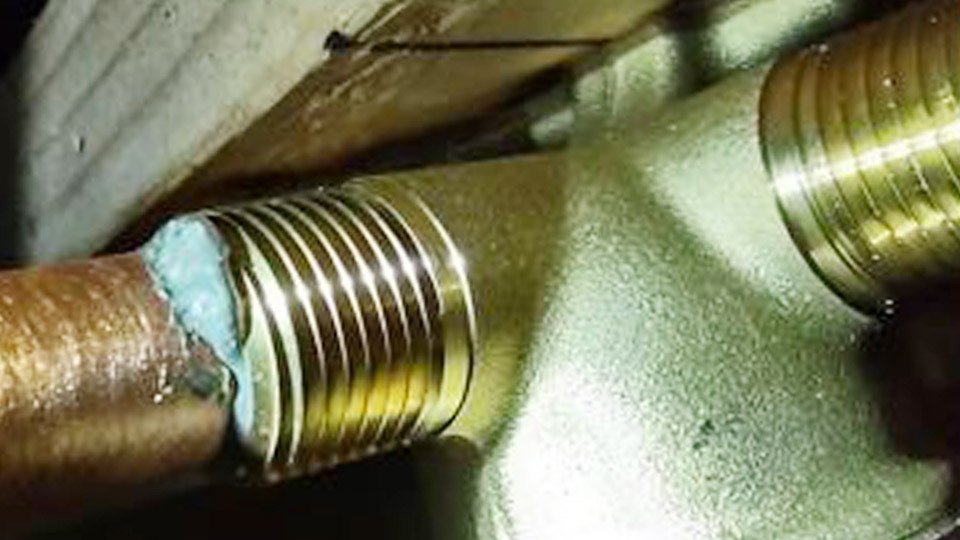
Aluminum sits anodic to copper in nearly every common electrolyte. Condensation, rain, or residual cleaning fluids complete the cell; the aluminum corrodes preferentially while the copper remains essentially untouched. The rate increases with larger potential difference, higher conductivity of the electrolyte, and greater surface-area ratio of cathode (copper) to anode (aluminum).
Practical Barrier Methods
After brazing, the joint interface must be isolated from the environment. Options with documented field success include zinc-rich coatings that act as sacrificial anodes, spray-on rubber sealants that form an airtight membrane, and dual-wall heat-shrink tubing that releases an adhesive liner when heated.
The barrier must cover the entire dissimilar-metal interface plus several millimeters of each adjacent tube. Mechanical fittings that already incorporate isolation sleeves require less additional protection but still benefit from exterior sealing in outdoor or high-humidity locations.
Decision Criteria for Selecting the Correct Method
Pressure, accessibility, code requirements, and long-term environment dictate the choice.
High-Pressure Refrigerant Lines
Brazing with a proven Zn-Al or flux-cored Al alloy plus post-joint sealing is the most common factory and field solution when pressures reach 20–35 bar. Mechanical crimp systems rated for the refrigerant and pressure provide an equally reliable alternative when hot work is restricted.
Field Repairs and Flammable Refrigerants
Crimp or Lokring fittings eliminate ignition sources and residual flux contamination. They also reduce the skill threshold compared with precise torch control of dissimilar metals.
Low-Pressure or Non-Refrigerant Service
Dielectric unions or simple compression fittings with isolation washers are often sufficient and lower in cost. Strength and leak-tightness requirements are less severe, so the extra expense of specialized braze alloys is rarely justified.
Wrapping Up
Successful copper-to-aluminum pipe joints result from matching the joining process to the service demands rather than forcing a single technique onto every application. When a metallurgical bond is required, zinc-rich fillers and copper-first heat sequences keep intermetallic growth under control; when isolation or flame-free work is required, calibrated mechanical systems remove the electrochemical and thermal variables entirely.
The advanced insight used by experienced HVAC technicians is to treat every copper-aluminum interface as a potential corrosion cell from the first day of service and to apply a verified environmental barrier before the system is charged or pressurized.
FAQs
Can you solder copper pipe directly to aluminum pipe?
Standard soft solder will not produce a reliable joint. Specialized zinc-aluminum or tin-zinc alloys with appropriate flux can create a low-strength bond suitable only for non-pressure or very low-pressure service.
What is the best way to connect aluminum to copper on an AC line?
For most field AC repairs a rated Lokring or pro-press style transition fitting is preferred because it avoids heat and provides galvanic isolation. Factory transition joints or controlled Zn-Al brazing are used when higher pressure ratings or permanent metallurgical bonds are specified.
Do copper-aluminum joints need extra corrosion protection?
Yes. After any direct metallurgical joint, apply a zinc-rich coating, rubber sealant, or adhesive-lined heat-shrink tubing that completely covers the dissimilar interface. Mechanical fittings with built-in isolation still benefit from exterior sealing in wet environments.
What joint clearance works best for brazing copper to aluminum tubing?
Maintain 0.08–0.15 mm (0.003–0.006 in) clearance per side. This range allows capillary flow while limiting flux entrapment and incomplete fill.