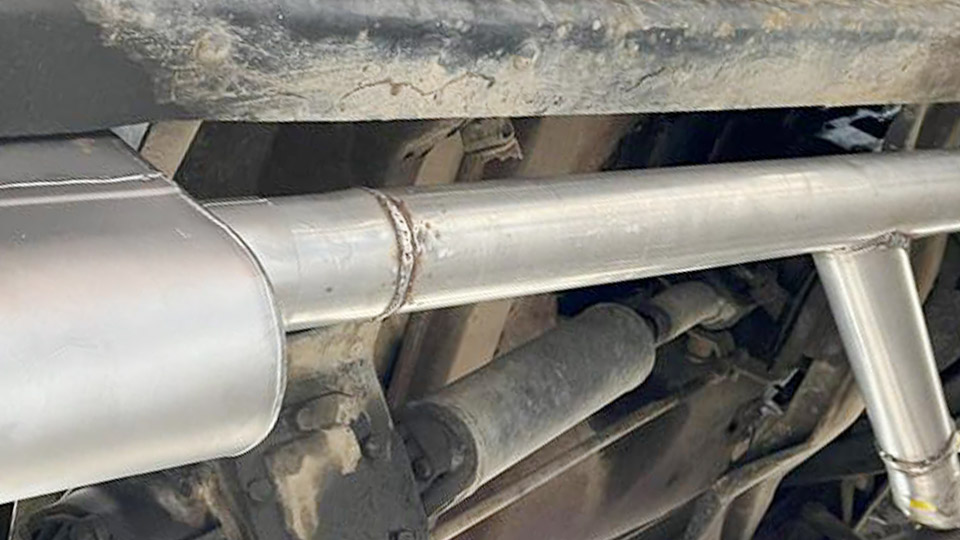
Welding on a vehicle introduces electrical risks that go far beyond the weld itself. Understanding what to disconnect when welding on a vehicle is essential for protecting sensitive electronics, preventing voltage spikes, and avoiding costly damage to control modules, sensors, batteries, and charging-system components.
Modern vehicles contain dozens of interconnected electronic systems that can be affected when welding current follows an unintended path through the chassis.
Failing to isolate the correct components can lead to diagnostic faults, module failure, or unexpected repair expenses that far exceed the welding job itself.
Proper disconnection procedures also help maintain a stable welding setup by controlling current flow and reducing the chance of electrical interference.
Whether you’re performing frame repairs, exhaust modifications, bodywork, or fabrication projects, knowing which systems to disconnect—and why—helps ensure both a safe welding operation and a reliable vehicle after the work is complete.
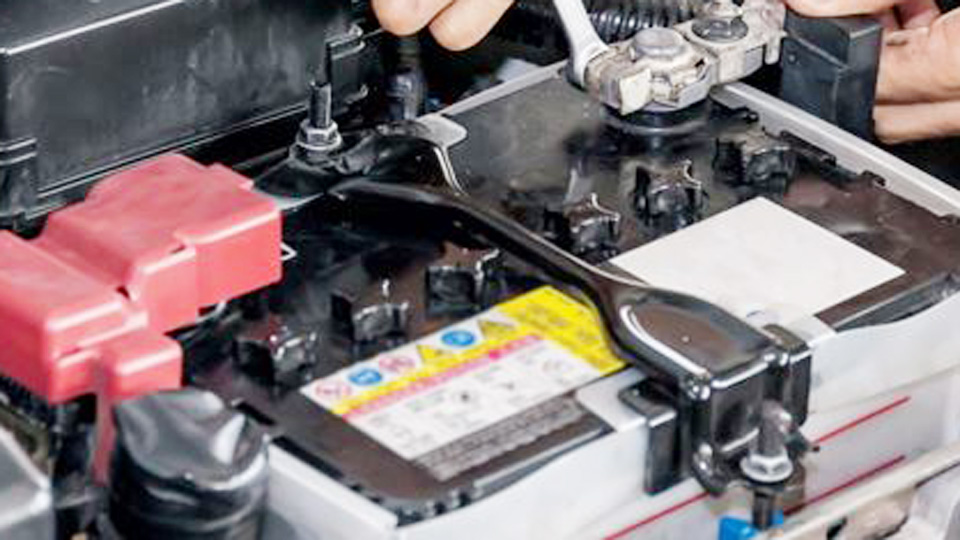
Image by parkers
Why Electrical Protection Matters During Vehicle Welding
Vehicle bodies serve as the primary ground plane. When striking an arc, welding current seeks the lowest-resistance path back to the welder.
Without isolation, this path can route through wiring harnesses, creating potential differences across components designed for 12–14V systems. Modern ECUs operate with low-voltage logic and microprocessors vulnerable to transients exceeding 16–20V or induced spikes.
OEMs frequently specify disconnect procedures in body repair manuals because even brief overvoltages can corrupt memory, fry drivers, or trigger fault codes. The goal is not just disconnection but controlling the current path so welding energy stays localized.
Battery Disconnection: Negative Terminal Best Practices
Always disconnect the negative battery terminal first. This breaks the primary return path through the battery, preventing the welder’s voltage drop across the chassis from adding to the battery voltage at electronic components.
With the negative terminal connected, the chassis acts as a resistor in a closed loop. Welding current flowing through the body creates a voltage gradient (per Ohm’s Law: V = IR). The ECU, referenced to battery negative, sees this elevated potential, risking overvoltage.
Disconnecting the negative terminal opens the loop; both sides of sensitive circuits float to similar potentials, minimizing differential voltage.
Procedure considerations:
- Use a memory saver if the vehicle requires constant power for radio presets or ECUs, but verify it doesn’t create a ground path.
- For dual-battery systems (common in trucks), disconnect both negatives.
- After disconnection, wait 10–15 minutes for capacitors to discharge in some modules.
- Reconnect only after the vehicle cools and all welding/grinding is complete to avoid reintroducing spikes.
Some experienced welders leave the battery connected, arguing it acts as a capacitor to dampen spikes, but this is riskier on vehicles with complex electronics. OEM guidance and field reports favor disconnection for safety.
Ground Clamp Placement and Current Path Control
The single most effective action, beyond battery disconnection, is clamping the welder’s ground (earth) as close as possible to the weld site—ideally within inches on the same panel or section. This minimizes resistance in the return path and keeps high current from traveling through distant chassis points, bearings, or wiring.
Grounding on Different Vehicle Areas
Frame or Chassis Welding: Clamp directly to the frame rail near the weld. Clean to bare metal for low resistance. Avoid clamping to suspension components or areas with isolation bushings.
Body Panel Repair: Ground to the panel itself or adjacent structural member. For MIG or flux-cored, short arcs and proper settings reduce heat input and spatter.
Exhaust or Underbody Work: Ground near the joint. Exhaust systems have flexible sections and sensors; poor grounding routes current through O2 sensors or catalytic converters.
Use a heavy-duty clamp with good contact. Test continuity with a multimeter if possible. Multiple ground points can help on long runs but prioritize proximity.
Protecting Electronic Control Units (ECUs) and Modules
Modern vehicles have multiple ECUs (engine, transmission, body, ABS, airbag, etc.). For extensive welding or work near harnesses, consider unplugging key modules.
Key decisions:
- Main ECU/ECM/PCM: Unplug if accessible and welding near the engine bay or firewall. Consult the service manual for location and disconnection procedure—some require specific sequences to avoid codes.
- BCM (Body Control Module): Critical for newer vehicles; disconnect for body or interior-adjacent welds.
- Airbag/SRS Modules and Sensors: Always disconnect or remove connectors in the welding zone. OEMs often require removal within 12–18 inches (300–450 mm) of the weld area due to risk of accidental deployment or module damage.
- Alternator: Disconnect the main output wire or unplug the connector to protect diodes from reverse current or spikes.
For professional or collision repair, follow OEM-specific guidelines, which may include scanning pre- and post-repair.
When Full Disconnection Isn’t Practical
On fleet vehicles or quick repairs, prioritize battery negative and close grounding. Surge protectors or welding capacitors designed for vehicle use can offer additional damping. Test electronics after welding with a scan tool.
Welding on Specific Vehicle Systems: Component Isolation
Suspension, Drivetrain, and Bearings
Avoid routing welding current through wheel bearings, ball joints, or differentials—these can suffer from arcing or heat. Disconnect related sensors (ABS, wheel speed) and ground locally. For frame welding near mounts, support the vehicle properly to maintain alignment.
Fuel Systems and Tanks
Disconnect the fuel pump relay or fuse. Cover the tank and lines with fire-resistant blankets. Welding near fuel systems requires purging lines if possible and maintaining a fire watch. Ground away from tank straps.
Electrical Harnesses and Wiring
Inspect and tape or shield harnesses near the weld. Remove plastic looms or connectors within the heat-affected zone. High-frequency TIG or inverter welders can induce EMI even with battery disconnected—keep torches away from harnesses.
Hybrid and Electric Vehicles
Special care is mandatory. Follow OEM high-voltage disable procedures, which go far beyond 12V battery disconnection. Isolate the traction battery system per manufacturer service info to prevent lethal voltages or inverter damage.
Technique Adjustments for Vehicle Work
Use settings that minimize heat input and arc time: lower amperage where possible, pulse MIG for thin panels, and short stitch welds for repairs. Maintain a tight arc and travel speed to reduce overall energy introduced into the chassis.
Post-weld, clean grounding points and inspect for unintended arcing marks. Perform a full system scan to catch any stored faults before reassembly.
Material and Thickness Considerations
Vehicle steels vary—mild steel frames, high-strength low-alloy (HSLA) in modern bodies, or boron steels in safety structures. Match filler metal and procedures accordingly. Thicker sections tolerate poor grounding better, but electronics remain the primary concern regardless of material.
For aluminum body panels (e.g., some trucks or premium cars), TIG welding requires even stricter isolation due to higher conductivity and different grounding dynamics.
Common Scenarios and Decision Framework
- Minor Bracket or Patch Weld: Disconnect battery negative, close ground clamp, proceed with caution.
- Frame Repair or Custom Fabrication: Disconnect battery, unplug nearby ECUs/modules, remove sensitive sensors, use multiple grounds if needed.
- Exhaust Fabrication: Local ground, battery disconnected, protect O2 sensors.
- Professional Shop Repairs: Adhere to OEM procedures, including any required module reprogramming or calibration.
Evaluate based on vehicle age (pre-1990s simpler, fewer modules), extent of work, and proximity to electronics. When in doubt, disconnect more rather than less.
Advanced Grounding and Mitigation Strategies
Experienced fabricators sometimes short the disconnected negative cable to the positive terminal (after full isolation) to prevent floating potentials, though opinions vary.
Capacitive surge protectors installed across the battery terminals can clamp transients effectively. For repeated vehicle welding, dedicated grounding studs or bus bars simplify setups.
Monitor welder output; inverter machines with clean DC output are preferable over older transformers for reduced ripple.
Real-World Performance Takeaways
Effective preparation boils down to current path control: isolate the battery’s negative, localize the welder ground, and selectively unplug modules near the work area. These steps enable confident welding on frames, panels, and mounts while preserving vehicle electronics.
In high-stakes applications like structural repairs or custom builds, the pro-level insight is treating the vehicle chassis as a dynamic electrical network rather than a simple ground.
Precise path management and verification with diagnostics separate reliable long-term repairs from intermittent failures that appear days later. Mastering these decisions elevates both safety and weld quality on any vehicle.
FAQ
Do I need to disconnect the battery when welding on a truck frame?
Yes. Disconnect the negative terminal and place the welder ground close to the weld. For extensive frame work, also consider unplugging the ECM and other modules. This is standard practice to avoid voltage issues across the chassis.
Will disconnecting only the battery protect my car’s ECU?
It significantly reduces risk by opening the main loop, but optimal protection combines it with close grounding and removing nearby sensors or modules. On very modern vehicles, unplugging the primary ECU provides extra assurance.
What about welding without disconnecting anything?
It’s possible on older, simple vehicles with good local grounding, but not recommended for anything with computers. Many report success until a failure occurs—better to follow precautionary steps consistently.
Should I disconnect the positive or negative battery terminal for welding?
Always the negative terminal first. This maintains the reference while breaking the return path. Follow OEM order for reconnection to avoid issues.