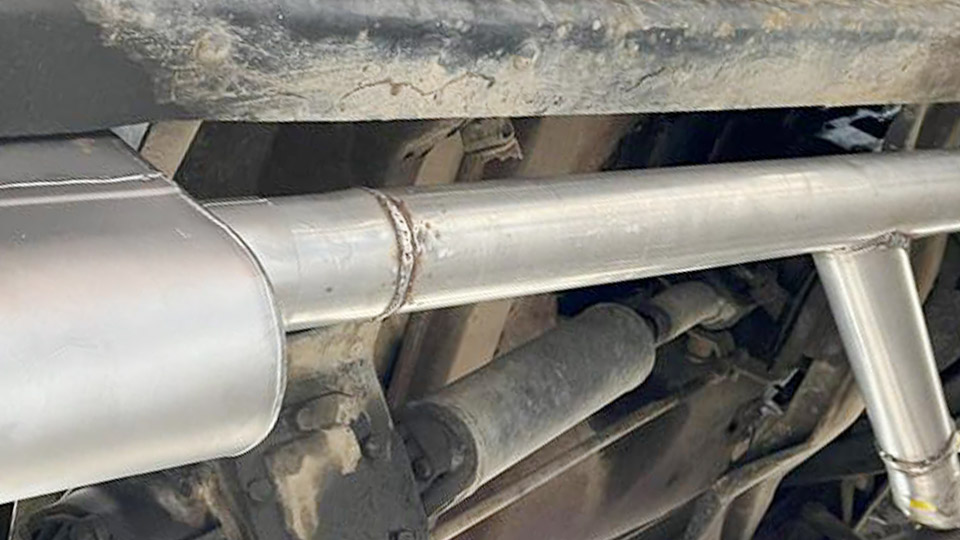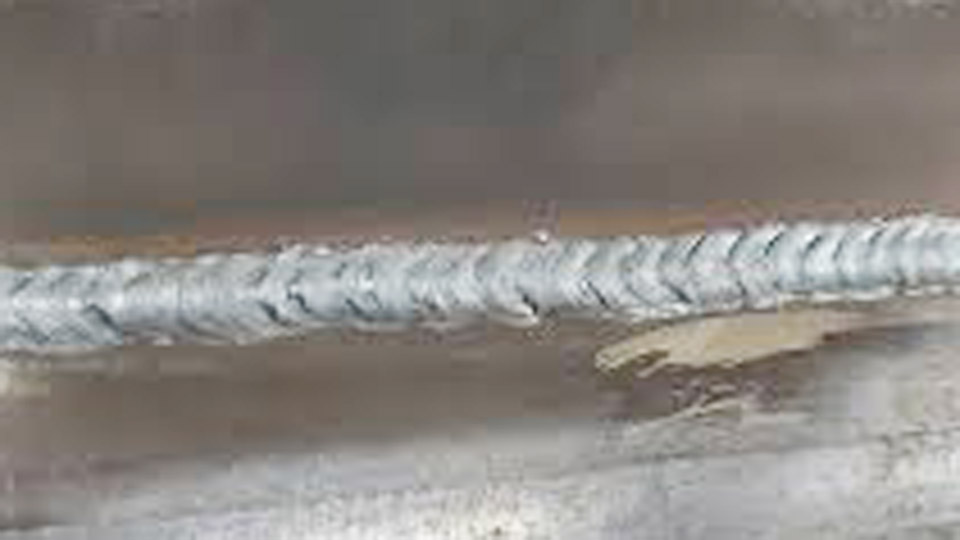
Weld quality is not determined by appearance alone. Even a weld that looks acceptable on the surface can contain defects that reduce strength, compromise safety, or lead to premature failure in service.
Understanding how to check welding defects is an essential skill for welders, inspectors, and fabrication professionals who need to verify weld integrity before a component is put into operation.
Effective defect inspection helps identify issues such as porosity, cracks, undercut, lack of fusion, and incomplete penetration before they result in costly repairs, rejected parts, or structural problems.
In production and repair environments, early detection also improves quality control, reduces rework, and supports compliance with welding standards.
By using the right inspection methods and knowing what warning signs to look for, you can evaluate weld quality more accurately and make informed decisions about repair or acceptance.
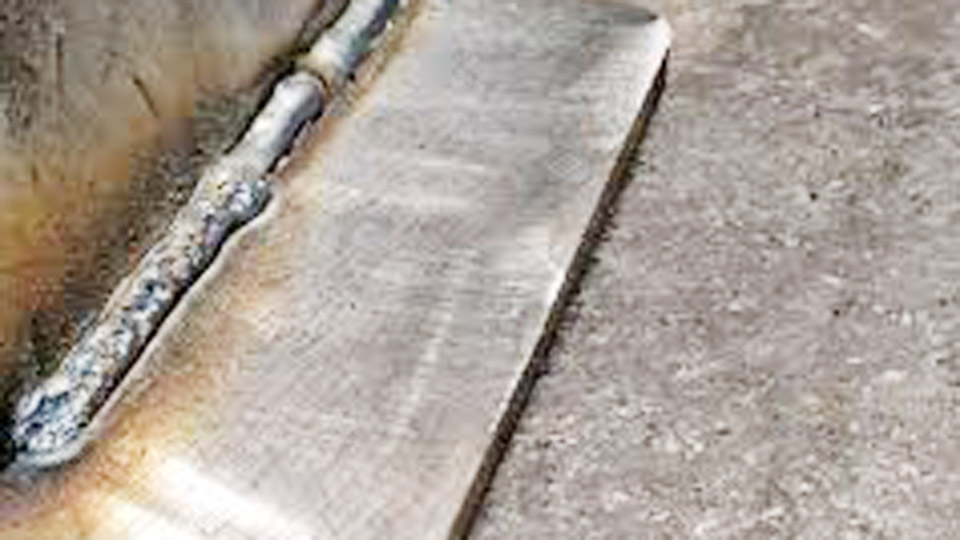
Image by millerwelds
Visual Inspection: The Essential First Step
Visual testing (VT) remains the fastest, cheapest, and most accessible method. It identifies many surface defects before more advanced tools are needed.
Key Surface Defects and Their Visual Characteristics
Undercut appears as a groove melted into the base metal alongside the weld toe. It creates stress risers and reduces cross-section. Measure depth with a fillet weld gauge or bridge cam; many codes reject depths exceeding 1/32 inch (0.8 mm) or 10% of base metal thickness, whichever is smaller.
Overlap (cold lap) shows where weld metal flows onto the base without fusing. It looks like a raised lip or rollover. Check by running a finger or probe along the toe—any lack of smooth transition indicates poor fusion.
Porosity manifests as small holes or pits on the surface. Cluster porosity often stems from contaminated shielding gas or dirty material. Surface pores signal possible internal issues.
Cracks are linear discontinuities. Look for centerline cracks in the weld metal or transverse cracks. Hot cracks appear during solidification; cold cracks develop later due to hydrogen or stress. Any crack is typically rejectable under most structural codes.
Excessive reinforcement or underfill affects profile. Reinforcement should be convex or flat within code limits (often 1/8 inch max height). Underfill leaves the weld below the base metal plane.
Spatter and arc strikes outside the weld zone can initiate cracks and require removal and blending.
Practical Visual Inspection Procedure
- Ensure proper lighting (minimum 500 lux or use a bright LED).
- Clean the weld area of slag, spatter, and contaminants.
- Inspect the entire weld length plus ½ inch on each side of the toe.
- Use gauges for size, convexity, and concavity.
- Document findings with photos and measurements.
VT alone satisfies many non-critical applications but misses subsurface flaws.
Common Internal Welding Defects and Why They Matter
Internal defects compromise load-carrying capacity without visible signs.
Lack of fusion (LOF) occurs when weld metal fails to bond with base metal or previous passes. It often results from low heat input, incorrect angle, or poor cleaning. LOF appears as planar discontinuities parallel to the fusion line.
Lack of penetration (LOP) leaves the root unfused. Critical in pressure vessels or pipes, it reduces throat thickness dramatically.
Slag inclusions trap non-metallic debris between passes. Caused by improper cleaning or welding parameters, they act as stress concentrators.
Porosity (internal) consists of gas pockets. Distributed porosity may be tolerable in small amounts; clustered or linear is usually rejectable.
Cracks (subsurface) propagate under cyclic loading and are among the most severe defects.
These defects reduce tensile strength, fatigue life, and toughness. Detection requires volumetric NDT methods.
Non-Destructive Testing Methods for Deeper Analysis
Magnetic Particle Inspection (MPI or MT)
MPI excels on ferromagnetic materials for surface and near-surface defects. Apply a magnetic field (yoke or coil) and sprinkle ferromagnetic particles (dry or wet fluorescent). Defects disrupt the field, causing particles to accumulate visibly.
Best for: Cracks, seams, and inclusions open to or near the surface. It works quickly on welds in carbon and low-alloy steels. Limitations include insensitivity to deep internal flaws and non-magnetic materials like aluminum or austenitic stainless.
Liquid Penetrant Testing (PT or Dye Penetrant)
PT detects surface-breaking discontinuities in any non-porous material. Clean the surface, apply penetrant, dwell (typically 10-30 minutes), remove excess, apply developer, and inspect under white or UV light.
It highlights cracks, porosity, and lack of fusion open to the surface with vivid indications. Ideal for stainless, aluminum, and complex geometries. Combine with MPI where applicable for comprehensive surface coverage.
Ultrasonic Testing (UT)
UT uses high-frequency sound waves (typically 2-5 MHz for welds) to detect internal flaws. A transducer sends shear or longitudinal waves into the material; reflections from defects return as echoes displayed on an A-scan or imaging screen.
How to interpret UT signals:
- Time-of-flight indicates depth.
- Echo amplitude and shape help classify defect type (planar cracks give sharp, high-amplitude signals; volumetric porosity scatters).
- Use angle-beam probes (45°, 60°, 70°) for weld inspection to hit fusion faces.
Phased array UT (PAUT) improves coverage with electronic scanning, producing sectorial views or C-scans for better sizing and characterization. UT is portable, safe, and excellent for thick sections where radiography is impractical.
Radiographic Testing (RT)
RT passes X-rays or gamma rays through the weld onto film or a digital detector. Defects appear as density variations: voids and slag (lower density) show darker; dense inclusions lighter.
Interpretation keys:
- Porosity: Rounded dark spots.
- Slag: Irregular dark areas.
- Cracks: Fine, dark lines if aligned with the beam.
- LOF/LOP: Dark lines along fusion boundaries.
RT provides a permanent record and excels at volumetric defects. Drawbacks include radiation safety, cost, and poorer detection of tight planar cracks not parallel to the beam. Use IQIs (image quality indicators) to verify sensitivity.
Acceptance Criteria and Code-Based Decision Making
Standards define what is acceptable. Common references include AWS D1.1 for structural steel, ASME Section VIII or B31.3 for pressure systems, and ISO 5817 for quality levels.
Typical limits (varies by code and service):
- Cracks: Generally none allowed.
- Porosity: Limited by size, number, and distribution (e.g., max 1/8 inch diameter in some cases).
- Undercut: Depth and length restrictions.
- Incomplete fusion/penetration: Often unacceptable in critical joints.
Always reference the specific Welding Procedure Specification (WPS), code, and engineering requirements. For hobby or DIY work, adopt conservative criteria from AWS or manufacturer guidelines.
Use tables for quick reference during inspection:
| Defect Type | Visual Detection | NDT Method Preferred | Common Acceptance |
|---|---|---|---|
| Surface Crack | Yes | PT, MT | None |
| Undercut | Yes | Visual, gauges | ≤ 0.8 mm depth |
| Internal Porosity | No | RT, UT | Per code limits |
| Lack of Fusion | Sometimes | UT, RT | Usually none |
Repair Strategies for Identified Defects
Once defects are located and sized:
- Remove defective material by grinding or gouging to sound metal.
- Verify complete removal with VT or PT/MT.
- Reweld using qualified procedures, often with preheat and controlled interpass temperatures.
- Re-inspect fully, including the repair and heat-affected zone.
For minor surface issues like light undercut, blending may suffice if within profile tolerances. Major internal defects usually require full cut-out and reweld.
Equipment and Technique Considerations for Reliable Checks
Choose methods based on material, thickness, joint type, and access. For field work, portable UT or MT yokes are practical. In shops, digital RT or PAUT offer efficiency.
Calibration is critical—UT requires reference blocks (e.g., IIW block); RT needs proper film density (2.0-4.0 typical). Operator qualification (e.g., ASNT Level II) ensures reliable results.
Environmental factors matter: Surface temperature, wind (for PT), and surface condition affect all methods. Pre-cleaning is non-negotiable.
Advanced Insights for Professional Welders
In high-stakes applications, combine techniques: VT + PT/MT for surfaces, then UT or RT for volume. Time-of-flight diffraction (TOFD) paired with PAUT provides superior sizing of planar defects for fitness-for-service assessments.
Emerging tools like real-time weld cameras and AI-assisted interpretation enhance consistency, but fundamental understanding of defect physics remains irreplaceable.
Real-world Application Insight
The best welders treat inspection as an integrated part of the process, not an afterthought. Selecting the right NDT method for the expected failure mode—fatigue (crack-sensitive) versus static load (volumetric tolerance)—optimizes both safety and productivity.
An advanced pro-level takeaway is mastering defect sizing and orientation: A 1/4-inch crack transverse to stress is far more critical than a similar-length longitudinal inclusion. This judgment, grounded in code and experience, drives repair-or-accept decisions that separate adequate fabrications from exceptional ones.
FAQ
What is the quickest way to check for surface welding defects?
Visual inspection combined with basic gauges for profile and a bright light. Follow with PT or MT for small cracks invisible to the eye.
Can ultrasonic testing detect all types of welding defects?
UT excels at internal planar and volumetric defects but requires proper probe angles and skilled interpretation. It complements RT, which provides a different view of density variations.
How do I know if a weld defect is acceptable without destroying the part?
Compare findings against the applicable code (AWS, ASME, etc.) acceptance criteria for the service condition. Minor porosity may pass in non-critical areas; cracks almost never do.
When should I use radiographic testing versus ultrasonic?
Use RT for a permanent record and when access limits UT, or for complex defect characterization. Prefer UT for thicker materials, field work, or when radiation safety is a concern.