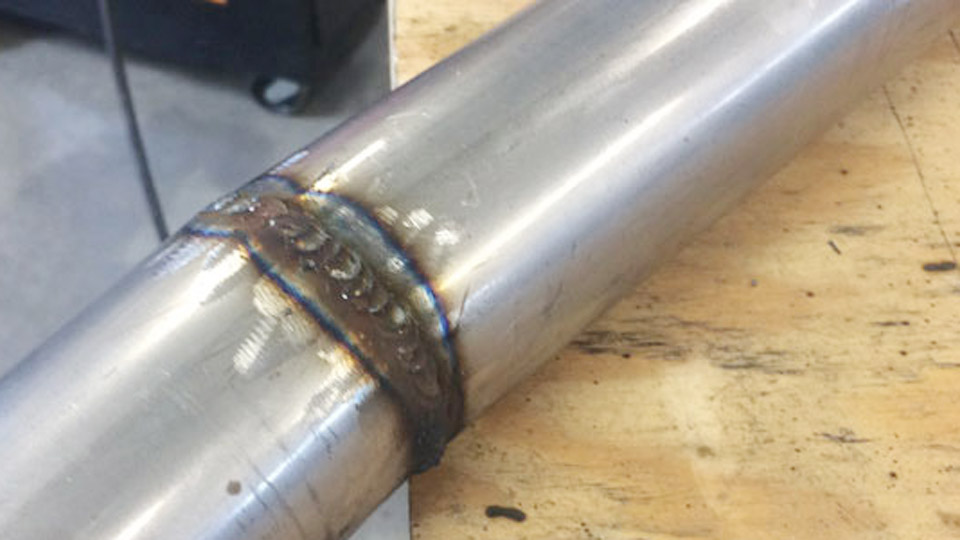
Proper machine setup is one of the most important factors in MIG welding quality. Knowing How To Adjust MIG Welder Settings helps ensure correct penetration, stable arc performance, and consistent bead appearance across different materials and joint configurations.
Even a small mismatch between voltage, wire feed speed, or shielding gas settings can lead to problems such as lack of fusion, excessive spatter, burn-through, distortion, or costly rework.
MIG welder settings are not fixed values. They must be adjusted based on material thickness, wire diameter, welding position, and the desired weld characteristics.
Understanding how these variables interact allows welders to produce stronger, cleaner welds while reducing defects and improving productivity.
Whether you’re working on fabrication, repair, or production welding, mastering proper machine adjustments helps improve weld consistency, minimize troubleshooting, and achieve results that meet both structural and visual quality requirements.
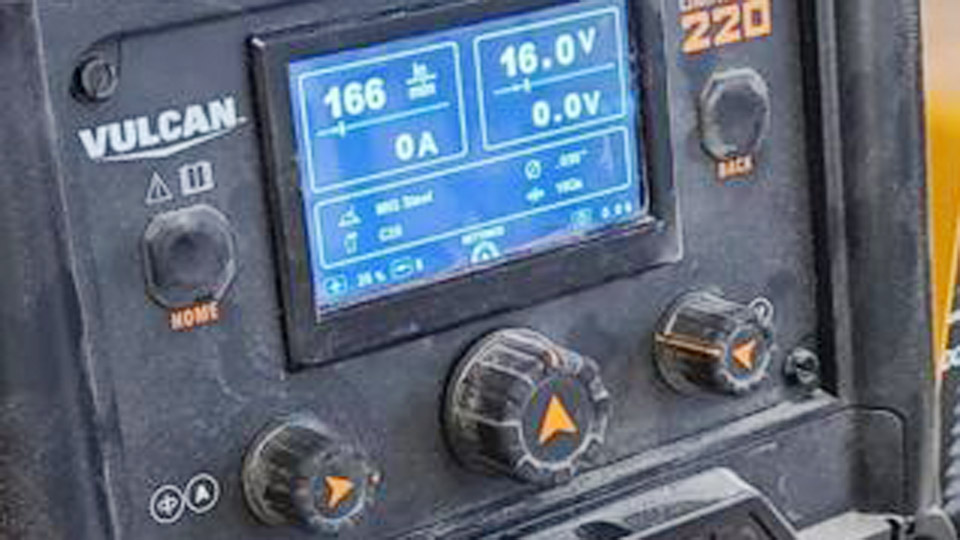
Image by r/Welding
Understanding Core MIG Welder Controls
Voltage: Arc Length and Bead Profile
Voltage primarily controls arc length and influences bead width, height, and overall heat input. Higher voltage lengthens the arc, producing wider, flatter beads with better wetting at the toes. Lower voltage shortens the arc for narrower, more convex beads.
For mild steel with 0.035″ wire:
- Thin materials (18-16 gauge): 15-18 V
- 1/8″ (0.125″): 18-20 V
- 1/4″: 21-24 V
Start in the middle of the recommended range for your wire diameter and thickness, then fine-tune. If the arc stubs into the workpiece or produces excessive spatter with a popping sound, increase voltage by 0.5-1 V increments. If the arc is erratic, hissing, or burning back to the contact tip, reduce voltage.
Voltage interacts heavily with travel speed. Faster travel requires slightly higher voltage to maintain fusion.
Wire Feed Speed (WFS): Amperage and Deposition
Wire feed speed directly controls amperage and filler metal deposition rate. Higher WFS increases heat input and penetration but risks burn-through on thinner stock. It is the primary heat control on most machines.
A common rule: approximately 1 amp per 0.001″ of material thickness for mild steel. Use multipliers for starting WFS (IPM):
- 0.023″ wire: ×3.5
- 0.030″ wire: ×2
- 0.035″ wire: ×1.6
- 0.045″ wire: ×1
Example for 1/8″ (125 amps) with 0.035″ wire: ~200 IPM starting point. Adjust upward for thicker material or deeper penetration needs, downward to prevent burn-through.
Test by welding on scrap: aim for a steady “bacon sizzling” or “frying” sound. Popping indicates WFS too high relative to voltage; a hissing or unstable arc suggests imbalance.
Shielding Gas Flow Rate: Protection Without Turbulence
Proper gas flow shields the weld pool from atmospheric contamination. Too low causes porosity; too high creates turbulence that draws in air.
Typical indoor settings for mild steel (C25 or similar mix):
- 15-25 CFH (cubic feet per hour)
- Start at 18-20 CFH and adjust based on nozzle size, joint type, and drafts.
For aluminum: often 25-35+ CFH due to higher heat and faster travel. Outdoors or in windy conditions, increase flow or use screens, but avoid exceeding 35-40 CFH to prevent turbulence. Check for leaks in hoses, regulators, and torch O-rings regularly.
Material-Specific MIG Settings Adjustments
Settings for Mild Steel Across Thicknesses
Mild steel is forgiving but demands precise balance as thickness increases.
Recommended starting settings (0.035″ ER70S-6 wire, C25 gas, flat position):
| Thickness | Voltage (V) | WFS (IPM) | Gas Flow (CFH) | Notes |
|---|---|---|---|---|
| 18-16 ga | 15-17 | 150-220 | 15-20 | Short-circuit mode, fast travel |
| 1/8″ | 18-20 | 250-320 | 18-22 | Balanced penetration |
| 3/16″ | 20-22 | 320-380 | 20-24 | Increase WFS for fill |
| 1/4″ | 21-24 | 380-450 | 20-25 | Monitor for distortion |
| 3/8″+ | 24-28 | 450+ | 22-28 | Possible spray transfer |
Fine-tune: Weld a test bead. Convex, ropey bead with poor tie-in? Increase voltage or WFS slightly. Wide, flat bead with undercut? Reduce voltage or slow travel.
Aluminum MIG Welder Settings
Aluminum requires higher heat input, faster travel speeds, and 100% argon. Use 0.030″ or 0.035″ wire (4043 or 5356 alloy typically). Push technique is preferred to avoid contamination.
- 1/8″ aluminum: 21-23 V, 450-600 IPM WFS, 25-35 CFH argon.
- Thinner sheet (14-18 ga): 18-21 V, 300-450 IPM.
Aluminum’s high thermal conductivity means settings must prevent burn-through while ensuring fusion. Clean oxide layer thoroughly; settings run hotter and faster than steel.
Stainless Steel Considerations
Stainless demands clean parameters to maintain corrosion resistance. Tri-mix gas (e.g., 90/8/2 He/Ar/CO2) often yields best results. Lower heat input than mild steel to control distortion and sensitization.
Typical for 0.035″ wire:
- Thin: 15-18 V, 150-250 IPM
- Medium: 18-21 V, 250-350 IPM
Focus on low spatter and good wetting. Back-purge where possible for critical applications.
Advanced Controls and Techniques
Inductance (or Arc Control/Trim) Adjustments
Inductance controls the rate of current rise during short-circuit transfer, affecting arc stiffness, spatter, and puddle fluidity.
- Lower inductance: Stiffer arc, more penetration, potentially higher spatter (good for root passes or thicker material).
- Higher inductance: Softer arc, better wetting, reduced spatter, smoother beads (ideal for thin material or cosmetic welds).
On machines with a dial (often 1-10 or soft/hard), start mid-range and adjust while listening. High inductance allows stable operation at lower WFS. Test on scrap: excessive spatter suggests lowering inductance; sluggish puddle suggests raising it.
Position and Joint Type Impacts
Vertical-up welding generally requires lower settings (reduce WFS 10-20%) for puddle control. Overhead demands even tighter control to prevent dropout. Groove joints need more penetration-focused settings (higher WFS/voltage balance) than fillets.
For thin-to-thick transitions, bias settings toward the thicker material but reduce slightly to protect the thin side. Use stringer beads or slight weave as needed.
Troubleshooting and Fine-Tuning MIG Settings
Diagnosing Common Weld Defects Through Settings
Examine the bead immediately after welding:
Porosity: Increase gas flow, check for drafts/leaks, ensure clean metal. Reduce voltage if turbulence suspected.
Lack of fusion / cold lap: Increase voltage and/or WFS. Slow travel speed. Improve gun angle (10-15° push or drag).
Burn-through / excessive melt: Decrease WFS and voltage. Increase travel speed. Use thinner wire or back-step technique.
Undercut: Lower voltage slightly or adjust travel to allow better toe wetting. Increase inductance for smoother puddle.
Excessive spatter: Balance voltage higher relative to WFS. Optimize inductance. Check contact tip to work distance (stick-out: 3/8″-3/4″ typical).
Always make test welds on identical scrap material and thickness. Record successful combinations for repeatability.
Machine-Specific and Synergic Considerations
Many modern machines offer synergic or Auto-Set modes that approximate settings based on material and thickness input. Use these as starting points but verify and override manually for optimal results. Older machines require full manual tuning.
Check drive roll tension, contact tip condition, liner cleanliness, and polarity (DCEP for solid wire) before blaming parameters.
Real-World Decision Framework for Adjustments
Prioritize in this order for most jobs:
- Determine amperage target from thickness (1A per 0.001″).
- Select appropriate wire size and set initial WFS.
- Set voltage to achieve stable arc and desired bead profile.
- Dial gas flow and inductance for quality.
- Adjust travel speed and technique last.
For production or critical welds, document parameters including position, joint prep, and environmental factors. Re-test when changing wire batches or gas mixes.
Performance-based Takeaway
Optimal MIG settings are not static numbers but a dynamic balance tailored to your specific machine, material, and conditions. Consistent test-weld verification combined with close observation of arc sound, bead geometry, and penetration will outperform any generic chart.
An advanced insight: Experienced welders often run slightly higher voltage with moderated WFS for spray or modified spray transfer on thicker sections, achieving higher deposition rates and superior mechanical properties with practice—transforming good welds into high-performance ones.
FAQ
What is the best starting voltage and wire speed for 1/8″ mild steel?
For 0.035″ wire on 1/8″ mild steel, begin around 18-19 V and 250-300 IPM WFS with 18-22 CFH gas. Fine-tune by sound and bead appearance on scrap.
How do I reduce spatter when adjusting MIG settings?
Increase voltage slightly relative to WFS, optimize inductance higher for softer arc, maintain proper stick-out, and ensure clean metal and correct gas flow. Small balanced adjustments outperform drastic changes.
Does gas flow rate really affect MIG weld quality significantly?
Yes—insufficient flow causes porosity; excessive flow induces turbulence and contamination. 15-25 CFH indoors is standard for steel; always verify with a flowmeter while triggering the gun.
Should I adjust settings differently for vertical welding?
Yes. Reduce WFS and voltage 10-20% compared to flat position for better puddle control. Use uphill progression with a slight weave if needed, and prioritize higher inductance for fluidity. Test thoroughly.