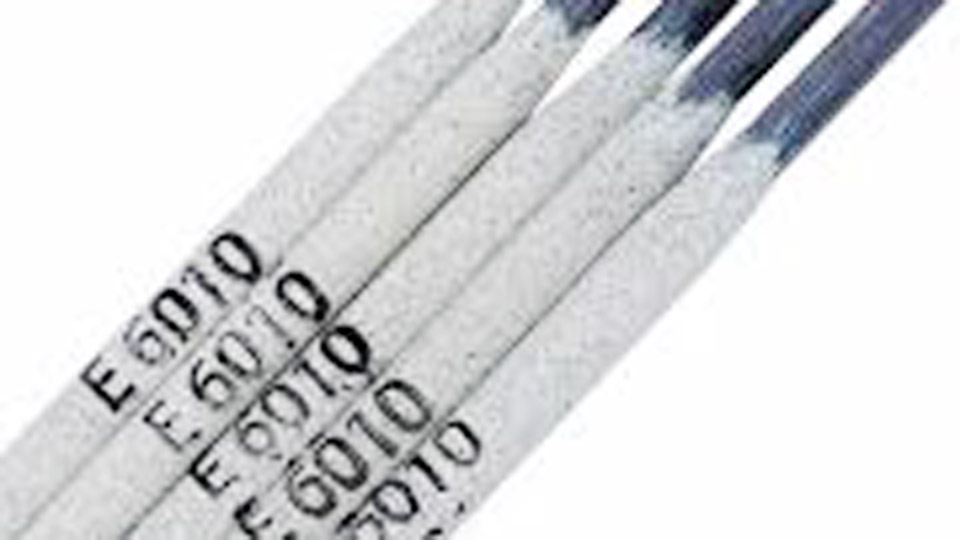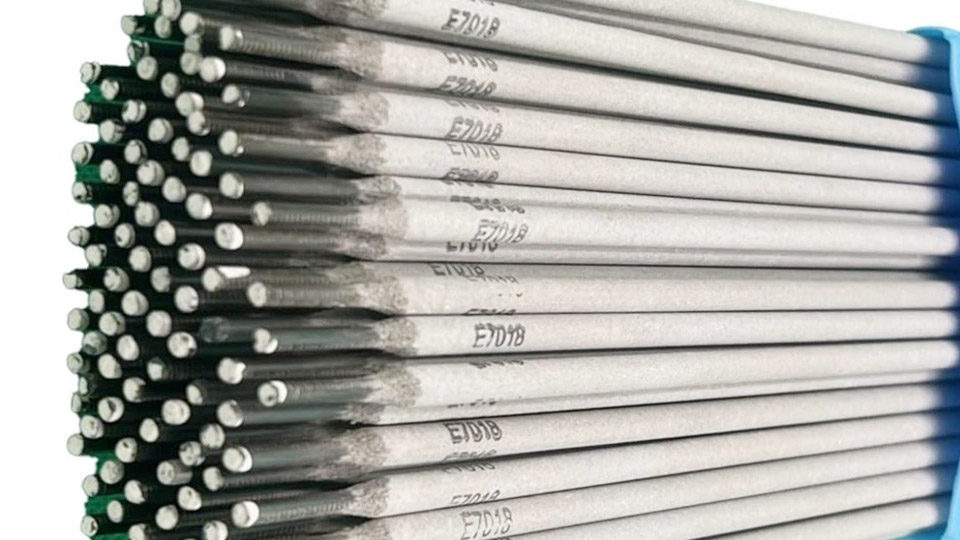
Choosing the wrong stick electrode turns a simple joint into a failed test or a cracked repair. Many welders grab a 6011 when the job needs low-hydrogen strength or reach for a 7018 on rusty plate and end up with lack of fusion or porosity.
Understanding the difference between 6011 and 7018 welding rods prevents those failures by matching coating chemistry, penetration profile, and mechanical properties to the actual joint conditions.
The two electrodes share mild-steel base chemistry and all-position capability, yet their flux systems produce opposite arc behavior, hydrogen levels, and final weld performance.
Selecting correctly determines whether the deposit meets code strength, resists hydrogen cracking, or simply burns through mill scale on a field repair.
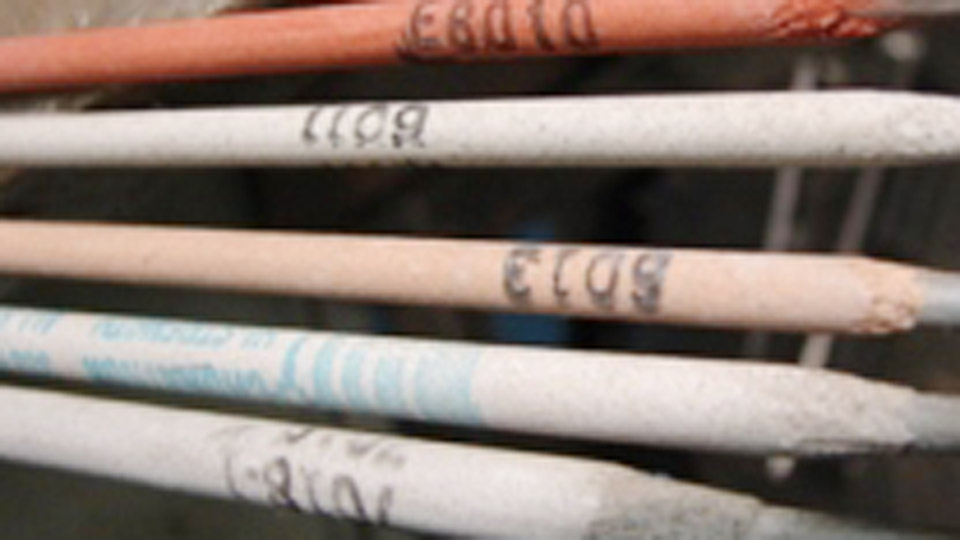
Image by weldingtipsandtricks
AWS Classification Numbers and What They Control
The four-digit AWS A5.1 codes encode tensile strength, position capability, coating type, and usable current. Misreading them leads to incorrect polarity or strength assumptions.
Breaking Down E6011
“60” sets minimum tensile strength at 60,000 psi. The first “1” confirms all-position use, including vertical down. The final “1” identifies a high-cellulose potassium coating that generates a forceful, dig-type arc and allows both AC and DCEP operation. Yield strength typically sits near 48,000 psi with elongation around 22 %.
Breaking Down E7018
“70” raises minimum tensile strength to 70,000 psi. The “1” again indicates all-position capability, though vertical-down performance is limited by puddle fluidity. The “8” designates a low-hydrogen iron-powder coating that produces medium penetration and requires DCEP or AC.
Yield strength reaches approximately 58,000 psi. Supplementary designators such as H4 or H8 limit diffusible hydrogen to 4 ml or 8 ml per 100 g of weld metal.
Penetration Profile and Arc Characteristics
Penetration depth and arc force dictate root fusion and the ability to handle surface contamination.
Deep Digging Action of 6011
The cellulose coating decomposes into a high volume of shielding gas and creates a concentrated, high-velocity arc. This produces deep penetration that cuts through light rust, paint, mill scale, and oil.
The fast-freeze slag supports vertical and overhead work and permits a whip-and-pause technique. Spatter is higher and the bead appearance is more irregular than low-hydrogen deposits.
Medium Penetration and Soft Arc of 7018
Iron powder in the coating increases deposition rate while the low-hydrogen flux produces a quieter, more stable arc. Penetration remains medium, sufficient for clean plate but inadequate for heavy contamination.
The fluid slag freezes more slowly, favoring stringer beads or controlled weaves in flat and horizontal positions. Spatter stays low and the finished bead is smooth with easy slag removal.
Surface Preparation Requirements and Contaminant Tolerance
Joint cleanliness decides which electrode can be used without porosity or incomplete fusion.
6011 Performance on Imperfect Surfaces
Cellulose rods tolerate moderate rust, paint, and mill scale because the aggressive arc burns through surface films. This makes 6011 the practical choice for farm equipment repair, outdoor structural steel with limited prep time, and root passes on pipe where perfect cleaning is impractical. Excessive oil or thick scale still requires grinding.
7018 Demand for Clean Base Metal
Low-hydrogen electrodes require near-white-metal cleanliness. Residual moisture, oil, or rust introduces hydrogen that can cause delayed cracking in restrained joints or higher-strength steels. Proper grinding or wire brushing before welding is mandatory for code work and critical fabrications.
Mechanical Properties and Hydrogen Cracking Risk
Strength and toughness numbers matter only when the electrode chemistry matches the service conditions.
Tensile Strength and Toughness Comparison
E6011 deposits deliver 60 ksi tensile and adequate toughness for general mild-steel fabrication. E7018 deposits reach 70 ksi tensile with higher yield and better low-temperature impact values, especially versions carrying the -1 designator. The extra strength supports structural code requirements under AWS D1.1 and similar specifications.
Low-Hydrogen Advantage of 7018
Diffusible hydrogen levels below 8 ml/100 g (often 4 ml/100 g) minimize under-bead and delayed cracking. This property is essential on thick sections, high-restraint joints, and steels with higher carbon equivalents. 6011 electrodes generate higher hydrogen and are unsuitable where hydrogen-assisted cracking is a concern.
Polarity, Power Source, and Amperage Windows
Machine capability and current type affect arc stability and usable diameter range.
Current Compatibility
E6011 runs reliably on AC or DCEP. Some formulations accept DCEN, but DCEP remains preferred for maximum penetration. E7018 prefers DCEP for deepest fusion and smoothest arc; AC versions exist but often require higher amperage and produce a slightly softer arc.
Practical Amperage Ranges for Common Diameters
For 1/8-inch (3.2 mm) electrodes:
- 6011 typically operates between 80–125 A
- 7018 typically operates between 90–150 A on DCEP
Smaller 3/32-inch rods drop roughly 20–30 A; 5/32-inch rods rise 30–50 A. Start mid-range and adjust for position and thickness. Vertical-up and overhead work generally require the lower end of each range to control the puddle.
Position Capability and Technique Adjustments
Both electrodes carry the “1” position rating, yet puddle behavior forces different techniques.
Vertical and Overhead Behavior with 6011
Fast-freeze slag and a stiff arc allow vertical-down travel and straightforward overhead stringers. A slight whip motion controls heat input without losing fusion. The thin slag is easily removed between passes.
Position Limitations and Technique for 7018
The more fluid puddle makes vertical-down unreliable. Vertical-up requires short arc length, controlled weave or stringers, and lower amperage. Overhead work demands a tight arc and steady travel to prevent sagging. Multi-pass joints benefit from thorough interpass cleaning because the thicker slag can trap inclusions if left in place.
Decision Criteria for Selecting the Correct Rod
Match electrode performance to joint condition, code requirements, and available equipment.
When 6011 Is the Correct Choice
Select 6011 for root passes on open-root pipe or plate, field repairs on rusty or painted steel, farm and maintenance work with limited surface prep, and any job where only an AC machine is available and deep penetration is required. The electrode also suits vertical-down fillet welds on thinner sections.
When 7018 Is Required
Choose 7018 for structural steel, pressure vessels, bridges, and any application demanding 70 ksi minimum tensile strength plus low hydrogen.
Use it for fill and cap passes after a cellulose root when code work is involved, and on clean, higher-strength or restrained joints where cracking resistance is critical. Proper dry storage (rod oven at 250–300 °F after opening) is non-negotiable.
Hybrid Sequences on Critical Joints
Many pipe and structural procedures specify a 6010 or 6011 root followed by 7018 fill and cap. The cellulose root guarantees penetration and tolerance of residual contamination; the low-hydrogen fill provides strength and toughness. Interpass temperature and cleaning procedures must follow the governing WPS.
Wrapping Up
The practical difference between 6011 and 7018 welding rods reduces to matching arc force and hydrogen control to the joint. Deep penetration and surface tolerance favor 6011 on imperfect metal; higher strength and crack resistance favor 7018 on clean structural work.
Advanced operators further refine results by combining a cellulose root with low-hydrogen fill while maintaining strict interpass temperature limits, producing X-ray-quality deposits that satisfy both fusion and mechanical requirements on the same joint.
FAQs
Can I use 6011 and 7018 on the same joint?
Yes. A common procedure places a 6011 or 6010 root for penetration, then fills and caps with 7018 for strength and low hydrogen. Clean thoroughly between layers and control interpass temperature.
Which rod is better for rusty metal?
- Its cellulose coating and forceful arc burn through light rust, paint, and mill scale. 7018 requires clean surfaces to avoid porosity and hydrogen cracking.
Do 7018 rods need a rod oven?
Yes. After the sealed container is opened, store them in a holding oven at the manufacturer’s recommended temperature (typically 250–300 °F) to keep diffusible hydrogen within specification.
What polarity works best for each rod?
6011 runs well on AC or DCEP. 7018 prefers DCEP for best arc stability and penetration; AC versions exist but may need higher amperage.