Choosing the wrong tungsten for TIG welding stainless steel produces an unstable arc that wanders, forces frequent re-grinding, and risks tungsten inclusions in the weld. Many welders default to whatever electrode is in the torch only to fight tip erosion or poor starts on 304 or 316 material.
The correct answer to what tungsten to use for TIG welding stainless steel directly controls arc focus, heat concentration, and electrode life under DC electrode negative polarity. Stainless demands a sharp, durable point that resists melting or contamination far more than aluminum work.
Selecting the right oxide-doped electrode and diameter prevents these failures and delivers the clean, precise fusion stainless requires.
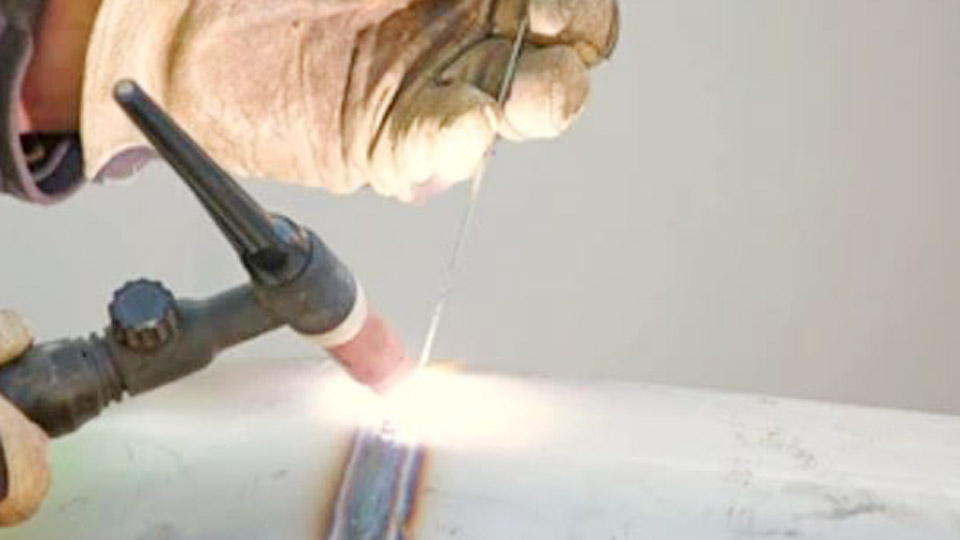
Image by bakersgas
How Oxide Additions Change Performance on Stainless
Tungsten electrodes for stainless operate almost exclusively on DCEN. Pure tungsten fails here because it cannot maintain a pointed geometry under the focused heat of a DC arc. Oxide additions lower the electron work function, improve electron emission, and allow the tip to stay sharp at higher currents.
Why Pure and Zirconiated Electrodes Fail on Stainless
Pure tungsten (green) and zirconiated (white or brown) electrodes are formulated for AC aluminum. They form a ball that spreads the arc and reduces current density.
On stainless this produces a wide, wandering arc that overheats the base metal and invites contamination. These types have no place in stainless TIG work.
Role of Rare-Earth Oxides in Arc Stability
Thorium, lanthanum, and cerium oxides improve electron emission. The result is easier arc starts, lower starting voltage, and reduced electrode consumption.
On stainless the practical difference appears as longer intervals between grinding and tighter control of the weld pool at both low and medium amperages.
Recommended Tungsten Types for Stainless Steel DC TIG
Three electrode families dominate stainless work. Each carries distinct trade-offs in tip life, low-amp performance, and safety.
2% Thoriated (Red, EWTh-2)
This remains the highest-performing option for pure DC stainless welding when tip retention at elevated amperage matters most. The 1.7–2.2% thorium oxide produces exceptional arc stability and the longest sharp-point life under continuous DC current.
Many production shops still specify it for pipe and structural stainless where restarts must be immediate and the point must survive 150–200 A runs.
The drawback is mild radioactivity. Grinding generates thorium-containing dust; shops that prohibit it require dedicated extraction or switch to non-radioactive alternatives.
2% Lanthanated (Blue, EWLa-2)
The modern default for most stainless fabricators. Two percent lanthanum oxide delivers arc starts and stability nearly equal to thoriated electrodes while remaining non-radioactive. It holds a usable point across a wide amperage band and tolerates occasional AC aluminum work without changing electrodes.
On stainless it provides consistent low-amp starts for thin sheet and reliable high-amp performance for thicker sections. Current-carrying capacity is among the highest of the non-thoriated options.
2% Ceriated (Gray, EWCe-2)
Ceriated electrodes excel below approximately 100–120 A. The cerium oxide promotes easy arc initiation at very low currents, making them the preferred choice for thin-gauge stainless, instrumentation tubing, and orbital welding.
Tip life is good at moderate amperage but shorter than lanthanated or thoriated electrodes once current rises. They are fully non-radioactive and work on both DC and limited AC.
Rare-Earth Blends (Purple / E3 / LaYZr)
Mixed-oxide electrodes combine lanthanum, yttrium, and zirconium. Performance sits between lanthanated and ceriated: excellent low-amp starts, solid tip retention, and full AC/DC capability. They serve as direct non-radioactive replacements for thoriated electrodes in shops that weld both stainless and aluminum.
| Tungsten Type | Color | Oxide | Best Amperage Range on Stainless | Tip Retention | Radioactive | Primary Strength |
|---|---|---|---|---|---|---|
| 2% Thoriated | Red | ThO₂ | Medium to high | Excellent | Yes | Highest DC point life |
| 2% Lanthanated | Blue | La₂O₃ | Wide (low to high) | Very good | No | All-purpose DC/AC |
| 2% Ceriated | Gray | CeO₂ | Low to medium | Good | No | Low-amp starts |
| Rare-earth mix | Purple | Mixed | Wide | Very good | No | Balanced AC/DC |
Matching Electrode Diameter to Stainless Thickness and Current
Diameter selection is driven by amperage, not material type alone. Undersized electrodes overheat and spit; oversized electrodes produce a less focused arc at low current.
Common Diameter Guidelines for Stainless
- 0.040 in (1.0 mm): Very thin sheet and low-amp precision work, typically under 40–50 A.
- 1/16 in (1.6 mm): 16–20 gauge sheet and light tube, roughly 40–100 A.
- 3/32 in (2.4 mm): The most versatile size. Handles 1–250 A on DC with proper preparation and covers the majority of stainless fabrication.
- 1/8 in (3.2 mm): Heavier plate or sustained high-current work above 200 A.
A 3/32 in electrode covers most stainless jobs from thin sheet to ¼ in plate when the welder adjusts taper sharpness for the lower end of the range.
Current Limits and Overload Effects
Exceeding the recommended current for a given diameter causes rapid tip erosion, tungsten inclusions, and arc instability. Running well below the lower limit produces a soft, wandering arc. Always stay inside the manufacturer’s published range for the chosen diameter and oxide type.
Correct Tip Geometry for Stainless DCEN Welding
Stainless requires a sharp, longitudinally ground point. The geometry concentrates the arc and minimizes heat input into the electrode itself.
Taper Angle and Grind Direction
Grind the tip to a taper length of approximately 2 to 2.5 times the electrode diameter. A 3/32 in electrode therefore receives a taper roughly 3/16–1/4 in long. Always grind parallel to the electrode axis on a dedicated fine-grit wheel reserved for tungsten. Radial grinding leaves circumferential lines that create arc wander and premature failure.
Flat Land Versus Sharp Point
A perfectly sharp needle point can melt and form a small ball under high current. Many operators put a tiny flat land (0.010–0.020 in) on the tip for currents above 150 A. This land stabilizes the arc without sacrificing focus. For thin stainless at low amperage, a true sharp point remains preferred.
Contamination Control During Preparation
Any contact with steel, aluminum, or dirty surfaces transfers contaminants that later appear as arc instability or weld inclusions. Store electrodes in clean containers and wipe the ground tip before insertion into the torch.
Decision Factors That Override Default Recommendations
Shop conditions and joint requirements often force a change from the “best overall” electrode.
Thin-Gauge Versus Thick-Section Priorities
On 20-gauge or thinner stainless the priority is low-amp arc initiation and minimal heat input. Ceriated or lanthanated electrodes win. On thick plate or multi-pass pipe the priority shifts to tip life under sustained high current; thoriated or high-percentage lanthanated electrodes hold the point longer.
Mixed-Metal Shops and Inventory Simplification
Fabricators who also weld aluminum benefit from standardizing on 2% lanthanated or rare-earth electrodes. One electrode type covers DC stainless and AC aluminum with acceptable performance on both, reducing inventory and the chance of installing the wrong electrode.
Regulatory and Health Constraints
Many food-grade, pharmaceutical, and nuclear facilities prohibit thoriated electrodes. In those environments lanthanated, ceriated, or rare-earth electrodes become mandatory regardless of pure performance rankings.
Practical Selection Sequence for Any Stainless Job
Start with material thickness and expected amperage range. Choose diameter first. Next select oxide type according to whether the work is predominantly low-amp precision, high-amp production, or mixed AC/DC.
Prepare the tip to the geometry required by the current. Test a short bead on scrap of the same alloy and thickness; if the arc starts cleanly, the point remains sharp after several inches, and the bead toes are free of undercut or inclusions, the combination is correct. Adjust only one variable at a time—diameter, oxide type, or taper angle—when results fall short.
Wrapping Up
Selecting the proper tungsten for stainless TIG welding reduces electrode consumption, eliminates tungsten inclusions, and produces the tight, low-heat-input arcs that preserve corrosion resistance. For the majority of modern shops the single best default is 3/32 in 2% lanthanated (blue) electrodes ground to a 2–2.5× taper; they deliver reliable DC performance on stainless while remaining usable on aluminum.
Advanced operators further improve consistency by matching post-flow time to electrode diameter (roughly 1 second per 0.040 in of diameter) so the tip cools under shielding gas and retains its geometry for the next arc start.
FAQs
What color tungsten is best for TIG welding stainless steel?
Blue (2% lanthanated) is the most practical modern choice for most stainless work. Red (2% thoriated) still offers the longest tip life on pure DC but carries radioactivity concerns.
Can I use 2% lanthanated tungsten for stainless steel?
Yes. 2% lanthanated electrodes perform excellently on DC stainless, provide strong arc starts, and hold a usable point across a wide amperage range.
What size tungsten for TIG welding thin stainless sheet?
Use 1/16 in or 0.040 in electrodes with a sharp point. Pair them with ceriated or lanthanated types for the best low-amp starts.
Is thoriated tungsten still recommended for stainless?
It remains the strongest pure-DC performer for tip retention, but many shops have switched to lanthanated or rare-earth alternatives to avoid radioactive grinding dust.