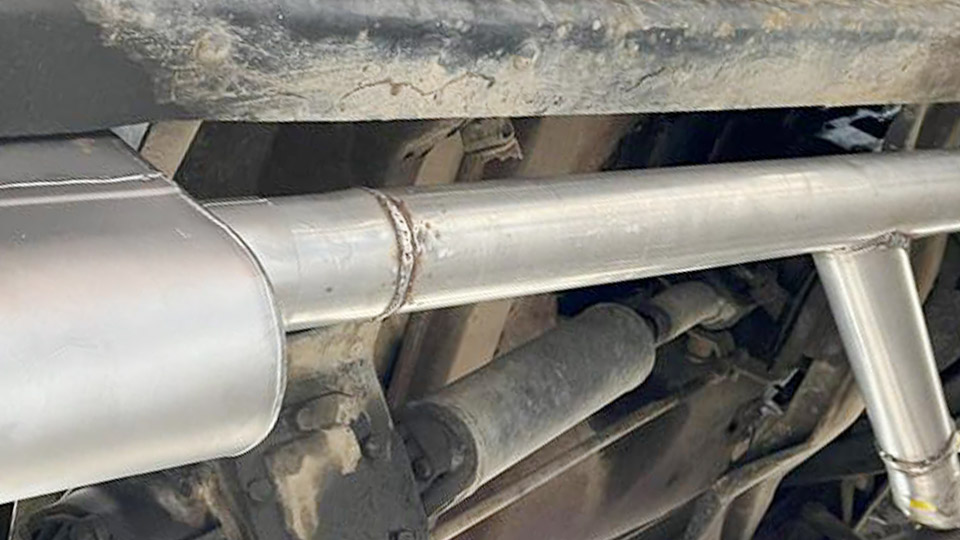
Many welders spray brake cleaner on oily or rusty parts moments before striking an arc, assuming the solvent will evaporate cleanly and leave a ready surface. That assumption is dangerous.
Arc welding can turn residual chlorinated brake cleaner into phosgene gas—a highly toxic compound once used as a chemical weapon.
The ultraviolet radiation and extreme heat of the arc decompose certain solvents into phosgene (carbonyl chloride), hydrogen chloride, and other corrosive gases. Exposure produces delayed pulmonary edema that can kill or permanently damage the lungs.
Understanding which cleaners create this risk, how the reaction occurs, and what safer cleaning methods actually work determines whether a routine repair stays safe or becomes a medical emergency.
Image by fb/TechDanne Hardware
How Chlorinated Solvents React Under the Welding Arc
Chlorinated hydrocarbon solvents common in many brake cleaners break down when exposed to the intense UV spectrum (roughly 200–400 nm) and temperatures exceeding several thousand degrees Celsius generated by stick, MIG, TIG, or flux-cored arcs.
Which Chemicals Produce Phosgene
Tetrachloroethylene (perchloroethylene or PERC), trichloroethylene, methylene chloride (dichloromethane), and carbon tetrachloride are the primary offenders. These compounds appear frequently in “non-flammable” brake-cleaner formulas.
Under arc conditions the molecules fragment and recombine, releasing phosgene (COCl₂). Laboratory and field studies confirm measurable phosgene formation even at solvent concentrations below typical workplace exposure limits for the parent solvent itself.
Role of UV Radiation Versus Heat Alone
Both ultraviolet radiation from the arc and thermal energy drive the reaction. Open-arc processes generate the short-wave UV that efficiently photolyzes chlorinated solvents in vapor or residual film.
Flame processes (oxy-fuel or plasma) can also produce phosgene through thermal decomposition, but the welding arc is especially efficient because of the continuous UV output.
Residual solvent trapped in seams, porosity, or under scale is sufficient to generate hazardous concentrations in the breathing zone.
Why Argon Is Not the Critical Factor
Older shop lore sometimes blamed argon shielding gas. Controlled tests show phosgene forms in air contaminated with the chlorinated solvent regardless of whether argon, CO₂, or mixed gases are present. The UV and heat from the arc are the decisive drivers. Shielding gas composition does not eliminate the hazard.
Recognizing Chlorinated Versus Non-Chlorinated Brake Cleaners
Product labeling and SDS documents provide the only reliable distinction. Color of the can or marketing claims of “heavy-duty” or “professional” offer no safety guarantee.
Label and SDS Indicators of Chlorinated Formulas
Look for tetrachloroethylene, perchloroethylene, trichloroethylene, methylene chloride, or carbon tetrachloride in the ingredients list.
Many chlorinated products carry explicit warnings: “Vapors may decompose to harmful or fatal corrosive gases such as hydrogen chloride and possibly phosgene when exposed to extreme heat or welding.”
Non-flammable claims often correlate with chlorinated chemistry because the halogenated solvents suppress flammability.
Non-Chlorinated Formulas and Their Limitations
Non-chlorinated brake cleaners typically rely on hydrocarbon blends (acetone, heptane, toluene, methanol, or similar). These do not generate phosgene under arc conditions.
They remain flammable, however, and still require complete evaporation before welding. Residual solvent can still produce combustion products or reduce weld quality if not fully removed.
Practical Identification in the Shop
When the SDS is unavailable, treat any unlabeled or “non-flammable” aerosol as suspect. Prefer products explicitly labeled “non-chlorinated” and cross-check the chemical abstract service (CAS) numbers against known chlorinated species. Many professional suppliers now stock dedicated non-chlorinated formulations precisely for weld-prep applications.
Health Effects of Phosgene Exposure During Welding
Phosgene is a colorless gas with a reported odor resembling musty hay or freshly cut grass at low concentrations; at higher (lethal) concentrations the odor may be weak or absent. The gas is denser than air and tends to accumulate in low or poorly ventilated areas.
Immediate and Delayed Symptoms
Early irritation of the eyes, throat, and respiratory tract may occur, followed by coughing or a sense of chest tightness. The most dangerous effects—non-cardiogenic pulmonary edema—often appear 4 to 24 hours after exposure.
Fluid fills the alveoli, oxygen exchange collapses, and respiratory failure can follow. Documented cases include welders who felt only mild discomfort while working yet required intensive care hours later.
Exposure Thresholds and Permanence
Occupational exposure limits for phosgene are extremely low (examples include 0.1 ppm or lower time-weighted averages in various jurisdictions). Concentrations of a few parts per million can produce severe injury.
Survivors frequently experience lasting reduction in lung function, chronic bronchitis, or emphysema. No specific antidote exists; treatment is supportive.
Documented Welding Incidents
Published accounts describe welders who cleaned aluminum or steel components with chlorinated brake cleaner, struck an arc, and later developed life-threatening pulmonary edema. Similar cases involve residual solvent on parts or solvent vapor present in the shop atmosphere during welding.
These incidents confirm that both direct residue on the workpiece and ambient vapor can generate hazardous phosgene levels.
Safe Cleaning Practices Before Arc Welding
Eliminate the chemical source rather than attempt to manage the reaction after it begins.
Preferred Degreasers for Weld Preparation
Acetone remains the most widely recommended solvent for final degreasing before welding. It evaporates rapidly, leaves minimal residue, and does not form phosgene. Isopropyl alcohol can serve for lighter contamination.
Dedicated non-chlorinated brake cleaners are acceptable provided every trace evaporates completely (minimum 15 minutes, longer in cool or humid conditions or in recessed areas).
Mechanical Cleaning Sequence
Grind or wire-brush the joint to remove scale, rust, and heavy soil. Follow with solvent wipe using acetone or approved non-chlorinated cleaner.
Allow full flash-off, then inspect for remaining oil films under good light. For critical joints, a final wipe with a clean, dry, lint-free cloth reduces the chance of residual solvent.
Shop Layout and Timing Controls
Separate cleaning and welding zones whenever possible. Never leave open containers or solvent-soaked rags near the welding station. If a part must be cleaned in place, verify complete dryness—including inside tubes, seams, and under clamps—before striking an arc. Parts cleaned by others should be treated as potentially contaminated until proven otherwise.
Additional Solvents and Coatings That Create Related Hazards
The same UV/heat mechanism affects other chlorinated materials beyond brake cleaner.
Contact Cleaners, Paint Strippers, and Degreasers
Many electrical contact cleaners and older paint removers contain methylene chloride or similar solvents. Heating or welding near these materials produces the same phosgene risk. Always consult the SDS before using any aerosol cleaner in a welding environment.
Coatings, Plastics, and Chlorinated Polymers
Certain paints, primers, and plastics release phosgene or other toxic gases when heated by the arc. Galvanized coatings produce zinc oxide fumes; cadmium coatings release highly toxic cadmium oxide. Pre-cleaning or coating removal remains essential for both weld quality and respiratory protection.
Residual Solvent in Confined Spaces
Even after surface drying, solvent trapped in blind holes, overlapping plates, or porous castings can vaporize under heat and enter the arc zone. Thorough drying, forced-air purge, or mechanical removal of trapped liquid is required before welding closed or semi-closed assemblies.
Decision Framework for Every Cleaning Step
Before applying any solvent to a part destined for welding, ask three questions: Does the product contain chlorinated hydrocarbons? Will the solvent fully evaporate from every surface and crevice before the arc is struck? Is the work area ventilated so that any residual vapor is diluted below hazardous levels? Affirmative answers to all three allow the job to proceed with conventional welding controls.
Any negative answer requires substitution of solvent or additional mechanical cleaning. Professional shops maintain written procedures that prohibit chlorinated cleaners in weld-prep areas and stock only verified non-chlorinated alternatives.
That single policy eliminates the phosgene pathway at its source and removes the need for after-the-fact gas detection or emergency response.
FAQs
Can I use non-chlorinated brake cleaner before welding?
Yes, provided the product is confirmed non-chlorinated on the SDS and every trace has fully evaporated. Allow at least 15 minutes of open-air drying; longer for recessed or cool surfaces.
Does MIG or TIG welding create the same phosgene risk as stick welding?
Yes. Any open arc that produces intense UV radiation can decompose chlorinated solvents. The risk exists across stick, MIG, TIG, and flux-cored processes.
How long after cleaning with chlorinated brake cleaner is it safe to weld?
It is never safe. Even after apparent evaporation, residual solvent in seams or under scale can still generate phosgene. The only reliable approach is to avoid chlorinated cleaners entirely on parts that will be welded.
What should I do if I suspect phosgene exposure while welding?
Stop work immediately, move to fresh air, and seek medical evaluation without delay. Inform responders of possible phosgene exposure because symptoms can worsen hours later. Do not wait for severe symptoms to appear.