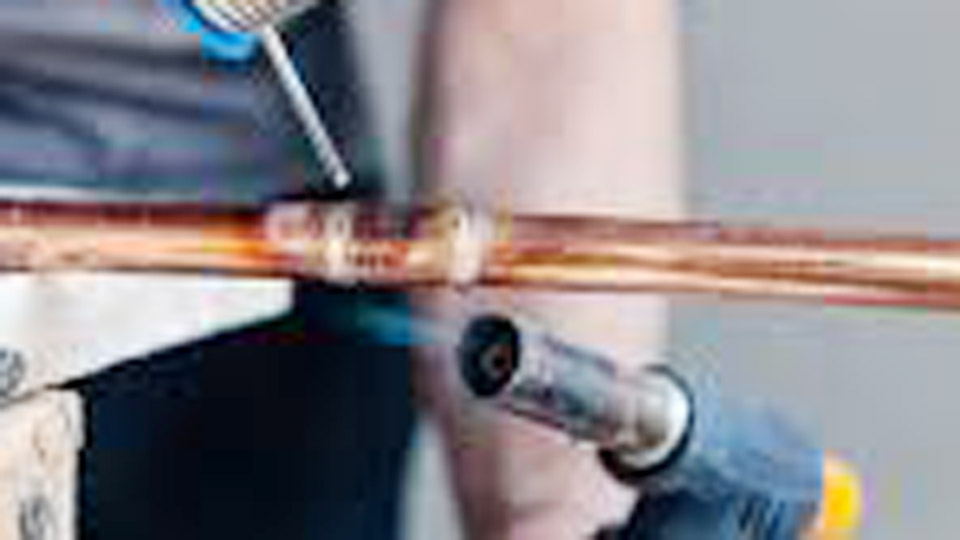
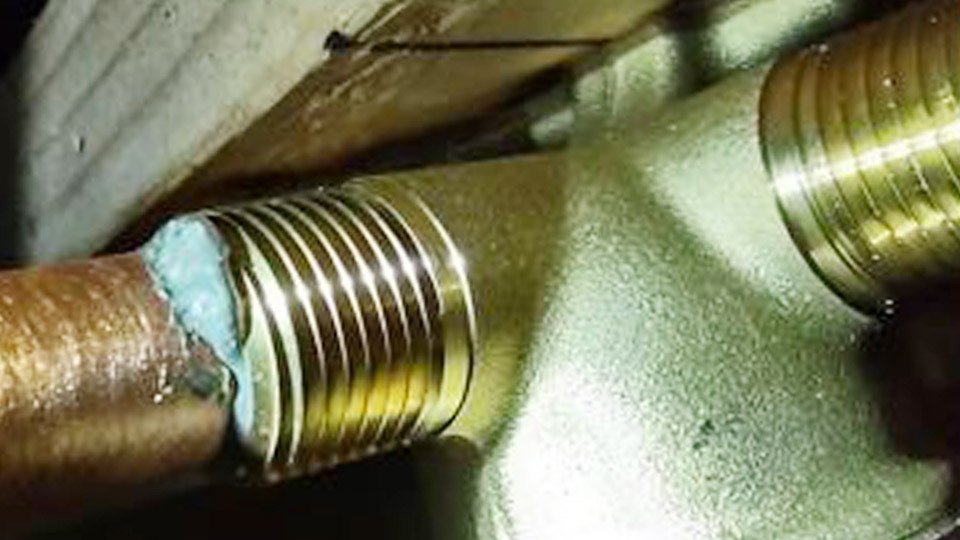
Attempting soldering copper pipe without flux leaves the joint vulnerable the moment heat hits the metal. Copper forms an oxide layer almost instantly under the torch, blocking the solder from wetting the surface or drawing into the capillary gap.
The result is a cold joint that may hold momentarily under low pressure but fails under thermal cycling, vibration, or sustained system pressure. Flux chemically removes and prevents that oxide so molten solder can form a true metallurgical bond.
For pressurized plumbing, HVAC, or potable-water lines, skipping it produces unreliable results that codes and long-term performance both reject. Understanding exactly when flux can be omitted—and when it cannot—determines whether the joint survives service.
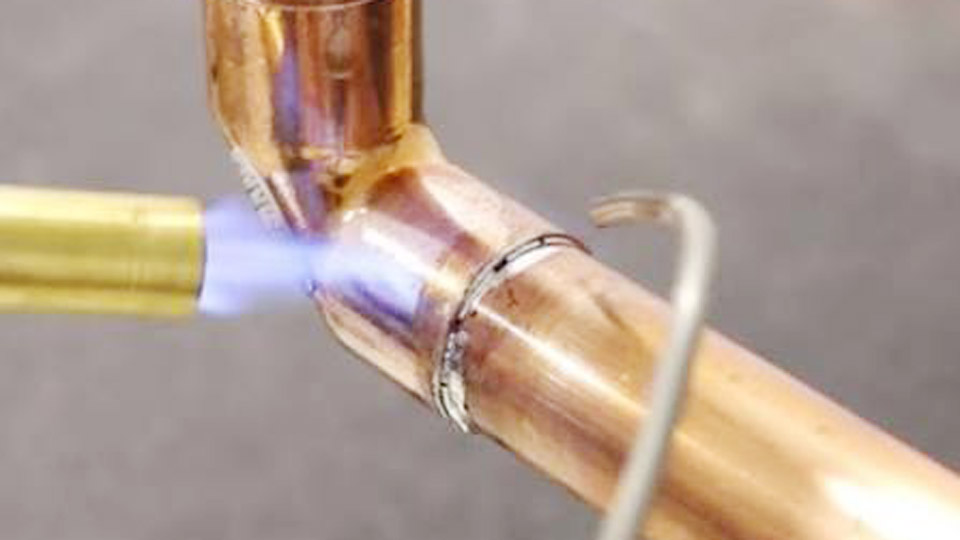
Image by satro.org.uk
Why Standard Soft Soldering Fails Without Flux
Soft soldering (filler metals melting below 840 °F / 450 °C) depends on clean metallic surfaces and capillary action. Without flux those conditions collapse.
Oxide Formation and Wetting Failure
Heating copper in air generates cuprous and cupric oxides within seconds. Molten tin-based solder (95/5, 97/3, or lead-free alloys meeting ASTM B32) cannot wet an oxidized surface.
Instead of spreading and alloying, the solder beads up and rolls off. Even aggressive mechanical cleaning with emery cloth or abrasive pads only delays oxidation; the heat of the torch recreates the barrier before the solder can flow.
Capillary Action Breakdown in Joint Clearances
Proper sweat joints rely on a radial clearance of roughly 0.002–0.005 in between tube and fitting cup. Capillary force pulls the liquid solder into that annulus only when the surfaces are oxide-free and the solder wets both walls.
Without flux the molten metal remains on the outer surface or fills isolated spots, leaving continuous voids. Pressure testing may pass briefly, but thermal expansion and contraction open leak paths.
ASTM B828, the standard practice for capillary soldering of copper tube, lists flux application as a mandatory step after cleaning and before heating for this reason.
When Brazing Allows Fluxless Copper-to-Copper Joints
Brazing with phosphorus-bearing filler metals changes the chemistry. These alloys operate above 840 °F and can eliminate separate flux under narrow conditions.
Phosphorus Self-Fluxing Mechanism in BCuP Alloys
AWS A5.8 BCuP-series rods (commonly called phos-copper or Sil-Fos) contain 5–7.5 % phosphorus. At brazing temperature the phosphorus reduces copper oxides, forming a liquid slag that floats free and allows the copper-rich filler to wet pure copper surfaces.
No external flux is required for wrought copper tube to wrought copper fittings. The joint is made by heating the assembly until the copper shows a dull cherry-red color, then touching the rod to the joint edge so capillary action draws the filler in.
Temperature and Alloy Selection for Reliable Flow
Typical solidus temperatures range from 1190 °F (BCuP-5 with 15 % silver) to 1310 °F (BCuP-2 with zero silver). Liquidus values reach 1460–1500 °F. BCuP-2 offers highest fluidity for tight clearances (0.001–0.003 in) at lowest cost but lower ductility.
BCuP-5 (15 % Ag) provides better gap-filling ability (up to 0.006 in) and vibration resistance, preferred for refrigeration lines. Heat evenly around the fitting; the filler should melt from the heat of the base metal, not from direct flame contact with the rod.
Limitations with Brass, Bronze, or Dissimilar Metals
Phosphorus does not flux brass, bronze, or any ferrous or nickel-bearing alloy. Attempting fluxless brazing on those combinations produces brittle intermetallics or incomplete wetting. Separate fluoride- or borate-based brazing flux rated for the temperature range becomes mandatory.
BCuP alloys are also unsuitable for steel or stainless because phosphorus forms brittle phosphides that crack under load.
Joint Preparation Requirements for Any Fluxless Attempt
Even self-fluxing brazing demands stricter surface and fit control than fluxed soft soldering.
Surface Condition and Clearance Tolerances
Both the tube exterior and fitting interior must be abraded to bright metal immediately before assembly. Residual oils, fingerprints, or oxide scale defeat the phosphorus reaction.
Maintain joint clearance inside the 0.001–0.005 in window; wider gaps starve capillary flow and produce incomplete fillets. Square cuts and full insertion depth are non-negotiable—any gap at the bottom of the cup becomes a stress riser.
Heating Sequence to Minimize Oxidation Time
Bring the entire joint to temperature rapidly and uniformly with a neutral or slightly reducing flame. Prolonged heating before the filler is applied allows oxides to reform faster than the phosphorus can reduce them.
Once the copper reaches cherry red, apply the rod promptly at the joint seam opposite the flame so the molten alloy is drawn through the full circumference. Quench only after solidification is complete; premature cooling traps incomplete flow.
Mechanical Joining Options That Eliminate Flux and Heat
When torch work or flux residue is undesirable, several mechanical systems produce code-accepted joints without metallurgical bonding.
Push-Fit and Press-Connect Performance Data
Push-fit fittings (O-ring plus stainless grab ring) seal by compression of an elastomeric element against the tube OD.
Rated working pressures commonly reach 200 psi for water and 125 psi for air at ambient temperatures; temperature limits are typically 200 °F continuous. Installation requires only square cuts, deburring, and full insertion to the depth mark.
Press-connect systems use a powered tool to crimp a stainless or copper sleeve around an O-ring, producing permanent joints rated to 300–600 psi depending on size and manufacturer.
Both eliminate open flame and chemical residue, making them suitable for occupied spaces or systems that cannot be fully drained.
Compression Fitting Decision Factors
A brass nut and ferrule create a metal-to-metal seal under torque. These fittings are reusable and require no special tools beyond two wrenches.
They perform well on soft or hard copper up to 1 in diameter at pressures comparable to soldered joints, but repeated thermal cycling can loosen the ferrule if the nut is not properly retightened.
They remain the practical choice for temporary or serviceable connections where future disassembly is expected.
Decision Criteria for Choosing Method by Application
Select the process by matching joint demands to the capabilities of each technique.
Pressure, Temperature, and Code Considerations
Soft-soldered joints with flux remain the baseline for most potable-water and low-pressure hydronic systems under model plumbing codes that reference ASTM B828 and B813.
Brazed BCuP joints are preferred or required for higher temperatures (above 250 °F continuous) or refrigeration lines where joint strength and vibration resistance matter.
Mechanical fittings satisfy the same pressure ratings in many jurisdictions when listed to the appropriate ASTM or ASSE standards, but some codes restrict their use in concealed or fire-protection piping. Always verify local amendments before substituting.
Wrapping Up
When flux is unavailable or prohibited by site conditions, the reliable path is either self-fluxing BCuP brazing on pure copper-to-copper or a listed mechanical system. Soft soldering without flux produces only temporary mechanical adhesion that will not survive service.
The advanced distinction is recognizing that phosphorus chemistry works solely on clean copper; any deviation in base metal or surface condition reintroduces the need for external flux or a different joining method entirely.
FAQs
Can you solder copper pipe without flux?
No for standard soft soldering. Oxides prevent wetting and capillary fill, producing cold joints that leak under pressure or thermal cycling. Flux is required by ASTM B828 practice.
Do you need flux when brazing copper to copper?
No when using BCuP (phosphorus-copper) alloys. The phosphorus acts as a self-fluxing agent on pure copper. Flux is still required for brass, bronze, or dissimilar metals.
What temperature is needed for fluxless copper brazing?
Heat the joint to dull cherry red, approximately 1300–1500 °F depending on the specific BCuP alloy. The filler melts from the heat of the copper, not from direct flame on the rod.
What are reliable alternatives to soldering copper pipe?
Push-fit, press-connect, and compression fittings create pressure-tight joints without heat or flux. Verify pressure and temperature ratings and local code acceptance for the specific system.