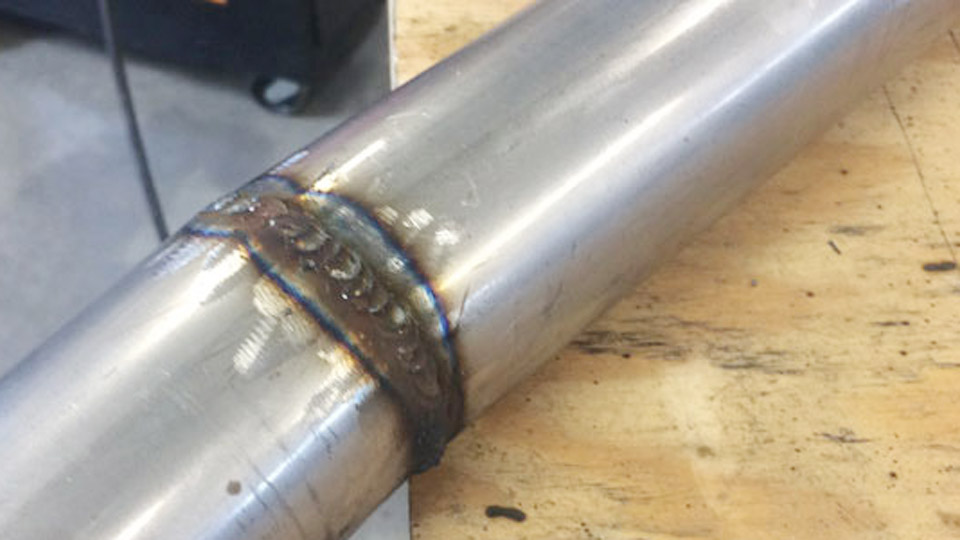
Setting up a MIG welder without shielding gas requires a different approach than conventional gas-shielded MIG welding. In this process, flux-cored wire creates its own protective shield, eliminating the need for a gas cylinder while still producing strong welds in many fabrication and repair applications.
Understanding how to set up a MIG welder without gas is critical because incorrect polarity, wire selection, or machine settings can lead to poor penetration, excessive spatter, unstable arc performance, and weld defects that require costly rework.
This setup method is especially valuable for outdoor welding, farm repairs, and field fabrication where wind can disrupt shielding gas coverage.
When configured correctly, a gasless MIG welder delivers reliable arc stability and consistent weld quality across a wide range of steel projects. The key is knowing which adjustments separate a successful setup from one that creates ongoing welding problems.
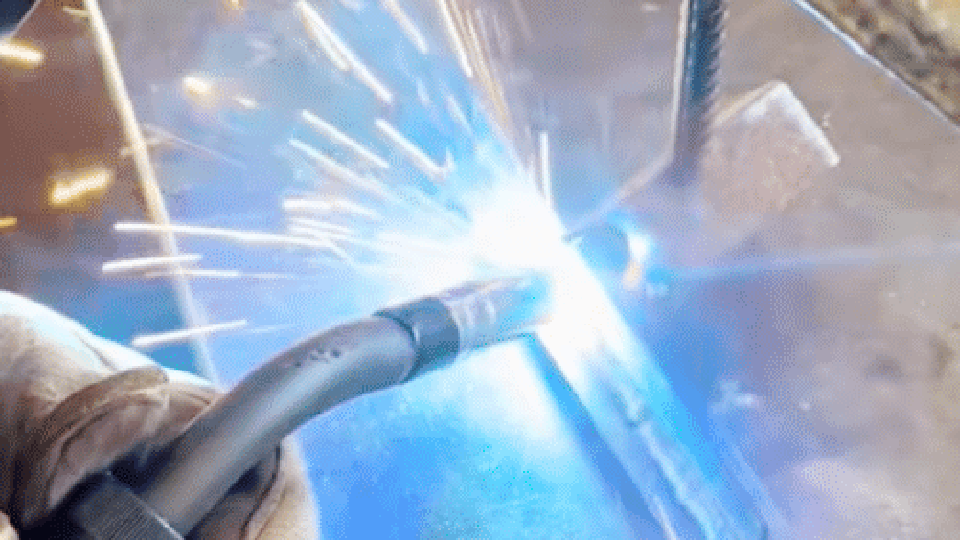
Image by yeswelder
Understanding Flux-Cored Arc Welding (FCAW-S) for Gasless Operation
Core Differences from Standard MIG (GMAW)
Standard MIG relies on external shielding gas to protect the molten pool from atmospheric contamination. Gasless MIG switches to tubular flux-cored wire where the flux inside generates its own shielding gases and slag as it burns.
This self-shielded process (FCAW-S) produces a more forceful arc and operates effectively in windy or outdoor environments where gas would dissipate.
The wire contains deoxidizers and alloying elements that handle surface contaminants better than solid wire, making it suitable for mildly rusty or scaled material after basic cleaning. However, it generates more spatter, visible slag, and fumes compared to gas-shielded processes.
When Gasless Setup Makes Technical Sense
Choose gasless for field repairs, farm equipment, structural tacks, or any scenario with limited gas access or wind exposure. It excels on material from 18-gauge up to about 1/2 inch with appropriate wire diameter and settings. For critical code work or multi-pass welds requiring high toughness, gas-shielded options or other processes may outperform it.
Essential Equipment and Consumables Preparation
Selecting the Right Flux-Cored Wire
Opt for self-shielded wires like E71T-GS for single-pass, thin-to-medium applications (up to 3/16 inch) on mild or galvanized steel, or E71T-11 for limited multi-pass capability on thicker sections. Common diameters are 0.030″ for thinner material and versatility, and 0.035″ for higher deposition on heavier stock.
Match wire diameter to your welder’s output capacity and material thickness. Smaller diameters reduce burn-through risk on sheet metal; larger ones support faster travel speeds and deeper penetration.
Drive System Configuration
Flux-cored wire is softer and tubular, so install knurled drive rollers sized to the wire diameter. These provide grip without crushing the wire, unlike smooth V-groove rollers suited for solid wire. Adjust tension so the wire feeds smoothly but can be stopped with firm finger pressure—typically lower than for solid wire to prevent bird-nesting or deformation.
Inspect and clean the liner; replace if contaminated. Use a contact tip sized for the wire (e.g., 0.035″ tip for 0.035″ wire) with adequate clearance.
Polarity and Power Source Adjustments
Switching to DCEN (Electrode Negative)
This is the most critical setup step. Most MIG welders default to DCEP (electrode positive) for solid wire. For self-shielded flux-cored wire, reverse polarity to DCEN: connect the torch to the negative terminal and the work clamp (ground) to positive. This concentrates more heat at the workpiece for better penetration and arc stability with flux-cored wires.
Consult your welder manual for the exact location of polarity connections—often inside near the drive assembly or on the front panel with quick-change leads.
Voltage and Wire Feed Speed (WFS) Fundamentals
Flux-cored arcs run hotter than solid wire. Start with manufacturer charts or general guidelines:
- For 0.030″ wire on 1/8″ steel: ~17-19V, 200-300 IPM WFS.
- For 0.035″ wire on thicker material: ~18-21V, 250-400+ IPM depending on exact thickness and joint.
Use the rule of thumb: approximately 1 amp per 0.001″ of material thickness as a baseline, then fine-tune WFS. Higher voltage widens the arc and reduces spatter; excessive WFS causes burn-through or poor fusion. Test on scrap, aiming for a smooth, crackling arc sound rather than popping or humming extremes.
Step-by-Step Welder Setup Process
- Verify power is off and unplug if necessary.
- Install knurled drive rollers and thread the flux-cored wire spool.
- Set polarity to DCEN.
- Adjust drive roll tension and spool brake.
- Install appropriate contact tip and nozzle (nozzle helps direct flow but gas is off).
- Set initial voltage and WFS based on material thickness.
- Connect work clamp securely to clean metal.
- Test feed without arc to ensure smooth delivery.
Fine-tune while welding: maintain 3/4″ to 1″ contact tip to work distance (stickout) for gasless—longer than typical MIG to allow flux to generate shielding effectively.
Welding Technique and Parameter Optimization
Torch Handling and Travel Direction
Use a drag or pull technique (torch angled 10-15° trailing the puddle) rather than pushing. This keeps the slag behind the pool and prevents inclusions. Maintain consistent travel speed to avoid undercut or excessive buildup.
Joint Preparation and Position Considerations
Clean surfaces to remove heavy mill scale, rust, paint, or moisture, though flux-cored tolerates more contamination than solid wire. For multi-pass welds, chip and wire-brush slag between passes thoroughly. Flat and horizontal positions are easiest; vertical-up works with proper settings to control the slag-supported pool.
Parameter Tuning for Common Thicknesses
Adjust for specific scenarios:
- Thin sheet (18-16 ga): Lower voltage (15-17V), moderate WFS to prevent burn-through.
- 1/8″ to 1/4″: Balanced settings with slightly increased voltage for fluidity.
- Thicker sections: Higher WFS for deposition, monitor heat input to control distortion.
Experiment with inductance (if available) to soften the arc and reduce spatter.
Advantages and Limitations in Practice
Performance Benefits
Gasless operation offers unmatched portability—no cylinder to transport or refill. It performs reliably outdoors in moderate wind and on less-than-perfect material. Deposition rates are high, and penetration is typically deeper than equivalent solid-wire MIG.
Trade-offs and Mitigation
Expect increased spatter, slag cleanup, and fumes. Use proper ventilation. Weld appearance is rougher, requiring more post-weld grinding for cosmetic applications. Wire cost per pound is higher than solid wire, but overall project savings from no gas often compensate. Avoid on very thin material or where low-hydrogen properties are mandatory without verifying wire specs.
Troubleshooting Common Setup Issues
Arc Instability or Poor Feeding
Check polarity first—wrong polarity causes erratic arcs and poor penetration. Verify drive roll alignment, tension, and liner condition. Bird-nesting often stems from excessive tension or contaminated liners.
Excessive Spatter or Burn-Through
Reduce WFS or increase voltage slightly. Shorten stickout if too long. Ensure correct wire type for the thickness.
Slag Inclusions or Lack of Fusion
Drag technique consistently, clean between passes, and maintain optimal parameters. Insufficient heat (low voltage) fails to melt base metal adequately.
Monitor contact tip wear—replace frequently as flux-cored is more aggressive.
Material-Specific Considerations
Mild Steel and Structural Applications
E71T-11 or similar wires provide good strength for repairs and fabrication. For galvanized material, E71T-GS handles zinc vapors better in single passes.
Thickness Transitions and Dissimilar Joints
Set parameters for the thicker member. Use stringer beads or slight weave for control. Preheat heavy sections if needed to reduce cracking risk.
Safety and Operational Best Practices
While basic safety (PPE, ventilation) is assumed, focus on process-specific needs: flux-cored produces more fumes, so position yourself upwind outdoors or use strong exhaust. Slag is hot and can pop—allow cooling before chipping.
Real-World Application Insights
Successful gasless MIG setups hinge on polarity reversal, proper drive components, and drag technique paired with test welds on scrap. These elements determine whether you achieve consistent penetration and bead profile or fight defects.
For advanced users, combining knowledge of heat input calculations (amps × volts × 60 / travel speed in ipm) allows precise control over mechanical properties and distortion in production environments.
This expertise turns a simple gasless setup into a versatile, field-ready tool that rivals more complex systems in the right applications.
FAQ
What wire size should I use for gasless MIG on 1/8 inch steel?
0.030″ diameter offers the best balance of control and penetration for most hobby and light fabrication on 1/8″ material. Move to 0.035″ for faster deposition on repeated thicker welds.
Can I use gas with flux-cored wire?
Some dual-shielded flux-cored wires require gas for optimal performance, but standard self-shielded gasless wires are formulated for no external gas. Adding gas to self-shielded wire is unnecessary and can disrupt the flux chemistry.
Why does my gasless setup produce so much spatter?
Common causes include incorrect polarity (must be DCEN), improper voltage/WFS balance, excessive stickout, or wrong drive roll tension. Fine-tune on scrap and ensure knurled rollers.
Is gasless MIG as strong as regular MIG?
Properly executed gasless welds on mild steel provide comparable tensile strength for many non-code applications. Multi-pass capability and toughness vary by specific wire classification—check manufacturer data for E71T-11 versus GS variants.