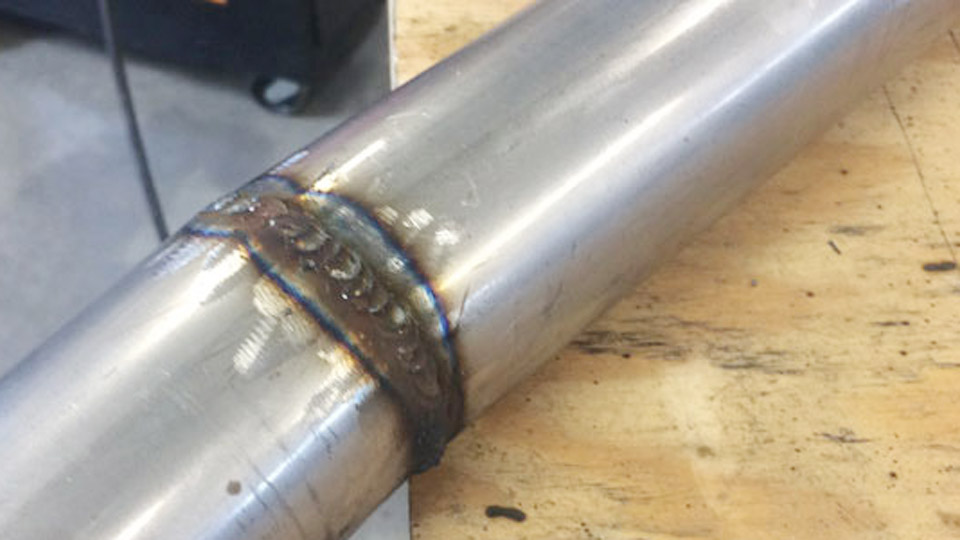
Attempting to run standard self-shielded flux-cored wire on aluminum produces immediate failure: excessive spatter, black soot, porosity, and a weak bead that lacks fusion.
The search for how to weld aluminum with gasless MIG arises because many portable welders are sold as “gasless only,” yet aluminum’s oxide layer and thermal conductivity demand different protection than steel flux-core provides.
Correct process selection determines whether the joint reaches usable strength or simply sits on the surface.
Understanding the metallurgical barriers, available consumables, and actual machine requirements prevents wasted material and unsafe repairs on structural or pressure-containing parts.
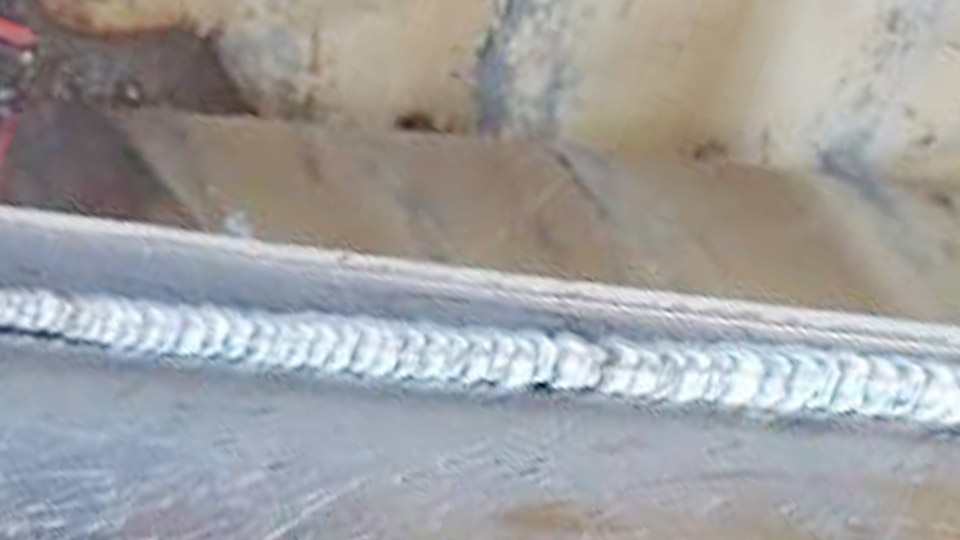
Image by metal.fabrication.tips
Why Standard Gasless Flux-Core Fails on Aluminum
Oxide Melting Point and Shielding Requirements
Aluminum oxide melts near 3700 °F while the base metal melts around 1220 °F. Steel self-shielded flux (E71T-11 / E71T-GS) generates a slag system designed for carbon steel chemistry and cannot reliably disrupt or float that oxide. The result is inclusions, incomplete fusion, and hydrogen porosity from atmospheric exposure.
Polarity and Heat-Input Mismatch
Self-shielded steel wire normally runs DCEN. Aluminum solid-wire MIG requires DCEP so the arc cleaning action occurs at the workpiece. Running the wrong polarity on aluminum concentrates heat at the wire, producing an unstable arc and shallow penetration.
Aluminum also conducts heat roughly four times faster than steel, so the same voltage and wire-feed settings that work on mild steel simply under-heat the joint.
Absence of Commercial Self-Shielded Aluminum Wire
Major manufacturers publish no AWS A5.10 or equivalent classification for self-shielded aluminum flux-cored wire suitable for structural fusion welding. Products labeled “gasless aluminum MIG wire” are frequently solid ER4043/ER5356 mis-marked, aluminum-zinc brazing rods, or non-classified imports whose flux is corrosive and difficult to remove.
Laboratory demonstrations have existed for decades, yet production versions remain unavailable because the required fluxes are aggressive and leave residues that promote corrosion.
Equipment Decisions When a Gasless Machine Is the Only Option
Converting a Multi-Process Welder
Most modern inverter machines that advertise flux-core capability also accept a gas solenoid and regulator. Install a pure-argon cylinder, set flow to 20–30 CFH, change polarity to DCEP, and fit either a spool gun or a PTFE liner with U-groove drive rolls. This converts the “gasless” platform into a functional aluminum MIG system without buying a second power source.
Spool-Gun Versus Push-Pull Requirements
Aluminum wire is soft. A standard 10–15 ft steel liner causes bird-nesting. A spool gun places a 1 lb spool at the handle so the wire travels only a few inches. Push-pull guns use dual drive motors and are preferred for longer leads or production work. Drive-roll pressure must stay light—just enough to feed without flattening the wire.
Machine Output Threshold
Successful aluminum MIG on ⅛ in plate typically needs 150–200 A continuous. Many 120 V gasless-only units top out near 140 A and lack the duty cycle for sustained aluminum work. Verify the manufacturer’s aluminum parameter chart before attempting anything thicker than 3/32 in.
Surface Preparation That Determines Weld Integrity
Oxide Removal Sequence
Degrease with acetone or a dedicated aluminum cleaner. Immediately before welding, brush the joint with a stainless-steel wire brush used only on aluminum. Brush in one direction; cross-hatching traps oxide particles. On cast or heavily oxidized material, a light stainless abrasive disc may be required, followed by a final solvent wipe.
Joint Design and Fit-Up
Aluminum expands more than steel. Leave 1/16–3/32 in root opening on butt joints thicker than ⅛ in and use intermittent tacks to control distortion. Bevel thicker sections to 60° included angle so the arc can reach the root without excessive heat input.
Practical Parameter Windows for Aluminum MIG (Argon-Shielded)
Because true self-shielded aluminum wire is unavailable, the following starting points apply to solid ER4043 or ER5356 wire under 100 % argon. Always confirm with the machine’s door chart.
| Material Thickness | Wire Diameter | Voltage | Wire Feed Speed | Approximate Amperage | Notes |
|---|---|---|---|---|---|
| 1/16 in (1.6 mm) | 0.030 in | 17–19 V | 180–250 IPM | 60–90 A | Short-circuit or pulsed preferred |
| 1/8 in (3.2 mm) | 0.030–0.035 in | 19–22 V | 250–350 IPM | 90–140 A | Common shop range |
| 3/16 in (4.8 mm) | 0.035 in | 21–24 V | 320–420 IPM | 130–180 A | Preheat optional |
| 1/4 in (6.4 mm) | 0.035–3/64 in | 22–25 V | 380–480 IPM | 160–220 A | Multi-pass typical |
Travel speed must stay high enough to keep the puddle ahead of the heat-affected zone—typically 12–20 IPM depending on thickness. Stick-out of ½–¾ in helps prevent burn-back into the contact tip.
Filler Alloy Selection
ER4043 (Al-Si) flows more fluidly and resists hot cracking on 6XXX series and castings. ER5356 (Al-Mg) delivers higher as-welded strength and better color match after anodizing on 5XXX series. Match the filler to the base alloy and service requirements rather than defaulting to one type.
Torch Technique Specific to Aluminum
Push Angle Only
A 10–15° push (forehand) angle directs the argon shielding gas ahead of the arc, providing the cathodic cleaning action that removes reforming oxide. Dragging traps oxide and produces a black, porous bead.
Consistent Travel and Crater Fill
Aluminum’s high thermal conductivity makes the start cold and the end hot. Begin on a run-on tab or use a higher wire-feed setting for the first half-second. At the crater, either increase travel speed sharply or use the machine’s crater-fill function to avoid solidification cracking.
Interpass Cleaning
Between passes, remove all slag or soot with a clean stainless brush. Residual flux from any experimental “gasless” product is highly corrosive and must be eliminated completely.
Common Defects and Immediate Corrections
Porosity
Caused by contaminated base metal, insufficient argon flow, or drafts. Increase gas flow 5 CFH, shorten stick-out, and re-clean the joint. Wind greater than 5 mph requires a windscreen even with argon.
Lack of Fusion
Usually from low heat input or excessive travel speed. Raise voltage 1 V or reduce travel speed while maintaining the push angle. Verify DCEP polarity.
Burn-Through on Thin Sheet
Drop voltage 1–2 V, increase travel speed, and consider pulsed MIG if the machine offers it. Backing bars of copper or aluminum can also limit heat sink.
Wire Feed Interruptions
Flattened wire or shavings indicate excessive drive-roll pressure. Install U-groove rolls, reduce tension, and confirm the liner is PTFE rather than steel.
When Gasless Approaches Are Acceptable Versus When They Are Not
Non-structural cosmetic repairs, temporary fixtures, or very light-gauge sheet where strength is secondary may tolerate experimental self-shielded products if the operator accepts reduced mechanical properties and thorough post-weld cleaning. Any joint that will see load, vibration, pressure, or code inspection requires either argon-shielded solid-wire MIG or AC TIG.
Attempting to force steel flux-core onto aluminum for structural work creates a false sense of completion that fails under service loads.
Choosing the correct path begins with identifying the alloy, thickness, and service demand, then matching the process to those requirements rather than to the machine already on the bench.
When the only available unit is gasless-only and the joint is critical, the advanced decision is to acquire a spool-gun-compatible multi-process machine or outsource the aluminum portion; the cost of a failed aluminum weld almost always exceeds the cost of the proper equipment.
FAQs
Can you weld aluminum with a regular gasless MIG welder and steel flux-core wire?
No. Steel self-shielded wire produces porous, weakly fused beads on aluminum because the flux chemistry and polarity are incompatible. Use solid aluminum wire and 100 % argon instead.
What polarity is required for aluminum MIG?
DCEP (electrode positive). This provides the arc cleaning action needed to break aluminum oxide. DCEN is correct only for most steel self-shielded wires.
Do I need a spool gun to MIG weld aluminum?
Yes for most setups. Soft aluminum wire bird-nests in a standard liner longer than a few feet. A spool gun or push-pull system solves the feeding problem.
Is there a true self-shielded aluminum flux-cored wire available?
No commercially reliable AWS-classified product exists for structural fusion welding. Products marketed as such are usually solid wire, brazing rods, or non-classified imports unsuitable for load-bearing joints.