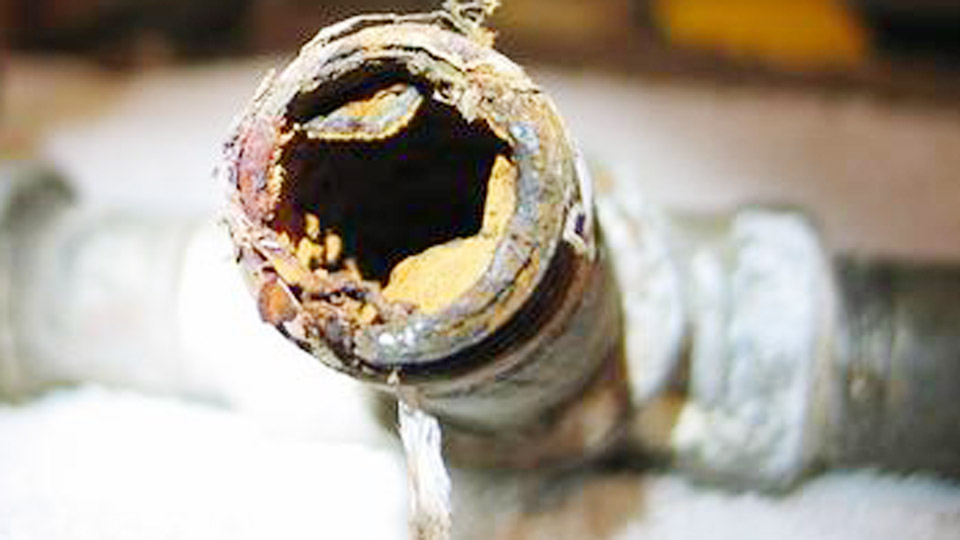
Most welders discover the hard way that striking an arc directly between aluminum and steel produces a brittle, cracked joint that fails under modest load.
The question of how to weld aluminum to steel is not answered by ordinary TIG, MIG, or stick techniques because the metals form hard intermetallic compounds and possess incompatible melting points and expansion rates.
Getting a reliable joint matters for structural frames, heat exchangers, marine superstructures, and lightweight assemblies where mixed-material performance is required.
The workable solutions rely on transition inserts, controlled brazing, or mechanical isolation rather than direct fusion. Choosing the correct approach depends on load, thickness, available equipment, and corrosion exposure.
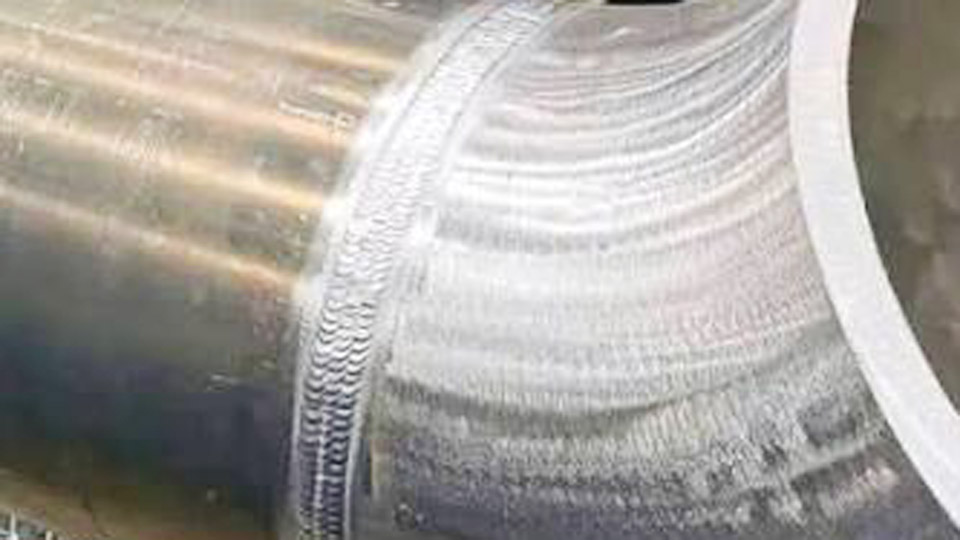
Image by fb/I See You Don’t Know Shit About Welding
Why Direct Fusion Welding Fails Between Aluminum and Steel
Melting-Point and Heat-Input Mismatch
Aluminum melts near 1220 °F (660 °C) while mild steel melts near 2500 °F (1370 °C). Any arc hot enough to wet the steel immediately overheats the aluminum, causing burn-through or excessive dilution.
The high thermal conductivity of aluminum further pulls heat away from the joint, making consistent puddle control nearly impossible on the steel side.
Formation of Brittle Intermetallic Compounds
When molten aluminum contacts solid or molten iron, Fe-Al phases such as FeAl₃ and Fe₂Al₅ form rapidly. Layers thicker than roughly 1–2 µm become continuous and brittle, reducing joint ductility and tensile strength.
Conventional arc processes generate enough heat and dwell time for these layers to grow beyond acceptable limits, producing cracks under residual stress or service loading.
Thermal Expansion and Residual Stress
Aluminum expands roughly twice as much as steel for the same temperature change. Upon cooling, the differential contraction places the interface under tension. Combined with the intermetallic layer, this residual stress frequently initiates cracking even before the part leaves the fixture.
Bimetallic Transition Inserts: The Structural Solution
How Transition Inserts Are Made and Used
Commercially available inserts (often called DetaCouple, Triplate, or similar) consist of aluminum and steel plates permanently bonded by explosion welding or roll bonding. A pure-aluminum interlayer is sometimes included to improve bond quality.
The finished insert presents an aluminum face on one side and a steel face on the other. Standard welding procedures then join like-to-like metals: aluminum filler on the aluminum side and carbon-steel filler on the steel side.
Temperature Control at the Bond Interface
The bonded interface must not exceed approximately 600 °F (315 °C) during subsequent welding. Exceeding this temperature allows intermetallics to thicken inside the pre-bonded zone and weakens the insert itself.
Sequence the work by welding the aluminum side first; the larger thermal mass of the remaining steel provides a heat sink that limits interface temperature during the higher-heat steel weld.
Practical Welding Parameters on Each Side
Use conventional aluminum settings on the aluminum face—AC TIG or pulsed MIG with ER4043 or ER5356 filler, pure argon, and thorough oxide removal immediately before welding.
On the steel face apply standard mild-steel parameters—DCEP MIG with ER70S-6 or SMAW with E7018, appropriate gas mix, and normal preheat if the steel section requires it. Keep arc time short and travel steadily to limit heat input into the insert body.
Brazing Aluminum to Steel for Lower-Load Joints
Suitable Filler Alloys and Temperature Windows
Aluminum-silicon or zinc-aluminum brazing alloys melt in the 800–1100 °F range, below the melting point of both base metals. Fluxes formulated for aluminum remove oxides on both surfaces and promote wetting.
Torch brazing (oxy-fuel or propane with air) or furnace brazing can be used; the key is uniform heating so the filler flows by capillary action rather than by melting the parent metals.
Joint Design and Surface Preparation Requirements
Lap joints with 0.002–0.005 in clearance give the best capillary fill. Both surfaces must be free of oil, paint, and heavy oxide.
Mechanical cleaning with a stainless-steel brush dedicated to aluminum, followed by solvent wipe, is mandatory. Apply flux evenly; excess flux residue must be cleaned after brazing to avoid corrosion.
Strength Limitations Relative to Transition Inserts
Brazed joints typically develop lower tensile and shear strength than properly welded transition-insert joints. They suit non-critical brackets, thin-gauge assemblies, and repair work where the load path can be designed around the lower allowable stress. Cyclic loading or elevated temperature service further reduces allowable design stress.
Mechanical Fastening and Isolation Strategies
Fastener Selection and Isolation Materials
Bolted or riveted joints remain the simplest and most inspectable method for many DIY and field applications. Stainless-steel fasteners combined with dielectric washers, sleeves, or insulating coatings break the galvanic couple.
PTFE-coated washers or polymer isolation pads prevent continuous electrolyte paths that accelerate corrosion of the aluminum.
Joint Geometry That Minimizes Galvanic Attack
Avoid designs that trap water at the aluminum-steel interface. Sealants compatible with both metals and with the isolation material close the joint edges. In marine or outdoor exposure, the aluminum should be the larger surface area component so that the cathodic steel area remains small relative to the anodic aluminum.
When Mechanical Joints Outperform Welded Alternatives
For serviceable assemblies, inspection access, or parts that experience vibration and thermal cycling, mechanical fastening often provides higher long-term reliability than a poorly controlled weld or braze. Replacement of individual fasteners is straightforward; replacement of a cracked intermetallic weld is not.
Specialty Processes and When They Apply
Cold-Metal-Transfer and Controlled Arc Techniques
Low-heat MIG variants such as CMT can deposit aluminum filler onto zinc-coated or specially prepared steel with limited intermetallic growth.
These processes require specialized power sources and are primarily used in automotive production for thin sheet. They are rarely practical for general shop or field work.
Solid-State Methods Outside Typical Shop Capability
Friction-stir welding, magnetic-pulse welding, and ultrasonic welding produce solid-state bonds with minimal intermetallics.
Equipment cost and joint geometry restrictions confine these methods to industrial production. They are mentioned only to indicate that research-grade solutions exist beyond conventional arc processes.
Coating Approaches Before Welding
Hot-dip aluminizing or thermal-spray aluminum coatings on steel create a surface that can accept aluminum filler with reduced intermetallic thickness.
The coating itself must be thick and continuous; thin or porous coatings still allow iron-aluminum reaction. This route is more common in specialized fabrication than in general repair.
Decision Criteria for Selecting the Correct Method
Load, Thickness, and Service Environment
Structural or safety-critical joints on thicker sections almost always justify bimetallic transition inserts. Thin non-structural brackets can use brazing or mechanical fastening. Outdoor or marine exposure demands isolation against galvanic corrosion regardless of joining method.
Equipment and Skill Constraints
Shops already equipped for aluminum and steel welding can adopt transition inserts with only the added cost of the insert itself. Brazing requires only a torch and appropriate fillers. Mechanical methods need no welding equipment beyond basic tools for hole preparation and torque control.
Cost Versus Performance Trade-Offs
Transition inserts carry a higher unit cost but deliver the highest joint integrity when welded correctly. Brazing and mechanical fastening have lower material cost yet impose design compromises on allowable load and durability.
Evaluate total installed cost including preparation, inspection, and expected service life rather than filler or insert price alone.
Wrapping Up
Selecting the proper route for aluminum-to-steel joining begins with rejecting direct fusion and ends with matching load, environment, and available process capability.
Transition inserts remain the highest-performance option for structural work; brazing and isolated mechanical joints cover the majority of lower-demand applications.
Advanced practice further limits heat input at every dissimilar interface and verifies intermetallic thickness through metallography or mechanical testing when joint criticality demands it.
FAQs
Can you TIG or MIG weld aluminum directly to steel?
No. Direct arc welding produces brittle intermetallic layers that crack under load. Use transition inserts, brazing, or mechanical fastening instead.
What is the temperature limit for bimetallic transition inserts?
Keep the aluminum-steel interface below approximately 600 °F (315 °C) during welding to prevent intermetallic growth inside the pre-bonded zone.
Is brazing strong enough for structural aluminum-to-steel joints?
Brazing is suitable for lower-load and thin-gauge applications. Structural or high-fatigue joints generally require transition inserts or engineered mechanical connections.
How do you prevent galvanic corrosion in aluminum-steel joints?
Isolate the metals with dielectric washers, sleeves, or coatings and seal the joint edges so continuous electrolyte paths cannot form.