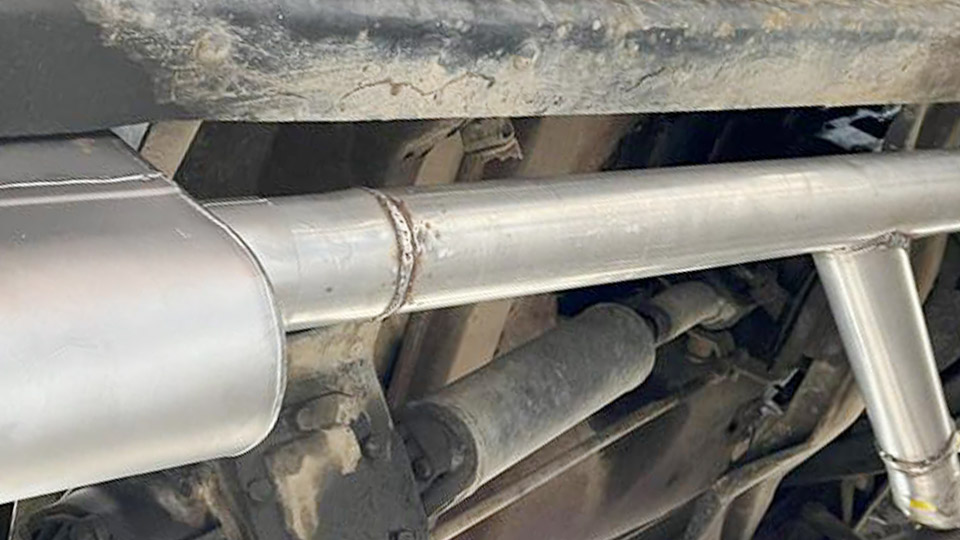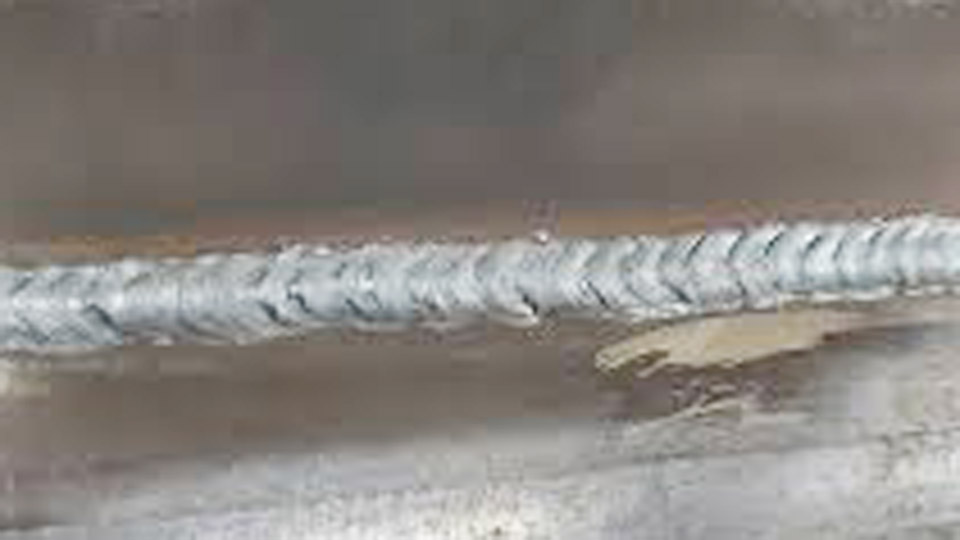
Heat distortion on thin sheet, difficulty joining dissimilar metals, restricted access for a torch or electrode, or the simple absence of a welding machine forces fabricators to look beyond arc processes.
Choosing among the top alternatives to welding metal determines whether the joint carries structural load, survives vibration, remains serviceable, or avoids metallurgical changes in the base material.
Brazing, structural adhesives, mechanical fasteners, and limited-use soldering each deliver different combinations of strength, heat input, and joint geometry.
Selecting the wrong method produces either under-strength assemblies or unnecessary cost and complexity. The decision hinges on required shear or tensile capacity, service temperature, joint accessibility, and whether the connection must ever be disassembled.
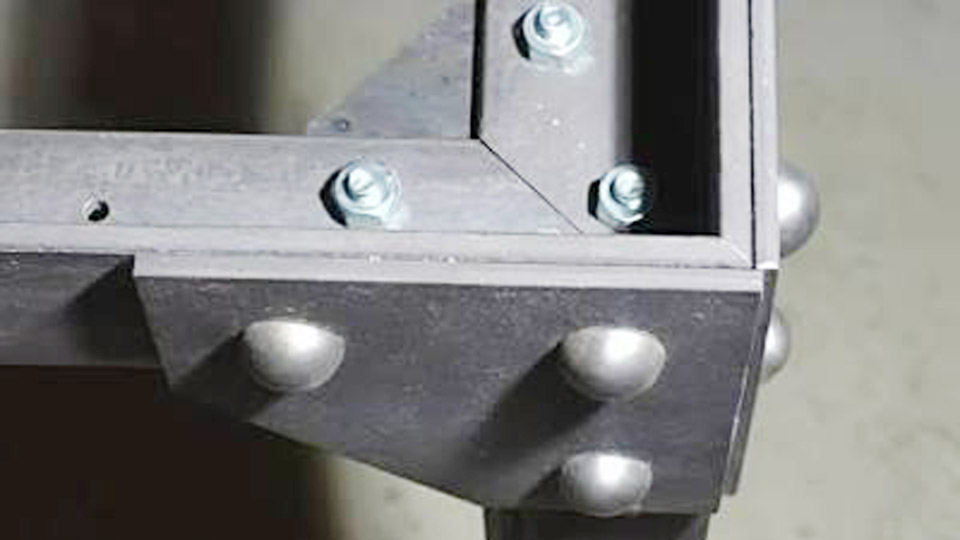
Image by fb/Steampunk and found artists
When Brazing Delivers Comparable Strength With Far Less Distortion
Brazing melts only the filler metal above 450 °C while the base metals remain solid. Capillary action draws the molten alloy into a tightly fitted joint, producing a continuous metallurgical bond without the fusion zone or heat-affected zone created by welding.
Joint Clearance and Capillary Requirements
Optimal clearance for most silver- and copper-based fillers falls between 0.03 mm and 0.15 mm. Larger gaps interrupt capillary flow and leave voids; smaller gaps restrict filler entry.
Lap joints are preferred over butt joints because they increase the bonded area and raise load capacity. Flux or controlled atmosphere removes oxides so the filler can wet both surfaces cleanly.
Temperature Windows and Filler Selection
Torch, induction, or furnace heating typically operates between 620 °C and 1 100 °C depending on the alloy. Silver-bearing fillers (BAg series) flow at lower temperatures and join steel, stainless, copper, and many dissimilar combinations.
Copper-phosphorus alloys suit copper-to-copper HVAC tubing. Nickel-based fillers serve higher-temperature service. Because the base metal never melts, residual stress and distortion remain markedly lower than in fusion welds of equivalent thickness.
Strength and Service Limits Relative to Welding
A properly designed brazed lap joint can approach the tensile strength of the weaker base metal under static load. Pressure-containing joints in refrigeration and heat exchangers routinely rely on brazing rather than welding because leak-tightness is easier to achieve and thin walls suffer less warpage.
Cyclic fatigue performance is generally lower than a continuous weld of similar cross-section, so joint overlap must be increased when vibration or pressure cycling is present.
Structural Adhesives That Distribute Load Across the Entire Bond Line
Modern two-part epoxies and methyl-methacrylate (MMA) adhesives achieve lap-shear strengths of 15–40 MPa on properly prepared steel and aluminum. Unlike a weld bead or fastener that concentrates stress at a discrete location, the adhesive spreads load over the full overlap area.
Surface Preparation That Controls Final Strength
Degreasing followed by light abrasion or chemical etching removes oils and oxides. On aluminum the native oxide layer must be disrupted immediately before bonding; otherwise strength drops sharply.
Some MMA formulations tolerate light residual oil and reduce the need for aggressive cleaning, which is useful in production environments. Bond-line thickness is typically controlled between 0.1 mm and 0.5 mm with glass beads or designed stand-offs.
Cure Time, Temperature Resistance, and Fatigue Behavior
Room-temperature epoxies reach handling strength in a few hours and full strength in 24 h. Elevated-temperature post-cure can raise glass-transition temperature and chemical resistance. Service temperatures for high-performance epoxies commonly reach 150–200 °C; above that limit strength declines.
Under cyclic loading the continuous bond line often outperforms spot welds because it eliminates the geometric stress risers at weld toes. Hybrid joints that combine adhesive with intermittent rivets or welds further improve peel resistance and damage tolerance.
Design Changes Required When Replacing Welds
Butt and T-joints that work well for welding usually require redesign into lap or scarf configurations for adhesives. Increasing overlap length raises total load capacity linearly until the substrate itself yields.
When the adhesive bond area is large enough, joint efficiency can equal or exceed that of intermittent fillet welds while eliminating distortion and residual stress.
Mechanical Fastening Choices That Preserve Removability and Avoid Heat
Bolts, rivets, self-clinching fasteners, and clinch joints transfer load through mechanical interference rather than metallurgical fusion. They introduce no heat-affected zone and allow later disassembly when threaded fasteners are used.
Stress Concentration and Hole Preparation
Every hole creates a stress riser. Edge distance, hole quality, and fastener fit determine whether the joint fails by bearing, shear-out, or net-section tension. For thin sheet, self-clinching nuts or rivet nuts provide threads without welding.
Solid and blind rivets work well on sheet-metal assemblies where access is limited to one side. Clinching (press-joining) forms an interlock without consumables and is common in automotive body panels.
Vibration Resistance and Torque Retention
Threaded fasteners can loosen under cyclic load unless locking features (prevailing-torque nuts, thread adhesives, or lock washers) are applied. Proper preload is essential; under-torqued joints frett and fatigue, while over-torqued joints can yield the fastener or crush soft substrates.
Riveted and clinched joints are permanent and generally more vibration-resistant than plain threaded connections.
Weight, Appearance, and Corrosion Considerations
Fasteners add discrete mass and create potential galvanic couples when dissimilar metals contact. Isolating washers or coatings mitigate corrosion. Cosmetically, fastener heads remain visible unless countersunk or covered; welding can produce a smoother external surface after grinding.
For assemblies that must be field-serviceable or shipped in sections, mechanical fastening remains the practical default.
Soldering Boundaries for Structural Metal Work
Soldering uses fillers that melt below 450 °C. Joint strength is correspondingly lower—typically suitable only for electrical continuity, light plumbing, or decorative work. Capillary action still governs flow, but the solidified solder cannot carry significant structural shear or tensile loads.
When service temperature or mechanical demand exceeds the capability of soft or silver solders, the joint must be upgraded to brazing or another method.
Decision Factors That Separate Successful Alternatives From Failures
Load type (static shear versus cyclic peel), maximum service temperature, need for disassembly, material combination, and available equipment dictate the ranking of alternatives. Thin-gauge or heat-sensitive parts favor adhesives or brazing.
Dissimilar metals that form brittle intermetallics under fusion welding are routinely joined by brazing or adhesives.
High-temperature or high-pressure service usually returns to welding or high-temperature brazing. Production volume influences cost: adhesives and clinching scale efficiently on automated lines, while manual torch brazing remains economical for low-volume or repair work.
A quick comparison clarifies the trade-offs:
| Method | Typical Joint Strength | Heat Input | Distortion Risk | Dissimilar Metals | Removable | Best Primary Use Case |
|---|---|---|---|---|---|---|
| Brazing | High (design-dependent) | Moderate | Low | Excellent | No | Tubing, thin sections, HVAC |
| Structural Adhesive | Medium–High (area-dependent) | None | None | Excellent | No | Panels, hybrid structures, fatigue |
| Bolts / Rivets | High (fastener-limited) | None | None | Good | Yes/No | Serviceable assemblies, thick plate |
| Soldering | Low | Low | Very low | Good | Limited | Electrical, light plumbing |
When the application demands the absolute highest continuous tensile capacity in thick, similar metals and permanence is acceptable, fusion welding still dominates.
In every other common case one of the alternatives above removes heat-related problems while meeting the required performance envelope.
Wrapping Up
Selecting the correct non-fusion method begins with quantifying the actual loads and environment rather than defaulting to the process already available in the shop.
Once those parameters are fixed, joint geometry can be optimized for capillary flow, bond area, or fastener spacing, producing a connection that is both reliable and free of unnecessary heat effects.
Advanced fabricators routinely combine methods—adhesive plus intermittent rivets, or brazing plus mechanical backup—creating hybrid joints whose overall performance exceeds any single technique.