Selecting the wrong flux type produces welds that look acceptable on the surface yet fail under load or inspection.
A cellulosic electrode that runs cleanly outdoors on pipe can introduce enough diffusible hydrogen to crack high-strength plate; a rutile flux-cored wire that freezes fast for vertical work may leave impact toughness too low for cold service.
Understanding the types of flux in welding removes that risk by linking coating or core chemistry directly to shielding gas generation, slag behavior, oxygen potential, and final mechanical properties.
The decision affects hydrogen content, deposition rate, out-of-position capability, and code compliance long before the arc is struck.
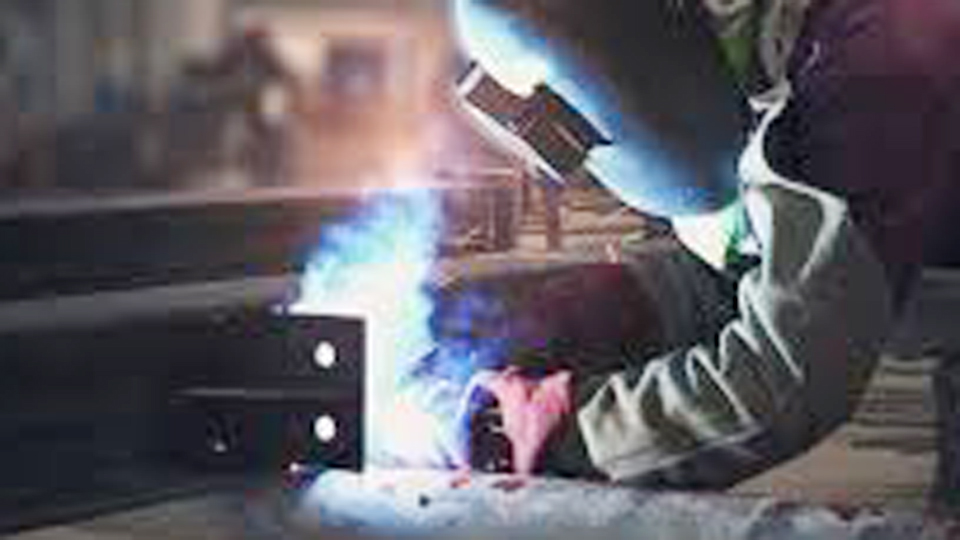
Image by simpleweld
Flux Coatings on Stick Electrodes and What They Deliver
Shielded-metal-arc electrodes carry their flux as an extruded coating. The dominant minerals and organics in that coating dictate arc force, penetration, slag fluidity, and diffusible hydrogen levels.
Cellulosic Coatings for Deep Penetration and Vertical-Down Work
Cellulosic fluxes contain 30 % or more wood pulp or related organic material plus rutile and deoxidizers. Combustion generates a high volume of hydrogen, carbon monoxide, and carbon dioxide. The resulting arc is forceful and deeply penetrating, which suits open-root pipe joints and vertical-down progression.
Diffusible hydrogen typically measures 30–45 mL/100 g of deposited metal. These electrodes (E6010, E6011, pipeline grades such as E7010) tolerate moderate mill scale and rust but are unsuitable where hydrogen-assisted cracking is a concern. Moisture in the coating is intentional; baking destroys the cellulose and ruins performance.
Rutile Coatings for Operator Comfort and Smooth Beads
Rutile (titanium dioxide) forms 40–60 % of the coating in common general-purpose electrodes such as E6013 and E7014. The slag is fluid yet freezes quickly enough for all-position work. Arc noise is low, spatter is minimal, and slag detachment is easy.
Hydrogen levels sit in the medium range (roughly 10–25 mL/100 g). Penetration is moderate rather than deep. Iron-powder additions raise deposition rate for flat and horizontal fillets.
Rutile electrodes remain the default choice for non-critical structural work, sheet metal, and training because they forgive variations in arc length and travel speed.
Basic Low-Hydrogen Coatings for Crack-Sensitive Steels
Basic fluxes rely on calcium carbonate and calcium fluoride (fluorspar). Decomposition yields a dry carbon-dioxide shield with very little hydrogen. When electrodes are stored and redried correctly, diffusible hydrogen stays below 5 mL/100 g (H4 or H5 grades).
The slag is less fluid than rutile, so operators must maintain a short arc and slightly slower travel. Notch toughness and resistance to solidification cracking are superior.
These electrodes (E7016, E7018, E7018-1) are required by most structural codes for restrained joints, thick sections, and high-strength or low-temperature service. Iron-powder versions improve deposition without sacrificing low-hydrogen performance.
Flux Systems Inside Flux-Cored Wires
Flux-cored electrodes place the flux and alloying powders inside a continuous metal sheath. Two broad families exist: gas-shielded and self-shielded. Within each family the slag system still follows rutile or basic chemistry.
Rutile Flux-Cored Wires for All-Position Productivity
Rutile cores (AWS T-1, T-9, T-12 designations) use titanium dioxide as the primary slag former. The slag freezes rapidly, supporting the puddle in vertical-up and overhead positions. Arc stability is excellent across a wide current range, spatter is low, and slag lifts cleanly.
Most rutile wires are designed for CO₂ or argon-CO₂ mixtures. Mechanical properties are good for general fabrication but impact values at low temperature are usually lower than basic systems. These wires dominate shipbuilding, structural steel, and repair work where position flexibility outweighs ultimate toughness.
Basic Flux-Cored Wires When Toughness and Low Hydrogen Matter
Basic cores (commonly T-5) rely on fluoride and lime compounds. Oxygen content in the weld metal drops, producing higher impact toughness—often usable to –40 °C or lower—and diffusible hydrogen under 5 mL/100 g. The slag is slower freezing, so out-of-position welding is more difficult and usually limited to flat and horizontal.
Arc characteristics are harsher and spatter higher than rutile. Basic flux-cored wires are selected for heavy equipment, pressure vessels, and any joint where Charpy requirements or hydrogen cracking risk dominate.
Metal-Cored and Self-Shielded Variants
Metal-cored wires contain mostly metallic powders with only minor slag formers. They behave closer to solid MIG wire, produce almost no slag, and deliver high deposition rates with good sidewall fusion. External shielding gas is still required.
Self-shielded flux-cored wires generate their own protective atmosphere from the core ingredients (fluorides, carbonates, and deoxidizers).
They eliminate gas bottles, making them practical for outdoor construction and field repair, but fume generation is higher and mechanical properties must be verified against the specific classification.
Granular Fluxes Used in Submerged Arc Welding
Submerged-arc welding pours a blanket of granular flux over the joint, completely covering the arc. Flux chemistry and manufacturing method control bead shape, current-carrying capacity, and weld-metal cleanliness.
Fused Versus Agglomerated Manufacturing Routes
Fused fluxes are melted at high temperature, quenched, and crushed. The result is chemically homogeneous, non-hygroscopic particles that resist moisture pickup and recycle cleanly at high currents. Agglomerated (bonded) fluxes mix raw minerals with a silicate binder and bake at lower temperature.
This route allows addition of metallic deoxidizers and alloying elements that would oxidize or segregate during full fusion. Agglomerated fluxes therefore offer greater flexibility for matching specific wire chemistries and for welding over light rust or scale.
Basicity Index and Its Direct Effect on Toughness
Basicity is calculated as the ratio of basic oxides (CaO, MgO, CaF₂, MnO, etc.) to acidic oxides (SiO₂, Al₂O₃, TiO₂). Values below 0.9 are acidic, 0.9–1.2 neutral, and above 1.2 basic. Higher basicity lowers oxygen content in the weld metal, reduces non-metallic inclusions, and raises low-temperature impact toughness.
Acidic fluxes give excellent wetting, high travel speeds, and easy slag removal but lower toughness. Highly basic fluxes reverse the priorities: superior toughness at the cost of slightly more difficult slag detachment and lower tolerance for surface contamination.
Active, Neutral, and Alloying Flux Behavior
An active flux transfers significant manganese and silicon into the weld as voltage changes. This compensates for dilution and surface oxides on single-pass or two-pass welds but can accumulate excessive Mn and Si on multipass thick plate.
Neutral fluxes keep Mn and Si transfer nearly constant across a voltage range, making them the standard choice for multipass work of unlimited thickness. Alloying fluxes deliberately add chromium, molybdenum, or nickel to produce specific deposit chemistries when the electrode wire alone cannot supply them.
Matching Flux Type to Service and Process Constraints
Hydrogen-sensitive steels and thick restrained joints demand basic low-hydrogen systems whether the process is SMAW, FCAW, or SAW. Outdoor or windy sites favor self-shielded flux-cored or cellulosic stick electrodes that do not rely on external gas. High-deposition flat-position work benefits from iron-powder rutile stick electrodes, metal-cored wires, or acidic SAW fluxes that support high current and fast travel.
When Charpy values at –40 °C or lower are specified, move toward higher-basicity fluxes and low-hydrogen classifications; accept the trade-off in positional capability or slag removal.
For mixed fabrication shops the practical sequence is often rutile flux-cored for general assembly, basic stick or basic flux-cored for critical connections, and neutral or basic SAW flux for long seams on thick plate.
Hydrogen content, oxygen potential, and slag freezing characteristics are fixed by the flux formulation itself. Once the correct type is chosen, storage, redrying, and interpass cleaning become the remaining variables that determine whether the laboratory values appear in the finished weld.
Advanced operators further refine results by pairing a basic flux with a matching low-alloy wire and controlling heat input so that the clean, low-oxygen deposit fully develops its designed toughness without excessive grain growth.