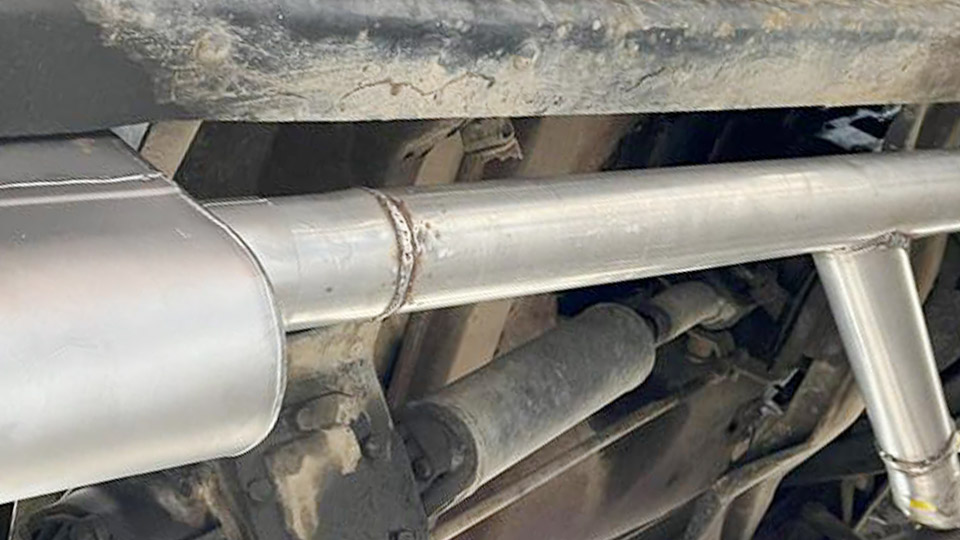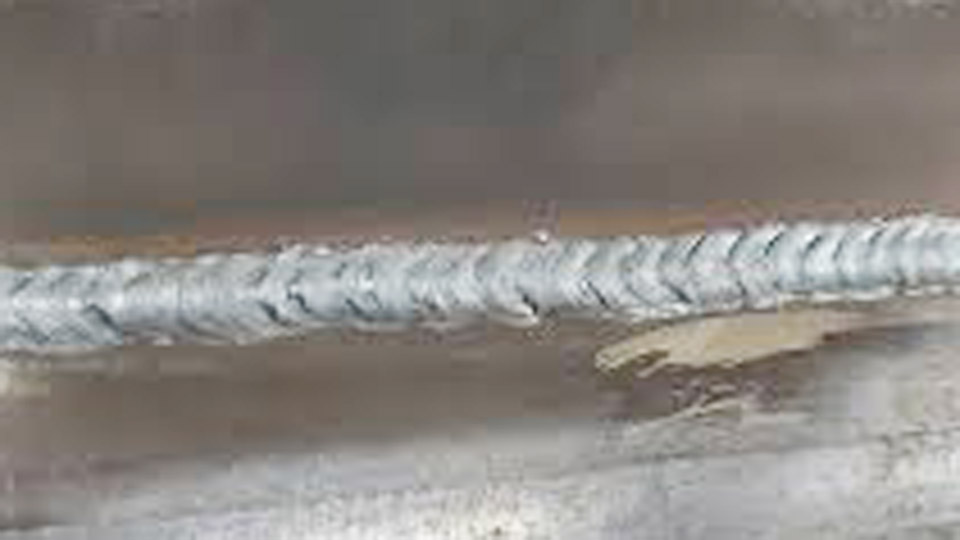
Many welders discover too late that a joint designed for full load transfer has only partial fusion at the root. That incomplete connection creates a built-in stress riser and leaves the weld unable to develop the full strength of the base metal.
A full penetration weld, also called a complete joint penetration (CJP) weld, solves this by ensuring the weld metal fuses through the entire thickness of the members being joined.
Without it, critical structures such as moment connections, pressure-retaining vessels, and high-cycle fatigue members risk premature failure under tension, bending, or cyclic loading.
Understanding exactly when and how to achieve full penetration determines whether the finished joint behaves as a continuous piece of steel or as a weak link waiting to open.
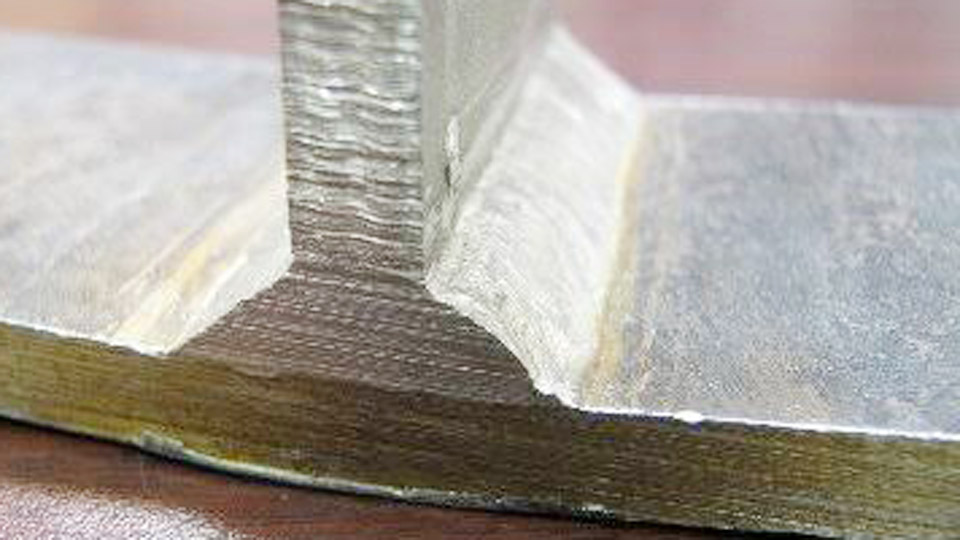
Image by shengenfab
When Codes and Drawings Require Complete Joint Penetration
Engineers specify full penetration only when the joint must carry the full capacity of the connected members. Partial joint penetration (PJP) is deliberately limited in effective throat and is not permitted in those cases.
Structural Steel Under AWS D1.1
AWS D1.1 requires CJP groove welds for primary tension members and for connections that develop the full tensile strength of the base metal. Moment connections in buildings and bridges commonly call for CJP.
When the drawing shows an open triangle (groove weld symbol without a specified depth of preparation less than the thickness), full penetration is mandatory. Ultrasonic or radiographic examination is typically required for these joints on cyclically loaded or high-importance members.
Pressure Vessels and Piping
ASME Section VIII and B31 codes treat most pressure-retaining butt joints as requiring complete joint penetration. Any unfused root becomes a potential leak path and a crack starter under internal pressure.
Root openings, bevel angles, and backing requirements are tightly controlled by the Welding Procedure Specification (WPS).
Decision Point for Fabricators
If the design stress in the joint equals or exceeds the allowable stress of the base metal, or if the service involves tension normal to the weld axis combined with cyclic loading, CJP is the only acceptable choice. Using PJP in those conditions violates the code and voids the design calculation.
Joint Configurations That Allow Full Penetration
Not every geometry can achieve complete joint penetration. Groove welds are the primary vehicle; fillet welds cannot develop full penetration through the thickness in the same sense.
Square-Edge Butt Joints on Thin Material
On plate or sheet up to approximately ⅜ in (10 mm), a square butt with a controlled root opening can produce full penetration from one side when heat input and travel speed are matched to thickness. Beyond that thickness, incomplete fusion at the root becomes almost inevitable without preparation.
Single-V, Double-V, Single-Bevel, and J-Groove Preparations
For thicker sections the edges are beveled to create access to the root. Typical included angles range from 60° for SMAW to 60–75° for GTAW and GMAW.
A root face of 0–⅛ in and a root opening of 0–⅛ in (process-dependent) allow the first pass to fuse the root while still supporting the molten pool. Double-sided preparations reduce the volume of weld metal required and help balance residual stresses.
Use of Backing and Back-Gouging
Single-sided CJP almost always requires a continuous steel backing bar (minimum ¼ in thick) or a ceramic backing strip.
After the root and fill passes are complete, the backing is often removed and the root is back-gouged to sound metal before a sealing pass is applied on the opposite side. This sequence guarantees that no unfused root remains.
Process Variables That Control Root Fusion
Amperage, voltage, travel speed, and electrode manipulation must work together to push the weld pool through the root without burn-through or lack of fusion.
Heat Input and Polarity Choices
Higher current increases penetration depth. For SMAW with low-hydrogen electrodes on carbon steel, DCEP is preferred because two-thirds of the arc energy concentrates in the base metal. GMAW spray transfer or pulsed spray on thicker sections delivers deeper penetration than short-circuit transfer.
Excessive heat input, however, widens the heat-affected zone and can produce undercut or excessive reinforcement that later becomes a stress concentrator.
Travel Speed and Arc Length Trade-Offs
Too slow a travel speed piles metal and can leave slag or incomplete fusion at the toes. Too fast freezes the pool before it reaches the root.
A short arc length keeps the force directed into the joint root rather than allowing the arc to wander. Stringer beads generally produce more reliable root penetration than wide weaves on the first pass.
Root Pass Technique Differences by Process
GTAW offers the most precise control of the root bead and is common on pipe and thin plate. SMAW root passes with 6010 or 6011 electrodes are still widely used for open-root pipe because the dig of the arc can force metal into the root opening.
GMAW and FCAW require careful parameter selection and often a short-circuit or pulsed mode for open-root work to avoid burn-through.
Inspection Methods That Confirm Full Penetration
Visual examination alone cannot verify internal fusion. Codes therefore mandate volumetric methods for CJP welds in critical service.
Radiographic Testing Limits and Capabilities
RT detects incomplete penetration and lack of fusion when the beam is oriented properly relative to the defect plane. It is highly effective on butt joints but less sensitive on T-joints or when the defect is parallel to the radiation beam. Acceptance criteria in AWS D1.1 and ASME prohibit any incomplete joint penetration in CJP welds.
Ultrasonic Testing Advantages for Field Work
UT can interrogate the weld from multiple angles and is often preferred for thick sections and structural steel because it does not require access to both sides. Discontinuities such as lack of root fusion appear as clear reflectors. Calibration and technician qualification are critical; an improperly set instrument can miss a continuous unfused root.
Macro-Etch and Destructive Verification
When procedure qualification or production sampling is required, a transverse section is cut, polished, and etched. The fusion lines must extend through the full thickness with no visible unfused plane at the root. This remains the definitive laboratory confirmation of complete joint penetration.
Strength and Service Consequences of Incomplete Penetration
An unfused root acts as a sharp crack. Under cyclic tension the crack propagates rapidly. Even under static tension the effective cross-section is reduced and the stress concentration elevates local stresses well above the nominal design value.
Codes therefore assign PJP welds significantly lower allowable stresses and often prohibit them in primary tension members. Full penetration eliminates that geometric discontinuity and allows the joint to develop the full tensile capacity of the base metal when matching-strength filler is used.
Cost and Distortion Realities of Specifying CJP
Complete joint penetration requires more edge preparation, more weld metal, more labor for back-gouging or backing removal, and more inspection. Distortion is typically higher because of the larger heat input and the restraint created by the continuous fused section.
Fabricators therefore push back when drawings call for CJP on every joint; the correct engineering decision balances the actual service stresses against the added fabrication cost.
When the load path does not demand full strength, a properly designed PJP or fillet weld is both stronger in practice (because residual stresses are lower) and more economical.
Wrapping Up
Selecting full penetration is a structural decision, not a welding preference. When the joint must develop the full strength of the base metal, when tension acts normal to the weld, or when cyclic loading is present, CJP is non-negotiable.
Proper bevel geometry, controlled root parameters, and volumetric inspection then become the practical means of delivering that requirement.
Advanced fabricators further reduce residual stress and distortion on heavy CJP joints by sequencing weld passes to balance heat input from both sides and by using low-hydrogen processes with controlled interpass temperature, thereby preserving both strength and dimensional accuracy.
FAQs
What does full penetration weld mean on a blueprint?
It means the weld must fuse through the entire thickness of the joint (complete joint penetration). The symbol is typically an open groove weld triangle without a reduced depth dimension.
Can a fillet weld be a full penetration weld?
No. Fillet welds join surfaces at an angle and do not penetrate through the thickness of the members in the same manner as a CJP groove weld. Their strength is based on throat size, not full base-metal thickness.
How is full penetration verified on structural steel?
Visual inspection is always performed, but critical CJP welds also require ultrasonic or radiographic testing per AWS D1.1 to confirm the root is fully fused.
What happens if a full penetration weld has incomplete root fusion?
The joint cannot develop the designed strength. The unfused root acts as a crack starter and is rejectable under AWS and ASME codes for CJP applications.