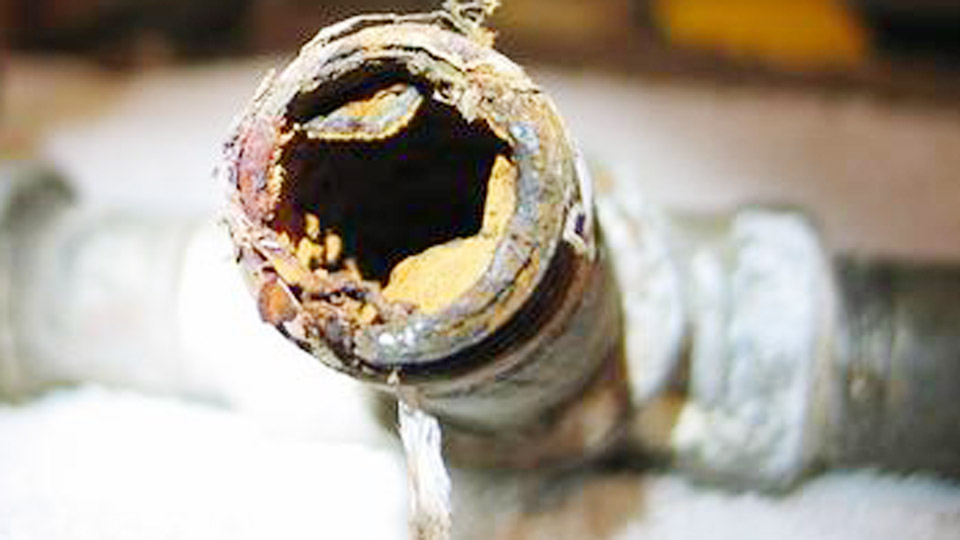
Direct contact between copper and galvanized steel in the presence of moisture triggers rapid zinc loss, followed by premature steel corrosion. This copper and galvanized steel reaction appears in plumbing transitions, structural assemblies, roofing details, and resistance-welded sheet joints.
Welders encounter it as electrode sticking, porosity in the weld pool, or field failures years after installation. Zinc sits far more anodic than copper in the galvanic series; once an electrolyte bridges the metals, the zinc coating sacrifices itself at an accelerated rate.
Understanding the electrochemical driver, the heat-affected behavior during welding or brazing, and the isolation methods that stop current flow lets fabricators and installers select materials and processes that deliver the expected service life instead of early replacement.
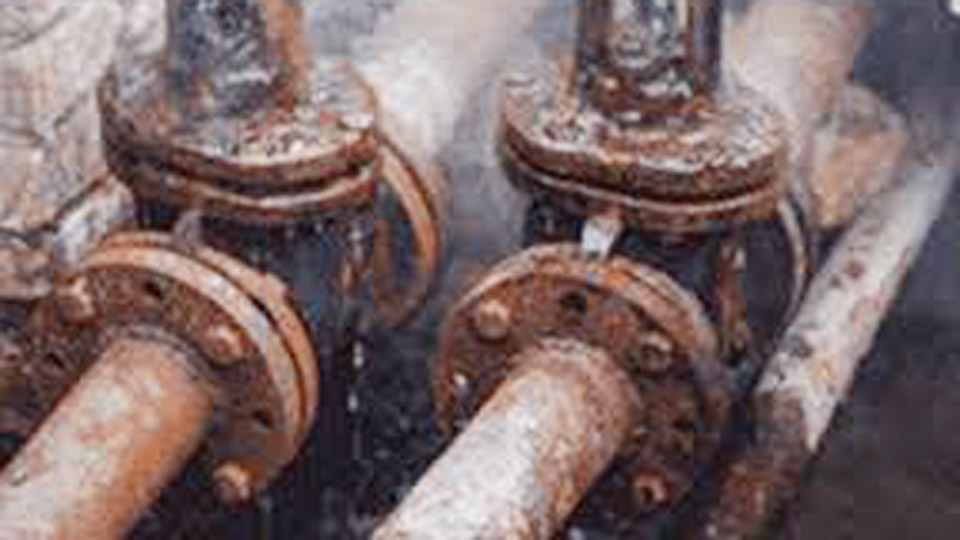
Photo by wzppgi
Why Copper Drives Rapid Zinc Attack on Galvanized Surfaces
Zinc protects steel by acting as a sacrificial anode. When copper enters the same electrical circuit, the potential difference increases dramatically and the zinc corrosion current rises.
Position of the Metals in the Galvanic Series
Zinc and galvanized coatings typically sit near –0.76 V to –1.0 V versus a standard hydrogen electrode in aqueous environments. Copper sits near +0.34 V. The large potential difference drives electron flow from zinc to copper.
In humid air, rain, or process water the zinc dissolves preferentially, exposing the underlying steel once the coating is locally consumed. Even small amounts of dissolved copper ions carried in runoff water deposit on the galvanized surface and create additional cathodic sites that intensify the attack.
Role of Electrolyte and Surface Area Ratio
No electrolyte means no galvanic cell. Dry indoor conditions produce negligible reaction. Once moisture, condensation, or salt-laden water is present, the cell activates. A large copper surface coupled to a small galvanized area accelerates zinc loss far more than the reverse ratio.
Classic field examples include copper roofing sheets draining onto galvanized gutters or copper pipe sections connected directly to galvanized water lines.
Observable Failure Sequence
Initial white zinc corrosion products appear at the contact line. After the coating is breached, red rust forms on the steel. In pressurized piping the result is wall thinning and leaks; in structural members it is loss of section and reduced load capacity. Runoff alone can produce the same pattern without continuous metal-to-metal contact.
Resistance Welding Complications from the Zinc-Copper Interaction
Spot and projection welding of galvanized sheet relies on copper or copper-alloy electrodes. The zinc coating reacts directly with the electrode face and shortens tip life.
Alloy Formation on the Electrode Face
Molten zinc alloys with copper to form a brass layer on the electrode surface. The brass softens under welding pressure and current, leading to sticking, mushrooming, and inconsistent nugget formation.
Class 1 zirconium-copper and Class 2 chromium-copper electrodes resist this reaction better than pure copper, yet still require more frequent dressing than when welding uncoated steel.
Process Adjustments That Limit Wear
Lower weld current, shorter weld time, and higher electrode force reduce the volume of molten zinc that contacts the tip. Some shops insert a thin nickel barrier or use dispersion-strengthened copper electrodes to extend life.
Even with optimized schedules, galvanized material typically demands electrode maintenance intervals two to four times more frequent than bare steel of the same thickness.
Liquid Metal Embrittlement Risk
Under certain combinations of temperature, stress, and zinc presence, liquid zinc can penetrate grain boundaries in the steel, producing intergranular cracks. Proper electrode force and controlled heat input keep the zinc vaporized and expelled rather than retained in the joint long enough to cause embrittlement.
Brazing and Fusion Welding Options When Copper Filler Meets Galvanized Steel
Copper-based filler metals are frequently chosen for joining galvanized sheet because their lower melting range limits zinc burn-off compared with steel weld metal.
Silicon-Bronze and Aluminum-Bronze Fillers
ERCuSi-A silicon bronze and certain aluminum bronzes melt well below the temperature needed to fuse steel. The reduced heat input leaves a larger fraction of the zinc coating intact adjacent to the joint.
The deposited metal itself is corrosion-resistant and can cover the bare steel exposed by the process. Travel speed must remain high and arc length short to minimize zinc vaporization and porosity.
Preparation Requirements Before Brazing
Remove zinc for a short distance (typically 6–12 mm) on either side of the joint when full coating retention is not required, or leave the coating intact and accept some local discoloration. Apply a suitable flux to promote wetting. Excess zinc vapor still produces fumes; local exhaust remains mandatory.
Limitations of Direct Fusion Welding Copper to Galvanized Steel
Copper and steel differ sharply in melting point, thermal conductivity, and expansion. Zinc vaporization adds porosity and fume load. Copper can penetrate microcracks in the steel under high heat, producing hot cracking.
Most successful copper-to-steel joints rely on intermediate layers, specialized processes, or mechanical fastening rather than direct arc fusion of the two base metals when one is galvanized.
Isolation Methods That Stop the Galvanic Current
Once the electrochemical path is broken, the accelerated reaction ceases.
Dielectric Unions and Insulating Fittings
In piping systems a dielectric union or dielectric nipple inserts a non-conductive barrier between the copper and galvanized sections. The barrier interrupts electrical continuity while still providing a pressure-tight joint. Codes often require this transition specifically for copper-to-galvanized connections.
Gaskets, Coatings, and Fastener Selection
Non-conductive gaskets or mastics at bolted interfaces prevent metal-to-metal contact. Zinc-rich paints or epoxy coatings applied to the galvanized surface at the contact zone further isolate the metals. Use insulating washers or grommet-style fasteners when mechanical joints cannot be avoided.
Orient the assembly so that water flows from the galvanized surface onto the copper rather than the reverse; dissolved copper ions in runoff are aggressive.
Design Geometry That Reduces Risk
Keep copper and galvanized components physically separated whenever possible. When proximity is unavoidable, ensure drainage paths do not carry copper-contaminated water onto zinc surfaces.
In grounding systems or electrical installations, apply dielectric grease at contact points and inspect the zinc coating integrity at regular intervals.
Inspection and Repair After Exposure Has Already Occurred
Early detection limits the extent of steel corrosion once the zinc is consumed.
Visual and Thickness Indicators
White powdery zinc corrosion products followed by red rust signal progressive attack. Ultrasonic thickness measurements or magnetic coating gauges quantify remaining zinc and steel wall. In piping, internal inspection or pressure testing reveals leaks before catastrophic failure.
Repair Options Once Zinc Is Lost
Remove loose corrosion products, restore the steel surface, and apply zinc-rich primer or thermal-spray zinc per ASTM A780. For critical structural members, section replacement may be required once wall loss exceeds design allowables. After repair, re-establish isolation so the same galvanic couple does not re-form.
Monitoring Intervals for Mixed-Metal Assemblies
Assemblies known to contain copper-galvanized interfaces in wet service warrant more frequent inspection than all-galvanized or all-copper systems. Document the location of dielectric fittings and coatings so subsequent maintenance crews preserve the isolation.
Wrapping Up
Selecting materials and joint methods that either eliminate the copper-galvanized couple or break its electrical path prevents the accelerated zinc loss that shortens service life. When welding or brazing is required, copper-based fillers can reduce coating damage relative to steel weld metal, yet they still demand fume control and process discipline.
In resistance welding the zinc-copper electrode reaction remains the dominant consumable cost driver and is managed through alloy selection and schedule adjustment.
The decisive step is recognizing the galvanic potential difference before fabrication or installation and inserting isolation wherever moisture will be present.
Advanced practice further evaluates the anode-to-cathode area ratio and drainage geometry so that even residual contact produces only negligible corrosion current.
FAQs
Can copper and galvanized steel be connected directly?
No. Direct metal-to-metal contact in the presence of moisture produces rapid galvanic corrosion of the zinc coating. Use a dielectric union, insulating gasket, or non-conductive coating to interrupt the electrical path.
What happens to copper electrodes when spot-welding galvanized steel?
Zinc alloys with the copper face to form a soft brass layer. The electrode sticks, mushrooms, and requires more frequent dressing. Chromium-copper or zirconium-copper alloys slow the reaction but do not eliminate it.
Does runoff water from copper damage galvanized steel?
Yes. Dissolved copper ions carried in rainwater or condensate deposit on the galvanized surface and create additional cathodic sites that accelerate zinc attack even without continuous physical contact.
Is brazing with silicon bronze acceptable on galvanized sheet?
Yes, provided heat input is kept low and travel speed high. Silicon bronze melts at a lower temperature than steel, preserving more of the zinc coating adjacent to the joint while still producing a corrosion-resistant deposit.