Choosing the wrong process leaves porosity in the root, undercut on the toes, or a bead that fails the bend test. What are the welding techniques that actually solve those failures depends on base-metal condition, joint access, required deposition rate, and code acceptance criteria.
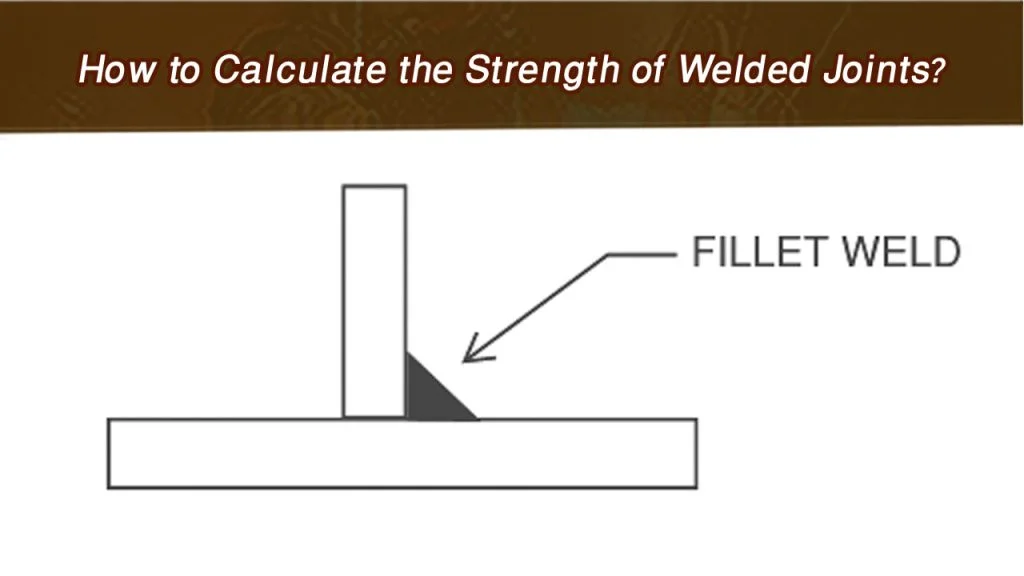
Stick, MIG, TIG, and flux-cored each control heat input, shielding, and filler delivery differently; the differences determine whether a ¼-inch fillet on rusty A36 holds or cracks under load.
Matching the process to the constraint—wind, thin gauge, aluminum oxide, or high-volume production—avoids rework and keeps mechanical properties inside the design range. The decision starts with the joint demands, not the machine sitting in the shop.
Image by americantorchtip
Which Process Handles Dirty Metal and Outdoor Work Without Gas Cylinders?
Field structural steel and repair work expose electrodes and wire to wind, mill scale, and surface contamination. Processes that generate their own shielding or tolerate incomplete cleaning maintain arc stability where gas-shielded methods fail.
Stick Electrode Ranges and Penetration Profiles
Shielded metal arc welding (SMAW) uses a flux-coated consumable electrode. Cellulosic rods such as E6010 run 70–130 A on ⅛-inch diameter and dig through rust or paint with deep, forceful penetration. Low-hydrogen E7018 electrodes operate 90–160 A on the same diameter, delivering 70 ksi tensile strength and low diffusible hydrogen for crack-sensitive steels.
The flux generates both shielding gas and a slag layer that protects the solidifying metal. Duty cycle is limited by electrode length—typically 12–18 inches—so deposition stays in the 1–3 lb/h range. All-position capability exists, yet vertical-down cellulosic electrodes freeze faster and suit open-root pipe more readily than iron-powder types.
Flux-Cored Self-Shielded Alternatives for Higher Deposition
Self-shielded flux-cored arc welding (FCAW-S) feeds a continuous tubular wire filled with flux. Typical parameters fall between 150–400 A at 22–32 V. Deposition rates reach 3–7 lb/h, two to three times that of SMAW, while the internal flux tolerates wind speeds up to roughly 20–30 mph.
Polarity is almost always DCEP. Slag volume is higher than gas-shielded variants, requiring thorough interpass cleaning, yet the absence of an external cylinder makes the process practical on remote sites or structural iron. Wire diameters of 0.045–1/16 inch cover most plate from 3/16 inch upward.
When Does Continuous-Wire Welding Outrun Stick on Clean Shop Steel?
Indoor fabrication rewards higher duty cycles and continuous filler feed. Gas metal arc and gas-shielded flux-cored processes raise productivity once surface preparation and draft control are available.
Short-Circuit, Globular, and Spray Transfer Windows
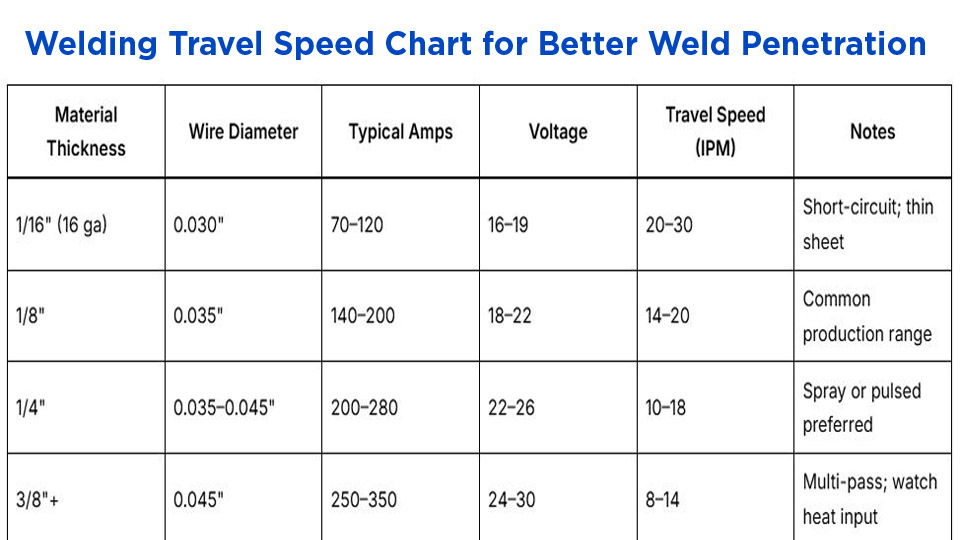
Gas metal arc welding (GMAW) feeds solid wire under an external gas shield. Short-circuit transfer operates 75–200 A at 14–22 V with 0.030–0.045-inch wire, producing a stable arc on thin gauge (down to 18–20 gauge) in all positions.
Spray transfer requires 200–600 A and 28–40 V, axial droplet transfer, and argon-rich mixtures; it is limited to flat and horizontal positions but deposits metal rapidly on plate thicker than ¼ inch.
Pulsed GMAW bridges the gap, allowing all-position work on aluminum and stainless with peak currents 100–400 A and background currents 30–80 A. Typical shielding gases are 75 % Ar / 25 % CO₂ for steel short-circuit and 90–98 % Ar blends for spray or aluminum.
Gas-Shielded Flux-Cored Speed Advantages
Gas-shielded flux-cored (FCAW-G) combines continuous wire with external CO₂ or Ar/CO₂ mixtures. Operating ranges mirror self-shielded wire—150–500 A, 22–36 V—yet slag is lighter and mechanical properties often higher for code work. Deposition efficiency reaches 85–95 %.
The process suits structural fabrication and heavy plate where wind is controlled. Compared with solid-wire GMAW, flux-cored tolerates slightly poorer fit-up and delivers deeper penetration at equivalent current, but still demands interpass slag removal.
Why Precision Alloys and Thin Sections Force Tungsten Electrode Control
Reactive metals and thin gauge demand independent control of heat and filler. Non-consumable tungsten electrodes separate the arc from the filler addition.
Heat Input Limits on Aluminum and Stainless
Gas tungsten arc welding (GTAW) maintains an arc between a sharpened tungsten electrode and the workpiece under pure argon or argon-helium. Current ranges from 5–300 A depending on electrode diameter (1/16–⅛ inch common).
AC polarity is standard for aluminum to break the oxide layer; DCEN suits most steels and stainless. Travel speeds remain low—often 3–8 ipm—because deposition rates stay under 1–2 lb/h when filler is added.
The process produces virtually zero spatter and allows precise puddle manipulation, making it the default for 16-gauge stainless, thin aluminum sheet, and root passes that must pass radiographic inspection. Backing gas (argon purge) is required on stainless and reactive alloys to prevent root-side oxidation.
Root-Pass and Cosmetic Joint Requirements
Open-root pipe and pressure-boundary joints frequently specify GTAW for the first pass because the process achieves consistent fusion without the risk of lack-of-fusion common in short-circuit MIG. Subsequent fill passes may switch to SMAW or FCAW for speed.
On visible architectural stainless or motorsport aluminum, the absence of slag and the ability to autogenous-weld thin edges preserve appearance and minimize distortion.
How Thickness and Joint Geometry Dictate Process Limits
Material thickness sets minimum heat input; joint access and position set maximum controllable heat.
Thin Gauge Versus Heavy Plate Decision Points
Below ⅛ inch, short-circuit GMAW or GTAW prevent burn-through. Between ⅛ and ⅜ inch, both MIG and stick remain viable; the choice turns on production volume and cleanliness. Above ½ inch, spray-transfer GMAW, FCAW, or submerged arc welding become economical.
Submerged arc (SAW) runs under a blanket of granular flux at 300–1000 A, depositing 10–20 lb/h or more, but is restricted to flat and horizontal positions and requires mechanized travel. Single-pass vertical techniques such as electroslag appear only on plate thicker than 1 inch in specialized shops.
Position Capability Across Processes
SMAW and GTAW operate in all positions with appropriate electrodes or techniques. GMAW short-circuit and pulsed modes cover vertical and overhead; conventional spray does not. FCAW is generally all-position when the wire classification permits. SAW is limited to 1G and 2F.
When a joint must be welded out-of-position without repositioning the work, the process list shrinks to stick, short-circuit or pulsed MIG, flux-cored, or TIG.
Matching Process to Base Metal Chemistry and Code Requirements
Mild steel accepts nearly every process. Alloy chemistry and service environment narrow the field.
Carbon and Low-Alloy Steel Choices
E7018 stick or ER70S-6 MIG wire meet most structural codes. Low-hydrogen consumables become mandatory when thickness exceeds 1 inch or restraint is high. Self-shielded flux-cored wires exist for outdoor structural work but must carry the correct AWS classification for the design strength.
Stainless, Aluminum, and Dissimilar Joint Constraints
Austenitic stainless prefers GTAW or pulsed GMAW with ER308L/ER316L fillers and argon-based shielding to retain corrosion resistance. Aluminum oxide demands AC-GTAW or pulsed GMAW with 100 % argon and 4043 or 5356 fillers.
Dissimilar joints (stainless to carbon steel) commonly use 309L consumables under TIG or MIG to manage dilution and residual stress. Hydrogen-sensitive alloys force low-hydrogen processes and controlled interpass temperatures regardless of the arc method chosen.
Wrapping Up
Selecting among welding techniques reduces to three simultaneous constraints: surface condition and environment, required deposition versus quality, and material thickness plus position.
Stick or self-shielded flux-cored solve dirty outdoor steel; continuous-wire gas-shielded methods maximize shop throughput on clean plate; tungsten-electrode control protects thin and reactive alloys.
Once those boundaries are mapped, amperage, voltage, and travel speed become fine-tuning variables rather than primary decisions.
Advanced fabricators further optimize by hybrid sequences—GTAW root followed by FCAW fill—balancing radiographic quality against overall arc-on time without compromising the mechanical design values.
FAQs
What is the strongest welding technique for structural steel?
Low-hydrogen SMAW with E7018 or gas-shielded FCAW with matching strength wire both deliver 70 ksi minimum tensile and excellent toughness when parameters and interpass temperature stay inside procedure limits.
Which welding process is best for beginners on mild steel?
Short-circuit GMAW (MIG) with 0.030–0.035-inch ER70S-6 wire and 75/25 gas offers the widest parameter window and continuous feed, reducing the coordination load of electrode angle and arc length control.
Can the same machine run multiple welding techniques?
Most modern inverter power sources support SMAW, GMAW, and GTAW with the correct torch, feeder, and polarity settings; flux-cored usually requires only a change of drive rolls and polarity.
What welding technique works outdoors in wind?
SMAW or self-shielded FCAW maintain shielding without external gas; conventional GMAW and GTAW lose coverage above light breezes and produce porosity.