Many fabricators face the same barrier: the joint needs permanent strength, but welding is impractical—thin sheet distorts, dissimilar metals create metallurgical problems, powder coating or heat-sensitive components cannot tolerate arc heat, or the shop simply lacks a suitable welder and certified operator.
Knowing how to bond metal without welding solves these constraints while still delivering load-bearing performance.
Structural adhesives, mechanical fasteners, and lower-temperature thermal processes each create reliable joints when selected against actual service loads, temperature, vibration, and material combination.
The correct choice prevents premature failure and often produces cleaner, more fatigue-resistant assemblies than an under-controlled weld.
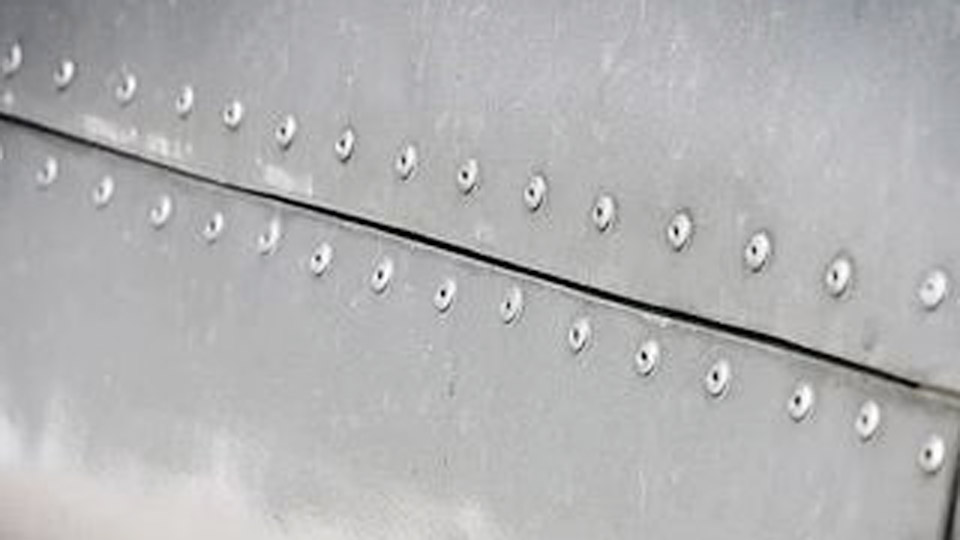
Image by forgeway
When Mechanical Fasteners Deliver Higher Reliability Than Adhesives Alone
Mechanical connections remain the first choice whenever disassembly, extreme vibration, or immediate load capacity is required.
Rivets for Thin Sheet and Panel Work
Blind (pop) rivets and solid rivets lock sheet metal through pure shear and clamp force. Match rivet diameter to material thickness—typically 1/8 inch rivets for 1–3 mm steel or aluminum.
Drill holes slightly larger than the rivet body for alignment, then set with a hand or pneumatic gun until the mandrel snaps.
Riveted joints resist vibration better than most adhesives and maintain strength at elevated temperatures where epoxy softens. They leave visible heads, so plan for appearance or countersink where possible.
Bolts, Nuts, and Structural Screws for Load-Bearing Assemblies
Threaded fasteners provide the highest removable strength. Grade 8 or equivalent bolts in properly sized holes with lock nuts or thread-locking compound handle shear and tensile loads far beyond typical structural adhesives.
For tubing or plate frames, through-bolting with backing plates spreads stress and prevents pull-out. Torque to manufacturer values; under-torqued joints loosen under cyclic loads, while over-torqued ones damage threads or crush soft metals such as aluminum.
Clinching and Self-Piercing Fasteners
These cold-forming methods create interlocking joints without filler or heat. Self-piercing rivets (SPR) and clinching tools punch and form a mechanical interlock in one operation, common in automotive body construction. They excel on coated or pre-painted sheet where welding would burn the finish.
Structural Adhesives Capable of Replacing Welds in Specific Load Cases
Modern two-part epoxies and methyl-methacrylate (MMA) adhesives achieve lap-shear strengths of 15–40 MPa (roughly 2,000–6,000 psi) on properly prepared steel and aluminum—sufficient for many brackets, panels, and non-critical structural members.
Two-Part Epoxies for Rigid, Gap-Filling Bonds
Epoxies deliver the highest static strength and chemical resistance among common adhesives. Mix ratios are usually 1:1 or 2:1 by volume. Optimal bond-line thickness is 0.1–0.5 mm; thicker gaps reduce shear performance.
Full cure typically requires 24 hours at room temperature, though some systems reach handling strength in 1–4 hours.
Service temperatures for standard formulations stay below 150 °C; high-temperature grades extend higher. Use them for rigid assemblies where peel and impact loads remain moderate.
MMA Acrylics for Faster Fixture and Better Impact Resistance
Methyl-methacrylate adhesives cure faster (often 5–20 minutes to handling strength) and tolerate slightly oily or imperfect surfaces better than epoxies. They offer superior toughness and vibration resistance, making them preferred for automotive body panels and mixed-metal joints.
Gap-filling ability reaches several millimeters. Strength values commonly fall in the 20–28 MPa range. Primerless grades simplify production but still benefit from abrasion.
Surface Energy and Metal-Specific Performance
Mild steel bonds readily after abrasion. Aluminum requires removal of the oxide layer immediately before bonding; delay beyond 10–30 minutes allows re-oxidation and weakens the joint. Stainless steel has lower surface energy and needs thorough abrasion plus a compatible primer in many cases.
Galvanized coatings often fail at the zinc interface rather than the adhesive, so mechanical fasteners or selective coating removal are safer for critical joints.
Brazing for Metallurgical Bonds Without Melting the Base Metal
Brazing produces a capillary-filled joint using filler metal that melts above 840 °F (450 °C) but below the solidus of the base metals. Joint strength frequently exceeds that of the filler itself because of the thin, continuous bond line and atomic interaction with the parent surfaces.
Joint Clearance and Capillary Action Requirements
Optimal clearance is typically 0.001–0.005 inch (0.025–0.13 mm). Too tight prevents filler flow; too wide reduces capillary force and strength. Lap joints with three times the material thickness in overlap maximize load capacity.
Clean both surfaces to bright metal, apply flux to prevent oxidation, heat the joint evenly with a torch until the filler flows by capillary action, then allow slow cooling.
Filler Selection and Temperature Control
Brass or bronze fillers suit steel and copper. Aluminum requires specialized fluxes and lower-melting alloys. Overheating causes porosity and base-metal damage; temperature-indicating sticks or careful observation of flux behavior prevent this.
Brazed joints retain good strength at elevated temperatures compared with adhesives and work well for tubing, fittings, and repair of castings where welding distortion is unacceptable.
Soldering as a Lower-Temperature Option
Soldering uses fillers that melt below 840 °F. Strength is substantially lower than brazing and is limited to electrical, plumbing, or light-duty joints. Flux and surface cleanliness remain critical. Tin-based solders dominate most non-structural applications.
Surface Preparation Steps That Control Final Joint Strength
Adhesive and braze performance collapses without correct surface condition. Mechanical abrasion creates the necessary “tooth,” while solvent cleaning removes the weak boundary layer of oils and oxides.
Degreasing Sequence
Wipe with acetone, isopropyl alcohol, or a dedicated metal cleaner until a clean cloth shows no residue. Avoid touching the prepared surface with bare hands afterward. For heavily contaminated parts, a mild alkaline cleaner or trisodium phosphate solution followed by thorough rinsing improves results.
Abrasion Parameters
Use 80–120 grit abrasive paper, Scotch-Brite pads, or a flap disc to produce a uniform matte finish. The goal is increased surface area and removal of weak oxide, not polishing. For aluminum, abrade immediately before bonding. After abrasion, a final solvent wipe removes loose particles.
Timing and Environmental Control
Bond aluminum within minutes of preparation. Steel tolerates longer intervals. Humidity and temperature affect adhesive cure rates; follow the specific product data sheet for allowable ranges. Clamping pressure must maintain consistent bond-line thickness until the adhesive reaches handling strength.
Decision Criteria for Selecting the Correct Bonding Method
Match the method to the dominant service conditions rather than defaulting to the most familiar process.
Load Type and Magnitude
Pure shear favors adhesives and rivets. Tensile or peel loads favor bolts or properly designed brazed laps. Cyclic or impact loading benefits from toughened MMA adhesives or hybrid mechanical-plus-adhesive joints. Structural bolts remain the safest choice when calculated loads approach the yield strength of the base metal.
Temperature and Environmental Exposure
Adhesives lose strength above their glass-transition temperature—commonly 120–180 °C for epoxies. Brazing and mechanical fasteners retain capacity at higher temperatures. Outdoor or chemical exposure requires adhesives with documented moisture and chemical resistance or sealed mechanical joints.
Dissimilar Metals and Coatings
Adhesives and mechanical fasteners avoid the galvanic and metallurgical problems of welding dissimilar metals. Brazing can join many combinations when the correct filler is chosen.
Pre-coated or painted surfaces usually require coating removal for reliable adhesive bonds; rivets and bolts can often work through coatings with proper hole preparation.
Production Speed and Skill Level
Epoxy and MMA systems need only mixing, application, and clamping—minimal skill once surface prep is mastered. Riveting is fast with the right tooling. Brazing demands torch control and flux management. Bolting is immediate but requires accurate hole location and torque control.
Hybrid Joints That Combine Mechanical and Chemical Strength
The highest-reliability non-welded assemblies frequently use both fasteners and adhesive. The adhesive spreads stress, seals the joint against corrosion, and dampens vibration, while the mechanical fasteners provide positive retention if the adhesive is overloaded or degraded by temperature.
This approach is standard in aerospace and automotive body construction and translates directly to shop fabrication of frames, panels, and brackets.
Wrapping Up
When the joint must carry primary structural load, survive high temperature, or remain serviceable under vibration and impact, mechanical fasteners or properly executed brazing still outperform pure adhesive solutions.
For heat-sensitive, dissimilar-metal, or appearance-critical work, modern structural adhesives deliver surprisingly high strength provided surface preparation is rigorous.
The decisive factor is matching the bonding method to the actual failure modes the joint will experience rather than treating any single technique as universal.
Advanced fabricators routinely combine short-arc welding on accessible high-load members with adhesive or riveted secondary joints to minimize distortion while maximizing overall assembly performance.
FAQs
What is the strongest glue for metal to metal?
Two-part structural epoxies and MMA acrylics reach 15–40 MPa lap shear on prepared steel and aluminum. Epoxies generally give the highest static strength; MMAs offer better impact and faster fixture.
Can you braze steel without a welding machine?
Yes. A propane, MAPP, or oxy-fuel torch plus appropriate flux and brass or bronze filler is sufficient for most steel brazing. No arc welder is required.
How do you prepare metal for structural adhesive bonding?
Degrease with acetone or isopropyl alcohol, abrade to a matte finish with 80–120 grit, wipe clean again, and bond within the time window specified for the metal (especially critical for aluminum).
Is riveting stronger than epoxy for sheet metal?
For thin sheet under vibration or elevated temperature, properly installed rivets usually provide higher long-term reliability. Epoxy can match or exceed static shear strength on well-prepared surfaces but is more sensitive to peel and heat.