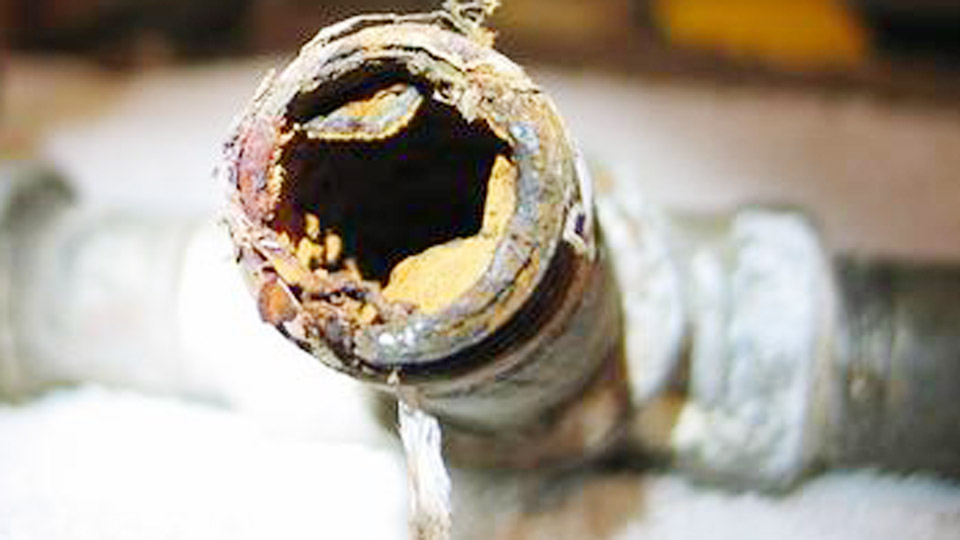
Welding over intact galvanized coatings produces immediate porosity, excessive spatter, and unstable arcs while releasing zinc oxide fumes that cause metal fume fever.
Knowing how to remove zinc coating from galvanized steel in the weld zone eliminates those defects, restores full penetration, and keeps airborne zinc below exposure limits.
AWS D19.0 requires clearing the coating 1–4 inches (25–100 mm) from both sides of the joint on structural work. Incomplete removal leaves residual zinc that vaporizes at 907 °C—well below steel’s melting point—and traps gas in the weld pool.
Selecting the right removal method based on part geometry, coating thickness, and shop constraints determines whether the joint meets code and whether the welder stays healthy.
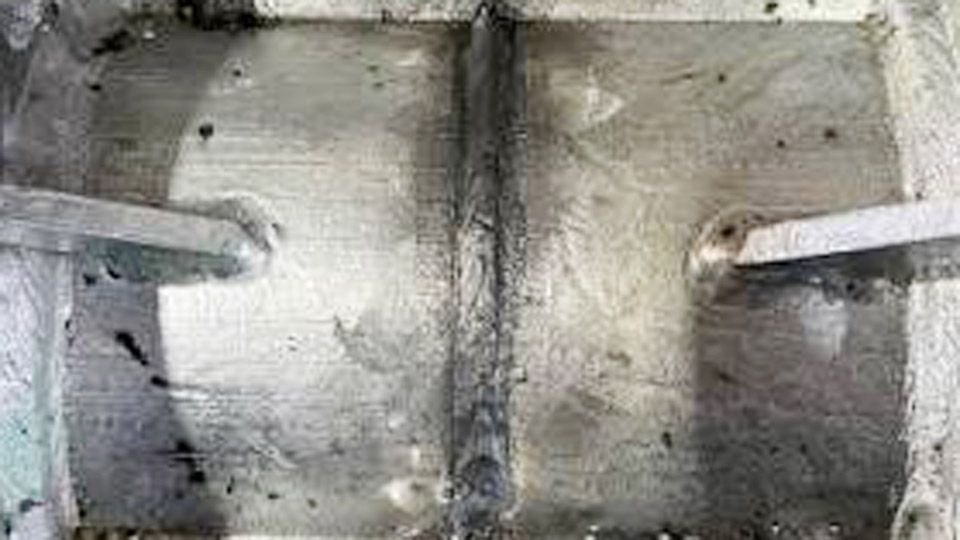
Image by fb/I See You Don’t Know Shit About Welding
Mechanical Removal for Local Weld Zones
Mechanical abrasion remains the fastest and most controllable option when only the joint area needs cleaning. It generates no liquid waste and integrates directly into standard weld prep.
Angle Grinder and Flap Disc Technique
Mount a 36- to 60-grit zirconia or silicon-carbide flap disc on a 4.5-inch or 7-inch angle grinder running 8,000–10,000 RPM. Mark the weld line plus a 1–4 inch buffer with soapstone. Hold the disc at 15–30 degrees and make continuous light passes.
Zinc sparks appear short, reddish, and sparse; bare steel produces longer, brighter white-to-orange sparks and a dull gray surface. Stop once the spangle disappears and the metal looks uniformly matte.
Typical material loss is only 0.002–0.005 inch if pressure stays light. Finish with an 80-grit disc if the surface must be smooth for a critical root pass.
Wire Wheels and Cup Brushes on Restricted Access
For inside corners, pipe interiors, or threaded areas, switch to a knotted wire cup brush or strip disc on a die grinder or drill. These tools remove zinc more slowly than flap discs but reach geometry that flat discs cannot.
Multiple passes are required; residual zinc in scratches still produces porosity, so follow with a light flap-disc pass where possible. Dust extraction at the tool is essential because zinc particles remain airborne long after grinding stops.
Abrasive Blasting for Frames and Complex Shapes
When entire assemblies or recessed surfaces must be stripped, media blasting (garnet, steel grit, or aluminum oxide at 6–8 bar) removes the coating uniformly without localized heat. Nozzle distance of 150–200 mm and a 45-degree angle minimize warping on thin sheet.
Blasting also creates a surface profile suitable for subsequent painting. Containment and spent-media disposal add cost, so the method suits production batches rather than one-off brackets.
Chemical Stripping When Geometry Limits Mechanical Access
Acids dissolve zinc without generating dust and reach threads, perforations, and internal surfaces that grinders cannot contact. Reaction control and neutralization determine success.
Vinegar Soak for Small Removable Parts
White distilled vinegar (5 % acetic acid) reacts slowly with zinc to form zinc acetate. Submerge the part in a plastic container so the liquid covers the coating completely. Bubbling begins within minutes; full removal on electroplated or light hot-dip coatings typically requires 4–12 hours, sometimes overnight for heavier layers.
Wire-brush the surface periodically to expose fresh zinc. Once the coating is gone, rinse thoroughly, neutralize any residual acid with a baking-soda solution, and dry immediately. The method is low-hazard and inexpensive but impractical for large structural members.
Muriatic Acid Dilution and Reaction Control
Hydrochloric acid (muriatic, typically 31 %) strips hot-dip coatings in minutes. Dilute 1 part acid to 3–10 parts water—always add acid to water. Use a plastic container outdoors or under strong exhaust. Immersion produces vigorous hydrogen evolution; reaction ceases when bubbling slows and the surface turns dull gray.
Typical dwell times range from 5–15 minutes for thin coatings to 30–60 minutes for heavy structural galvanizing. Transfer the part to a 1–2 % baking-soda or washing-soda bath for 5–10 minutes to neutralize, then rinse and dry.
Residual acid causes rapid flash rust and can promote hydrogen embrittlement in high-strength or quenched-and-tempered steels; avoid those grades or specify inhibited commercial pickling solutions.
Neutralization, Rinse, and Flash-Rust Prevention
After any acid process, incomplete neutralization leaves active hydrogen ions that continue attacking the steel. A borax or sodium-carbonate rinse followed by clean-water flush stops the reaction.
Dry with compressed air or clean rags and apply a thin film of light machine oil or weld-through primer if welding will not occur within a few hours. Humidity above 60 % accelerates flash rust on freshly stripped surfaces.
Matching Removal Method to Coating Type and Job Scale
Hot-dip galvanizing (typically 50–100 µm or more) forms intermetallic layers that resist light abrasion and require either aggressive flap discs or stronger acid. Electroplated zinc is thinner and more uniform, responding quickly to either mechanical or mild chemical treatment.
For field pipe or structural repairs, local grinding of the 1–4 inch zone is almost always the practical choice. Shop production of fittings or brackets favors batch chemical dipping when geometry is complex. Large frames or trailer beds often go to commercial blasting or pickling houses rather than in-house processing.
Decision Factors for Shop Versus Field Work
In a fixed shop with extraction, either mechanical or chemical methods work. In the field, grinding with a portable angle grinder and local fume extraction or outdoor positioning is the only realistic option. Torch “burning off” of zinc generates the same toxic fumes the removal process is intended to prevent and should not be used as a primary stripping technique.
Post-Removal Surface Verification
Visual inspection alone is insufficient. The surface must show continuous bare steel color with no remaining spangle or dull gray patches. A clean white-cloth wipe should leave no zinc residue. On critical joints, a light pass with a wire brush or solvent wipe confirms cleanliness before tacking.
Restoring Corrosion Protection After Welding
Once the weld is complete and inspected, the exposed steel requires protection equal to the original galvanizing. Zinc-rich primers or cold-galvanizing compounds (minimum 92 % zinc dust by weight in the dry film) restore sacrificial protection.
Apply after thorough cleaning of slag and spatter. For structural members that will be re-hot-dipped, all weld flux and slag must be removed first; residual flux prevents proper zinc adhesion.
Wrapping Up
Choosing mechanical removal for most local weld zones and reserving chemical methods for inaccessible geometry keeps both weld quality and operator exposure under control.
The decisive factor is complete clearance of the 1–4 inch perimeter on both sides of the joint; any residual zinc that reaches the arc will reintroduce porosity and fume.
Advanced operators further reduce risk by combining short-arc techniques with local extraction even on fully stripped joints, because residual zinc vapor from adjacent coating can still migrate into the weld zone under poor ventilation.
FAQs
How far should zinc be removed from the weld joint?
Clear the coating 1–4 inches (25–100 mm) on both sides of the joint and on both faces of the plate when accessible. This distance matches AWS D19.0 guidance and keeps zinc vapor out of the weld pool.
Can vinegar fully remove heavy hot-dip galvanizing?
Vinegar works reliably on thin electroplated or light coatings but may require overnight or longer soaks on heavy hot-dip layers. Wire brushing during the process speeds removal; thick structural coatings usually need stronger acid or mechanical methods.
Is grinding enough for code-quality welds on galvanized steel?
Yes, provided the entire specified zone is reduced to bare steel with no residual zinc in surface scratches. Follow grinding with a solvent wipe and visual confirmation before welding.
What happens if residual acid is left on the steel?
Residual hydrochloric or acetic acid continues to attack the base metal, producing flash rust within hours and potential hydrogen embrittlement in high-strength steels. Always neutralize with a baking-soda solution and rinse thoroughly.