Welding tables are a key part of any metalworking shop. Whether you are a professional welder, a hobbyist, or a student, you’ve probably seen them in factories, garages, and classrooms. But have you ever wondered what welding tables are actually made of, and why?
The answer can make a real difference in how you work, how safe you are, and how long your table lasts.
Choosing the right material for a welding table is not a simple matter. It’s about more than just picking something strong. The table must handle high heat, resist warping, and stay flat after many projects. The surface needs to be easy to clean, and it should not react badly with sparks, slag, or chemicals.
Some tables must also be portable or adjustable. In short, the material shapes the entire welding experience.
This article breaks down what welding tables are made of, why each material is chosen, and how they compare. You’ll learn about the science behind each choice, the practical pros and cons, and even some things most beginners miss.
By the end, you’ll know exactly what to look for—whether you plan to buy, build, or just understand welding tables better.
Why Material Choice Matters For Welding Tables
Welding is a process that involves extreme heat, bright arcs, and sometimes heavy parts. The table is where all this action happens. That means the material must be:
- Heat-resistant: It should not warp or melt.
- Flat and stable: Accuracy is critical for welding projects.
- Tough: It must resist scratches, dents, and heavy impacts.
- Conductive: Good tables often help with grounding for safety.
- Easy to clean: Spatter, slag, and dust build up fast.
If any of these qualities are missing, the table becomes a weak point in your workshop. For example, a soft wood table will burn or deform under welding, while a table that rusts quickly becomes a maintenance headache.
The Most Common Materials Used For Welding Tables
Let’s look at the materials you’ll find in real-world welding tables. There are a few main types, each with their own strengths and weaknesses.
1. Mild Steel
Mild steel is the top choice for most welding tables. Why? It’s strong, affordable, and easy to work with. Mild steel is also called low-carbon steel. It typically contains 0.05% to 0.25% carbon, which makes it softer and more flexible than other types.
Advantages:
- Handles high heat well.
- Flat and sturdy for years.
- Easy to cut, drill, or weld more parts onto.
- Affordable and widely available.
Drawbacks:
- Can rust if not coated or cleaned regularly.
- Not as hard as some specialty steels.
Example: Most commercial welding tables you see in schools or workshops are made from mild steel, with a surface thickness between 3/16 inch to 1/2 inch. Thicker tables last longer but are heavier.
2. Stainless Steel
Stainless steel is used when corrosion resistance is critical. It contains at least 10.5% chromium, which protects against rust.
Advantages:
- Excellent resistance to rust and chemicals.
- Stays shiny and clean with less work.
- Good for food-grade or medical welding applications.
Drawbacks:
- Expensive—sometimes 2-3 times the cost of mild steel.
- Harder to cut or drill.
- Not as common for general welding tables.
Example: If you work in a marine environment or with stainless welding rods, a stainless steel table keeps the workspace clean and safe.
3. Aluminum
Aluminum is used for lightweight, portable tables. It’s much lighter than steel and resists rust well.
Advantages:
- Very light—easy to move around.
- Will not rust.
- Reflects heat, which can protect the work surface.
Drawbacks:
- Not as strong as steel—can dent or bend under heavy loads.
- Expensive compared to mild steel.
- Can be damaged by high welding heat.
Example: Small aluminum welding tables are popular for quick repairs and mobile jobs.
4. Cast Iron
Cast iron is famous for staying flat and resisting warping, even after years of use.
Advantages:
- Extremely flat and stable.
- Absorbs vibrations well.
- Very durable.
Drawbacks:
- Heavy—usually not portable.
- Can crack if dropped.
- Can rust if not protected.
Example: High-end, precision welding tables or “layout tables” in factories often use cast iron.
5. Specialty Alloys
Some welding tables use specialty alloys for unique needs. These may include heat-treated steels or custom blends for very high temperatures.
Advantages:
- Can handle extreme environments.
- Designed for very specific jobs (like aerospace or nuclear welding).
Drawbacks:
- Very expensive.
- Hard to repair or replace.
Example: You might find these in advanced laboratories or heavy industry plants.
Comparison Of Welding Table Materials
To make things clearer, here’s a side-by-side look at how the main materials compare in key features:
| Material | Heat Resistance | Rust Resistance | Cost | Weight | Durability |
|---|---|---|---|---|---|
| Mild Steel | High | Low (unless coated) | Low | Heavy | Good |
| Stainless Steel | High | Very High | High | Heavy | Excellent |
| Aluminum | Medium | Very High | High | Light | Fair |
| Cast Iron | Very High | Low | Medium | Very Heavy | Excellent |
| Specialty Alloys | Very High | Varies | Very High | Varies | Best |
The Science Behind Material Choice
Why not use the hardest, most expensive metal for every table? The answer comes down to how welding works.
Welding uses temperatures between 6,500°F (3,600°C) and 10,000°F (5,500°C) at the arc. The table must not only survive this but also conduct electricity well, because the table often acts as a grounding point. For this reason, materials like steel are preferred—they’re both tough and electrically conductive.
Some beginners think that harder is always better. In fact, extremely hard surfaces can be a problem. If the table is too hard, such as certain tool steels, it can be brittle and may crack under impact. Also, harder surfaces are harder to repair if they get damaged.
Another thing people miss: thermal expansion. When metals heat up, they expand. If the table material expands unevenly, the surface can warp and lose its flatness—a disaster for precise welding. Materials like cast iron are chosen for their stability under heat.
Surface Treatments And Coatings
The base metal is important, but what goes on top matters, too. Welding tables often have special surface coatings to improve performance and lifespan.
Types Of Surface Treatments
- Paints and Primers
- Used mainly on mild steel to slow down rust.
- Wears off in welding areas but protects the frame.
- Zinc or Galvanized Coatings
- Offers very good rust resistance.
- Not always safe for welding on—zinc can produce toxic fumes when heated. Usually used on non-contact areas.
- Nitriding (Heat Treatment)
- Hardens the surface of steel.
- Makes the table more scratch-resistant.
- Powder Coating
- Adds a hard, decorative layer.
- Not used on the main work surface—more common on table legs or frames.
- Oiling or Waxing
- Simple method for mild steel.
- Needs to be reapplied, but it’s cheap and safe.
Why Not Use Wood Or Plastic?
It might be tempting to save money with wood or plastic. But these materials are a poor choice for welding tables:
- Wood burns, smokes, and can catch fire.
- Plastic melts, releases dangerous fumes, and is not conductive.
For safety and quality, always use metal for the working surface.
Table Surface Thickness: Why It Matters
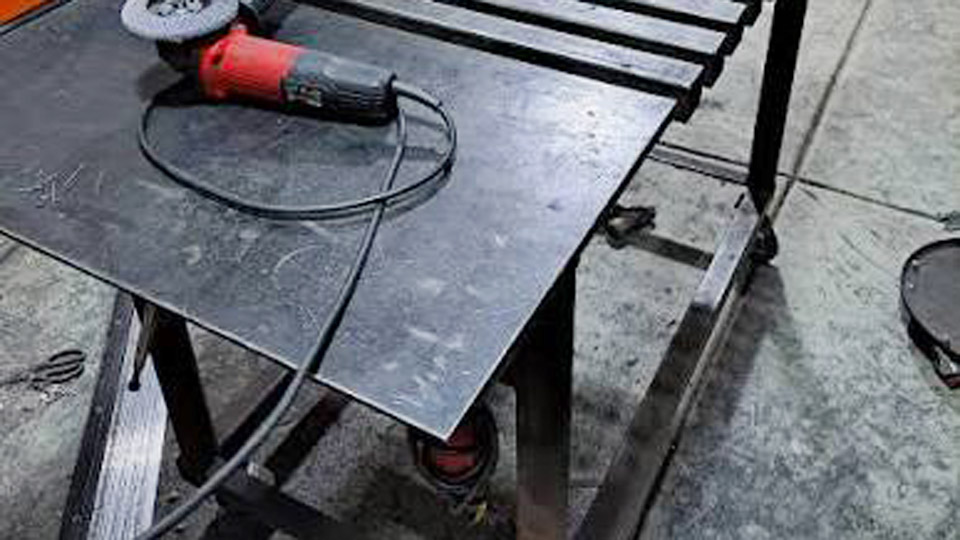
It’s not just about the material—it’s also about how thick the table is. Most welding tables use steel plate between 3/16 inch (about 5 mm) and 1 inch (25 mm) thick.
Thinner tables (under 1/4 inch) are light and cheap but can warp under heat or heavy loads. Thicker tables stay flat and absorb more heat but are very heavy. For most shops, a 3/8 inch (10 mm) or 1/2 inch (12 mm) top is the best balance.
Table Frame Materials
The top of the table gets most of the attention. But what about the frame and legs? These parts are often made from:
- Mild steel square tubing: Strong, easy to weld, and affordable.
- Angle iron: Used for bracing and supports.
- Stainless steel: Sometimes used for legs in wet or clean-room environments.
- Aluminum: For portable, lightweight tables.
The frame doesn’t need to be as thick as the top, but it must still be sturdy. A weak frame makes the table wobble, which is dangerous during welding.
Specialty Welding Table Designs
Not all tables are the same. Some are built for special tasks, and that changes the material choice.
Slotted And Fixture Tables
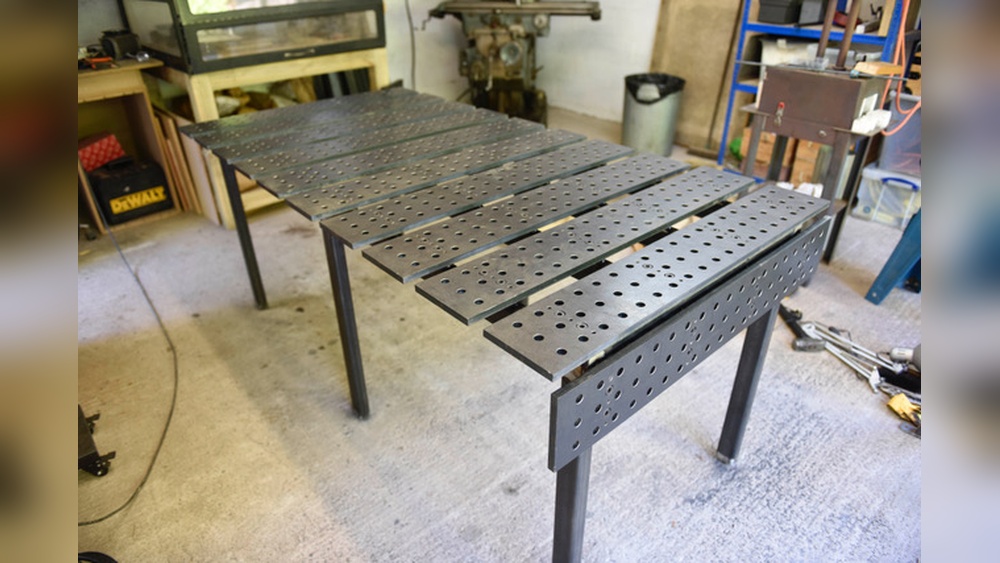
Slotted tables have rows of holes or slots to hold clamps and jigs. These are usually made from hardened mild steel or cast iron.
Why slots? They let you fix parts in place for accurate welding. The material must be tough but not brittle, since slots are weak points.
Portable Welding Tables
Portable tables are made from thinner steel or aluminum. The key is balancing weight and strength. Some fold up or have wheels.
Tip: Portable tables are best for light work. For heavy jobs, a fixed steel table is safer.
Water Tables (plasma Cutting)
Some tables have a shallow water tray under the surface. This cools the metal and catches sparks.
Material: The top is still mild steel, but the tray is sometimes stainless steel to prevent rust.
How To Choose The Right Welding Table Material
If you’re buying or building a table, here’s what really matters:
- Your main welding process: MIG, TIG, stick, or plasma cutting? Each has different heat and grounding needs.
- Work size and weight: Bigger, heavier parts need thicker and stronger tables.
- Budget: Mild steel gives the best value for most users.
- Corrosion risk: For outdoor or wet environments, stainless or aluminum resists rust.
- Portability: Need to move the table? Go lighter, but accept some loss of strength.
- Precision: For fine work, consider cast iron or a thick, ground steel top.
Don’t forget: Most welding happens in the same spot on the table. If you can’t afford a solid stainless or thick steel table, try using a steel “work plate” on top of a cheaper frame.
Comparing Commercial Welding Table Brands
Here’s a look at how some well-known welding table brands use different materials:
| Brand | Main Material | Surface Thickness | Special Features |
|---|---|---|---|
| Strong Hand Tools | Mild Steel | 3/16″–1/2″ | Slots, clamps, modular design |
| Siegmund | Nitrided Steel | 1/2″–1″ | Hardened surface, grid of holes |
| CertiFlat | Mild Steel | 1/4″–3/8″ | DIY kits, slot designs |
| BuildPro | Mild Steel | 3/16″–1/2″ | Fixture points, modular |
| Homemade/DIY | Varies (Steel, Cast Iron) | Varies | Custom features |
Maintenance: Keeping Your Table In Good Shape
Material affects not just how a table works, but how you care for it.
- Mild steel: Needs regular cleaning. Wipe with a rag and use light oil to prevent rust.
- Stainless steel: Easier to keep clean, but avoid steel wool (can cause rust spots).
- Cast iron: Don’t let water sit on the surface; use a rust inhibitor.
- Aluminum: Clean with non-scratching pads—aluminum is soft.
Pro tip: Never weld directly on a painted or coated surface unless the coating is safe and designed for welding. Remove any paint before starting.
Surprising Insights Most Beginners Miss
- Table grounding can affect weld quality. If your table is painted, dirty, or has a poor connection to your welder’s ground clamp, your welds may become weak or inconsistent. Always check the ground path.
- Flatness is more important than you think. Even a small warp (1/16 inch) can throw off complex assemblies. Use a straightedge to check your table’s surface often, especially after heavy work.
- Heat sinks can help. If you need to weld thin metal, placing a thick copper or aluminum plate under the work can absorb heat and reduce burn-through. These are not table surfaces but can be added on top for special jobs.
- Table holes and slots are not just for clamps. They can also be used to pass through wiring, coolant lines, or to attach jigs for repeated tasks. This adds flexibility to your workflow.
Environmental Considerations
The choice of material also has an impact on the environment.
- Steel can be recycled many times. Most new steel contains some recycled content.
- Aluminum production uses a lot of energy, but it is also highly recyclable.
- Stainless steel is durable, which can reduce the need for replacements.
- Coatings like paint and powder coat can give off volatile chemicals—choose low-VOC options when possible.
If you want to reduce your carbon footprint, look for tables made from recycled steel and avoid toxic coatings.
Future Trends: High-tech Welding Tables
Technology is changing even the humble welding table. Modern tables may include:
- CNC-machined tops for extreme flatness.
- Integrated grounding systems for better safety.
- Robotic fixture compatibility for automated welding.
- Smart surfaces that detect temperature and warn against overheating.
While these features are new, the core materials—steel, stainless, cast iron—remain the foundation.
Wrapping Up
Welding tables are all about the right foundation. The right material makes your work safer, faster, and more enjoyable. Now you know what goes into making that perfect welding surface—and why it matters for every project you tackle.
Frequently Asked Questions
What Is The Best Material For A Welding Table?
For most users, mild steel is the best choice. It offers a good balance of strength, cost, and workability. For environments with lots of moisture or special needs, stainless steel is better but costs more.
How Thick Should A Welding Table Top Be?
A top between 3/8 inch (10 mm) and 1/2 inch (12 mm) is ideal for most general welding. Lighter tables can be thinner, but thick tops stay flat longer and handle more heat.
Can I Use Wood For A Welding Table?
No, wood is not safe for welding tables. It burns easily, produces smoke, and is not electrically conductive. Always use a metal surface for welding.
How Do I Keep My Welding Table From Rusting?
Wipe the surface clean after each use and apply a thin layer of light oil or use a rust inhibitor. For long-term protection, consider stainless steel or a nitrided surface.
Is Aluminum A Good Choice For A Welding Table?
Aluminum is good for portable tables or light work, but it’s not as strong or heat-resistant as steel. It works well for TIG or small repairs, but not for heavy-duty welding.