Many welders hit a wall when tackling open-root pipe joints or welding on dirty, rusty, or mill-scaled carbon steel. The arc won’t penetrate consistently, the puddle lacks control in vertical-down positions, or the root pass fails inspection due to lack of fusion.
This is where the 6010 welding rod specifications become critical. Designed for deep penetration and all-position capability on DC electrode positive (DCEP), the E6010 delivers forceful arcs that cut through contaminants while producing X-ray quality welds when parameters are dialed in correctly.
Understanding these specifications—coating type, amperage ranges, polarity requirements, and mechanical properties—directly impacts weld strength, productivity, and pass rates in pipeline work, structural fabrication, and field repairs.
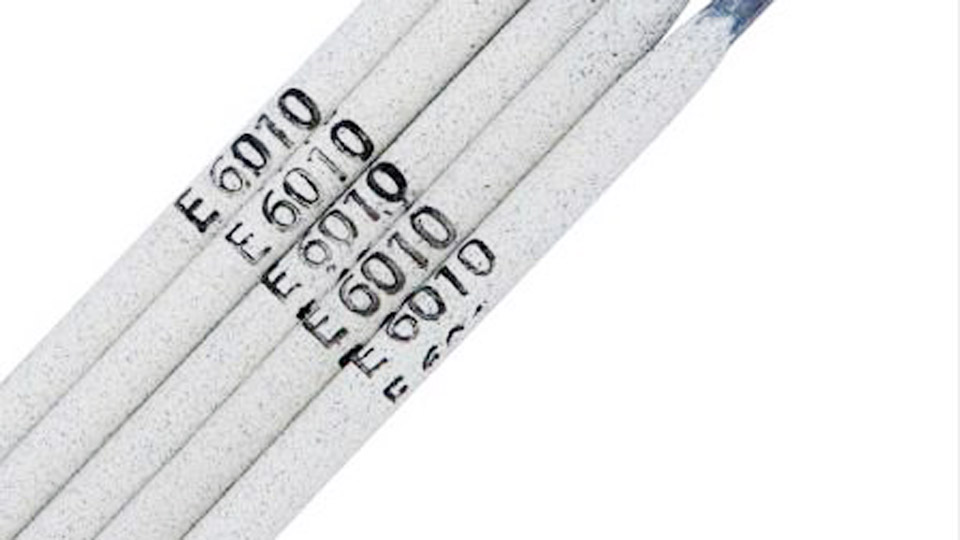
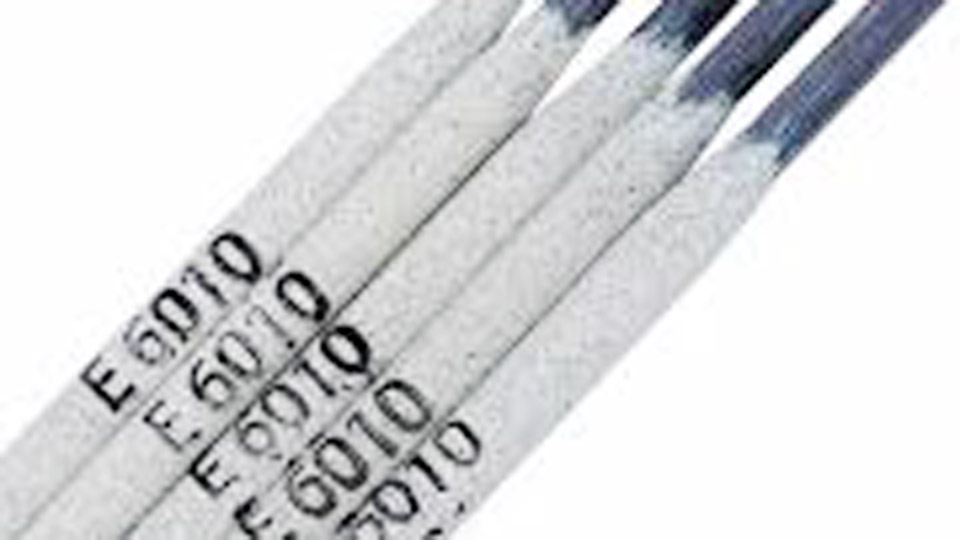
Image by indiamart
AWS Classification and What the Numbers Mean
The AWS A5.1 designation E6010 breaks down into precise performance indicators. “E” confirms it as a shielded metal arc welding (SMAW/stick) electrode. The “60” specifies a minimum tensile strength of 60,000 psi (about 414 MPa) in the weld metal.
The “1” indicates all-position welding capability (flat, horizontal, vertical, overhead). The final “0” denotes a high-cellulose sodium coating intended primarily for DCEP.
This classification ensures predictable mechanical properties: typical yield strength around 48,000 psi (330 MPa), elongation of 22% minimum, and Charpy V-notch impact values meeting 20 ft-lbs (27 J) at -20°F (-29°C). Actual values often exceed these, with tensile strengths reaching 70-86 ksi depending on diameter and parameters.
Coating Composition and Its Effects on Arc Behavior
High cellulose sodium flux (often exceeding 30% cellulose by weight) generates a forceful, digging spray-type arc. Key ingredients include calcium carbonate, calcium fluoride, silicates, titanium dioxide, and sodium silicate binders. This produces abundant shielding gas for deep penetration and a thin, friable slag that freezes quickly.
The coating tolerates rust, paint, oil, and mill scale better than low-hydrogen or rutile types. It creates a fast-freeze puddle ideal for vertical-down “stovepipe” welding and overhead work. Unlike iron-powder electrodes, it emphasizes penetration over deposition rate.
Electrode Diameters and Recommended Amperage Settings
Amperage must match diameter, position, and joint type for optimal penetration without burn-through or undercut. Always use DCEP polarity.
Typical Amperage Ranges (DCEP):
| Diameter (inch / mm) | Flat/Horizontal Amps | All-Position Amps | Optimal for Root Pass |
|---|---|---|---|
| 3/32″ (2.4 mm) | 50-80 | 40-70 | Thin material, root |
| 1/8″ (3.2 mm) | 80-140 | 70-130 | General pipe |
| 5/32″ (4.0 mm) | 110-175 | 90-170 | Structural, fill |
| 3/16″ (4.8 mm) | 140-225 | 140-200 | Heavy plate |
Voltage typically falls between 24-29V, with shorter arc lengths (1/16″ to 3/32″) maximizing digging action. For vertical-down, reduce amperage 10-15% and increase travel speed. Larger diameters demand machines capable of sustained high output with low spatter.
Voltage and Travel Speed Considerations
Maintain 26-28V for 1/8″ rods. Lower voltage tightens the arc for better control on thin sections but risks incomplete fusion. Higher voltage widens the bead and increases spatter. Travel speeds of 6-12 inches per minute are common; faster speeds (up to 15+ ipm) suit stovepipe root passes to prevent slag inclusions.
Polarity Requirements and Power Source Compatibility
E6010 rods require DCEP (DC electrode positive / reverse polarity) exclusively for optimal performance. The electrode connects to the positive terminal, concentrating heat at the arc for deep penetration. Using AC or DCEN results in unstable arcs, poor penetration, and excessive spatter.
Rectifier or inverter DC machines work best. Transformer-based DC welders can run them but may need higher open-circuit voltage. This DC-only limitation distinguishes 6010 from the more versatile 6011.
Chemical Composition of Weld Metal
Typical weld metal analysis stays well within AWS limits:
- Carbon (C): 0.09-0.15% (max 0.20%)
- Manganese (Mn): 0.28-0.60% (max 1.20%)
- Silicon (Si): 0.14-0.29% (max 1.00%)
- Low levels of Cr, Ni, Mo, V, P, S.
This composition delivers good ductility and toughness suitable for mild and some low-alloy steels (e.g., ASTM A36, API 5L grades up to X52 for fill/capping, root on higher grades).
Mechanical Properties and Performance Data
As-welded typical results:
- Tensile Strength: 490-593 MPa (71-86 ksi)
- Yield Strength: 427-483 MPa (62-70 ksi)
- Elongation: 25-28%
- Impact Toughness: 47-81 J at -30°C (often exceeding minimums)
These properties support pressure piping, structural steel, ship hulls, and storage tanks. Deposits produce coarse ripple beads with excellent wash-in and radiographic soundness when technique is sound.
Welding Positions and Technique Variations
All positions are supported due to fast-freeze characteristics. Vertical-down excels for pipeline root passes using the stovepipe method: a whipping or stitching motion creates a keyhole that ensures full penetration. Vertical-up requires tighter control and slightly lower amps. Overhead benefits from the quick-freezing slag.
Key Technique Insights:
- Short arc length for maximum penetration.
- Slight drag or whip technique; avoid long arcs.
- Electrode angle: 10-20° push for flat, trail for vertical-down.
- Restart by striking ahead of the crater and whipping back to tie in.
Applications in Real-World Welding
6010 rods dominate pipeline construction for root and hot passes on carbon steel. They handle field erection, shipbuilding, pressure vessels, water towers, and repairs on galvanized or contaminated steel. The deep penetration fills gaps in poorly fit-up joints common in construction.
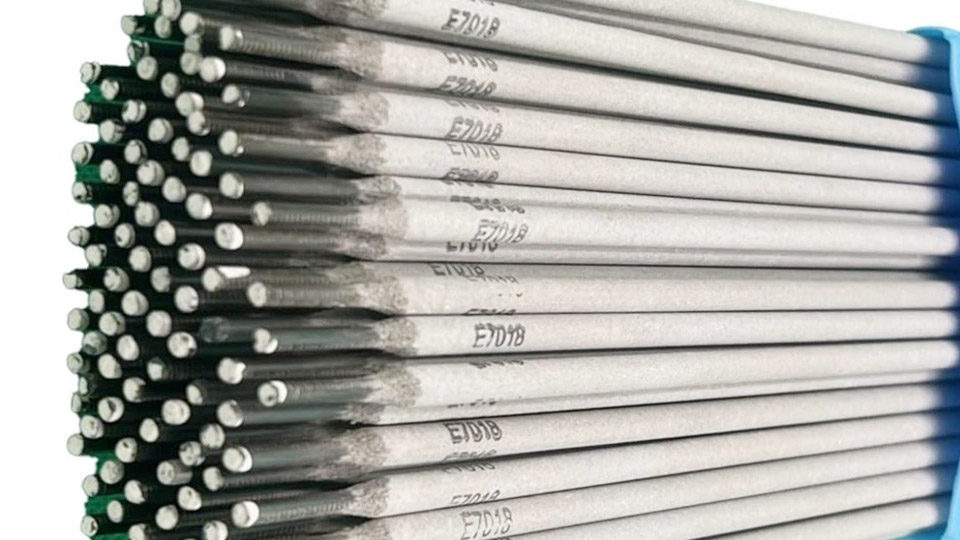
For multi-pass welds, pair with 7018 or similar for fill and cap to achieve low-hydrogen properties where needed. Not ideal for critical low-hydrogen applications without proper procedures.
6010 vs 6011: Critical Decision Factors
While similar in tensile strength and penetration, differences matter:
- Coating: 6010 (high cellulose sodium) vs. 6011 (high cellulose potassium).
- Polarity: 6010 (DCEP only) vs. 6011 (DCEP, DCEN, AC).
- Arc: 6010 offers slightly deeper, more forceful digging; 6011 is more forgiving on AC and contaminated surfaces.
Choose 6010 for dedicated DC setups needing maximum root penetration. Opt for 6011 when AC machines or broader versatility is required. Both tolerate dirt well, but 6010 often edges out in stovepipe technique consistency.
Storage, Handling, and Reconditioning
Store in dry conditions. High-cellulose coatings rely on moisture for gas generation, so avoid excessive drying. If damp, recondition at 70-100°C (158-212°F) for 30-60 minutes. Do not overbake, as this destroys performance.
Selecting the Right Diameter for Your Job
Match diameter to thickness and position:
- 3/32″ for sheet metal or tight roots.
- 1/8″ for most general and pipe work.
- 5/32″+ for thicker plates and higher deposition in flat positions.
Test settings on scrap to fine-tune for your machine and material.
Performance Takeaway for Correct Selection
Mastering 6010 welding rod specifications means prioritizing DCEP polarity, matching amperage to diameter and position, and leveraging the high-cellulose coating for contaminated or open-root joints.
This electrode rewards precise parameter control with deep fusion, fast-freeze control, and reliable mechanical properties across demanding applications.
For pro-level pipeline or structural work, the forceful arc and thin slag deliver X-ray quality results that hold up under load—provided you respect its DC-only nature and technique demands. Dial it in once, and it becomes a go-to for high-integrity welds where penetration is non-negotiable.
FAQ
What polarity is required for 6010 welding rods?
DCEP (DC electrode positive) only. AC or DCEN causes unstable arcs and poor penetration.
What amperage should I use for 1/8″ 6010 rod?
70-130 amps for most positions, starting around 90-110A for vertical or pipe root passes. Adjust based on fit-up and travel speed.
Can 6010 rods be used on rusty or painted metal?
Yes. The forceful arc and gas shield handle mill scale, rust, and light contaminants effectively, making it ideal for field work.
Is 6010 better than 6011 for pipeline root passes?
6010 often performs better for stovepipe vertical-down due to deeper, more consistent penetration on DC machines. 6011 offers more flexibility with AC.