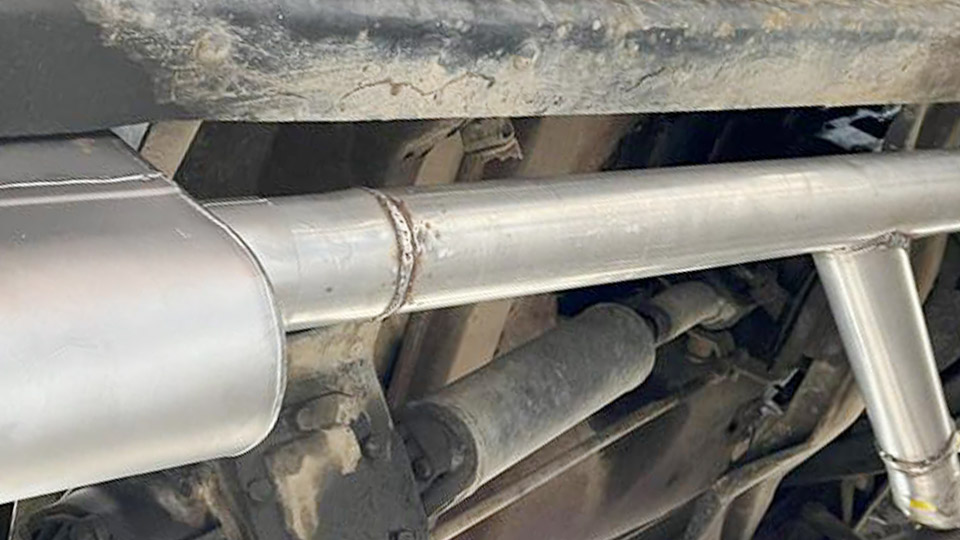
Many welders face the same decision on structural steel, aluminum assemblies, or heat-sensitive components: should the base metal melt to form the joint, or should the bond form without melting? Choosing incorrectly leads to excessive distortion, loss of material properties, or joints that fail under load.
Understanding Fusion vs Non-Fusion Welding – What’s the Difference? directly affects heat input, joint efficiency, residual stress, and whether dissimilar metals can be joined successfully. Fusion processes melt the parent metal (and usually add filler) to create a continuous metallurgical bond.
Non-fusion processes rely on pressure, plastic deformation, diffusion, or friction while keeping the base metal solid.
The distinction determines process selection for pipelines, aerospace structures, automotive bodies, electronics, and repair work where preserving original mechanical properties is non-negotiable.
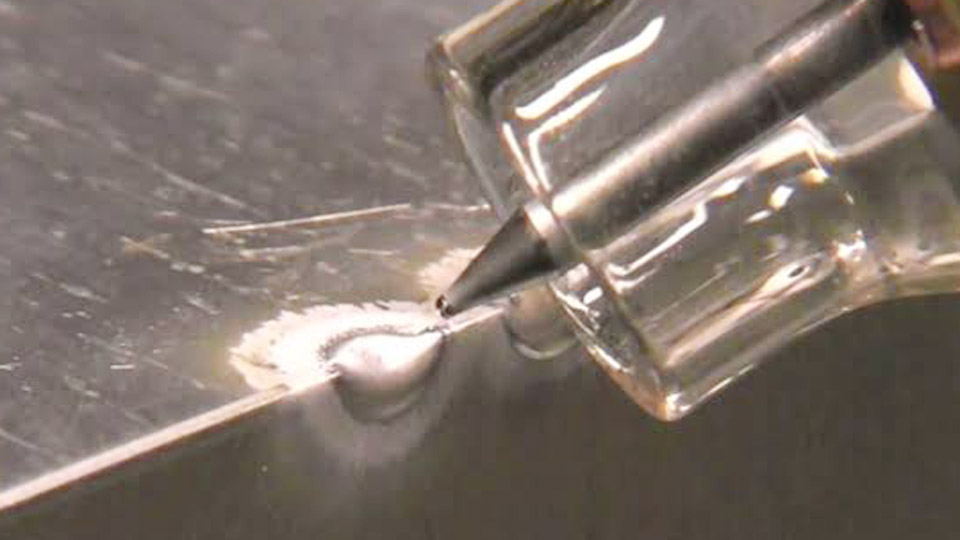
Image by red-d-arc
When Base Metal Melting Defines the Joint
Fusion welding creates coalescence by bringing the faying surfaces above the melting point so atoms mix in the liquid state and solidify into a continuous structure. Non-fusion (solid-state) welding achieves atomic bonding through intimate contact under pressure or controlled deformation without a bulk liquid phase.
Core Mechanism of Fusion Processes
An external heat source—electric arc, oxy-fuel flame, laser, or electron beam—raises the joint above the solidus temperature. Molten base metal and optional filler form a weld pool that solidifies into a fusion zone surrounded by a heat-affected zone (HAZ).
Common examples include SMAW (stick), GMAW (MIG/MAG), GTAW (TIG), FCAW, SAW, plasma arc, laser beam, and electron beam welding.
Local melting also occurs in most resistance spot and seam welds, producing a cast nugget; these are therefore classified as fusion processes despite the simultaneous application of pressure.
Core Mechanism of Non-Fusion Processes
Pressure, friction, or diffusion brings clean metal surfaces into atomic contact while the temperature remains below the melting point. Plastic flow disrupts surface oxides and creates metallic bonds.
Key processes include friction welding (rotary, linear, and friction stir), cold welding, diffusion bonding, explosion welding, ultrasonic welding, forge welding, and roll bonding.
Brazing and soldering are frequently grouped with non-fusion methods because the base metal stays solid; only the filler melts and flows by capillary action.
Heat Input, HAZ Size, and Property Retention
Heat input controls microstructure, residual stress, and distortion more than any other single variable.
Fusion Welding Heat Effects
Fusion processes deliver high energy density. Typical arc welding heat inputs range from 0.5–2.5 kJ/mm depending on process and parameters. The resulting HAZ can extend several millimeters, causing grain growth, softening in work-hardened alloys, or precipitation changes in heat-treatable materials.
Distortion and residual tensile stresses are common on thin sheet or highly restrained joints. Post-weld heat treatment is often required to restore properties or relieve stress.
Non-Fusion Heat Effects
Solid-state processes generate heat primarily from friction or deformation rather than an external source. Peak temperatures remain well below melting—often 0.5–0.8 of the absolute melting temperature. The HAZ is minimal or absent, preserving cold-worked strength, corrosion resistance, and fine grain structure.
Distortion is typically an order of magnitude lower. Friction stir welding of aluminum, for example, produces a narrow thermo-mechanically affected zone while retaining nearly base-metal tensile properties.
Joint Strength, Efficiency, and Dissimilar Metal Capability
Strength Characteristics of Fusion Joints
A properly executed fusion weld can match or exceed base-metal tensile strength in matching filler systems. Joint efficiency frequently reaches 100 % on carbon steel when using matching or over-matching consumables.
However, the cast microstructure of the fusion zone and the altered HAZ can reduce toughness, fatigue life, or corrosion resistance relative to the parent metal.
Crack-sensitive alloys (certain high-strength steels, aluminum 2xxx/7xxx series) require careful parameter control or specialized filler to avoid solidification cracking.
Strength and Compatibility of Non-Fusion Joints
Solid-state joints often exhibit near-parent-metal strength because the original microstructure is largely retained. Friction welds and explosion welds routinely achieve 90–100 % joint efficiency.
Dissimilar metal combinations that form brittle intermetallics in the liquid state—aluminum to steel, titanium to stainless, copper to aluminum—become practical because intermixing is limited to a few micrometers.
Diffusion bonding and friction stir welding are preferred for these pairs in aerospace and heat-exchanger applications.
Process Selection for Real Shop and Field Conditions
Structural Steel and Heavy Fabrication
Fusion processes dominate. SMAW and FCAW provide portability for field erection of beams, columns, and pressure vessels. GMAW and SAW deliver high deposition rates for shop fabrication of plate girders and pipe.
Heat input is managed through controlled interpass temperatures and multi-pass sequences. Non-fusion methods such as flash-butt welding appear in rail and pipeline production lines where high joint efficiency and automation justify the equipment cost.
Thin Sheet, Aluminum, and Heat-Sensitive Alloys
Non-fusion methods gain advantage. Friction stir welding joins aluminum extrusions and panels with minimal distortion and no filler. Ultrasonic welding bonds thin foils and electrical contacts without melting.
Cold welding produces gas-tight seals in copper and aluminum tubing. When fusion is required, pulsed GMAW or low-heat GTAW is selected to limit HAZ size.
Dissimilar and Multi-Material Assemblies
Solid-state processes or brazing are usually superior. Explosion cladding produces large-area aluminum-steel or titanium-steel transitions. Friction welding joins engine valves (austenitic stem to martensitic head).
Brazing with appropriate filler alloys joins copper to steel or carbide to tool steel without the cracking risk of fusion welding.
Equipment, Skill Demand, and Cost Trade-Offs
Fusion Process Practicalities
Arc welding equipment ranges from portable inverter machines (SMAW/GMAW/GTAW) to high-amperage submerged-arc systems.
Skill requirements vary: SMAW needs good manual technique for position and arc length control; GMAW is more forgiving once parameters are set; GTAW demands precise torch and filler coordination.
Consumable cost (electrodes, wire, shielding gas) and post-weld cleaning (slag, spatter) add to total cost. Capital investment for basic setups remains modest, making fusion the default for most fabrication shops and field work.
Non-Fusion Process Practicalities
Friction and friction-stir systems require specialized machines with precise force, rotation, and travel control. Explosion welding needs remote sites and licensed explosives handling.
Diffusion bonding uses vacuum or controlled-atmosphere furnaces under high pressure for hours. Capital cost is high, but consumable cost is near zero and joint quality is consistent once parameters are locked.
Operator skill shifts from manual dexterity to process monitoring and surface preparation. Surface cleanliness and flatness become critical because oxides and contaminants cannot be fluxed away as easily as in fusion welding.
Inspection and Quality Considerations Unique to Each Category
Fusion welds are inspected by visual methods, liquid penetrant, magnetic particle, radiography, and ultrasonic testing for lack of fusion, porosity, cracks, and incomplete penetration. Codes (AWS D1.1, ASME Section IX) provide detailed acceptance criteria based on the cast microstructure and potential discontinuities.
Non-fusion joints lack a distinct fusion zone, so conventional radiographic contrast is lower. Ultrasonic testing, phased-array, and mechanical testing (tensile, bend, peel) become primary methods.
Surface preparation defects or insufficient pressure leave planar lack-of-bond areas that can be difficult to detect. Process qualification often relies more heavily on destructive testing of production samples.
Decision Framework for Choosing Between the Two Approaches
Select fusion welding when the joint must bridge gaps, when high deposition rates are required, when the base metal tolerates a HAZ, or when portable equipment is essential.
Select non-fusion (or brazing) when distortion must be minimized, when original mechanical or corrosion properties must be retained, when dissimilar metals form brittle intermetallics if melted, or when thin or heat-sensitive sections cannot accept a molten pool.
Hybrid approaches—friction-stir root followed by fusion fill, or laser hybrid welding—combine advantages on large or critical structures.
Matching process physics to material response and service demands produces reliable joints. Advanced practitioners further optimize by controlling peak temperature and cooling rate in fusion processes or by engineering interface strain and time-at-temperature in solid-state processes, achieving properties that neither category reaches in isolation.
FAQs
Is resistance welding considered fusion or non-fusion?
Most resistance spot and seam welds form a molten nugget and are classified as fusion processes. Certain short-time, high-force variants can produce solid-state bonds, but the common industrial processes involve melting.
Can non-fusion welding join dissimilar metals better than fusion?
Yes. Limited intermixing prevents brittle intermetallic formation that often occurs when aluminum, titanium, or copper are melted together with steel or other alloys.
Which process has lower distortion on thin aluminum sheet?
Friction stir welding and ultrasonic welding typically produce far less distortion than arc or laser fusion processes because peak temperatures stay below the melting point.
Does non-fusion welding always produce stronger joints?
Not always. Fusion welds with matching filler routinely reach 100 % joint efficiency on structural steel. Non-fusion joints excel when the base metal’s original properties must be preserved or when dissimilar combinations are required.