Choosing whether to weld or use mechanical fasteners often creates immediate project risk: a welded joint delivers continuous strength but locks in heat distortion and residual stress that can compromise dimensional accuracy or fatigue life.
Understanding what are the advantages and disadvantages of welding matters because the wrong choice increases rework, inspection costs, or long-term structural problems.
Welded connections eliminate cross-section losses from bolt holes and create sealed, stiff assemblies, yet they demand skilled operators, controlled heat input, and permanent commitment to the joint design.
For DIY fabricators, students, and production welders, the decision hinges on load requirements, material thickness, accessibility, and whether future disassembly is needed. Accurate evaluation of these trade-offs prevents both under-designed joints and unnecessary complexity.
Image by expressmetalindustries
Strength and Structural Continuity Gains from Welding
Welded joints form a metallurgical bond that can match or exceed the tensile strength of the base metal when properly executed and inspected. This continuity removes the stress concentrations created by fastener holes and allows designers to use the full cross-section of members.
Full-Section Load Capacity Without Hole Reductions
Bolted connections require drilled or punched holes that reduce the net section area. In structural steel, this reduction forces larger members or additional reinforcement plates to compensate. A complete-joint-penetration groove weld restores the full section, enabling lighter overall assemblies.
In pressure vessels and tanks, the continuous seal also prevents leakage under internal pressure that bolted flanges cannot match without gaskets and higher clamp loads.
Stiffness and Fatigue Performance in Dynamic Applications
Welded frames and chassis exhibit higher torsional and bending stiffness because there is no slip between connected plates. Under cyclic loading, the absence of fretting at fastener interfaces improves fatigue life when the weld itself is free of undercut, incomplete fusion, or excessive reinforcement.
Properly designed fillet and groove welds transfer load smoothly across the joint plane, provided residual stresses are managed through sequencing or post-weld heat treatment where required by code.
Distortion, Residual Stress, and Heat-Affected Zone Constraints
Localized heating expands the weld zone while surrounding cooler metal restrains it. On cooling, the upset zone contracts and locks in tensile residual stresses that frequently reach yield strength levels. These effects represent the primary technical disadvantages of arc welding processes.
Mechanisms of Angular, Longitudinal, and Buckling Distortion
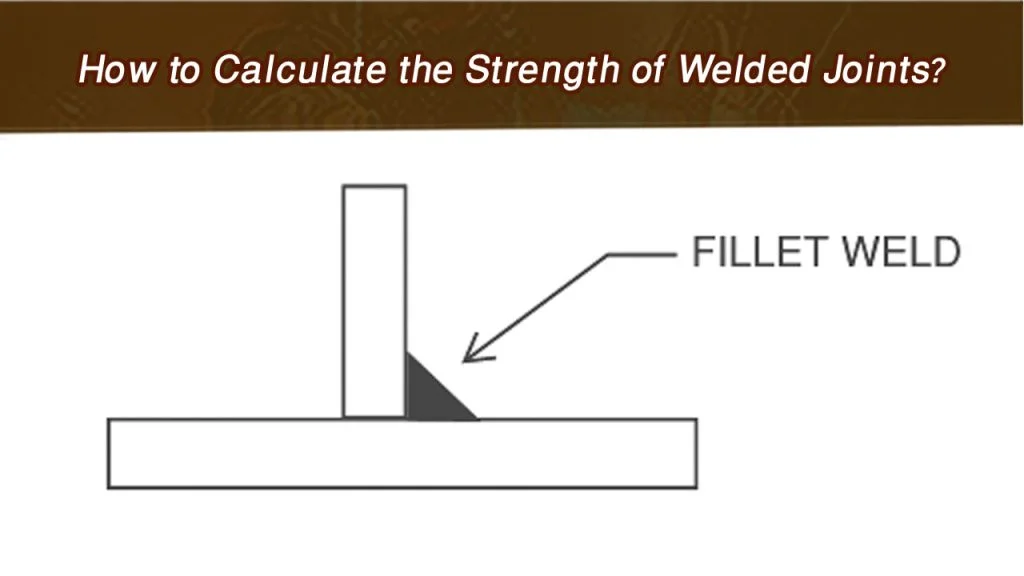
Uneven temperature gradients produce angular distortion in fillet welds (plate rotation about the weld axis), longitudinal shrinkage along the weld length, and buckling in thin plate.
Restraint level controls the outcome: highly restrained joints show less visible distortion but higher residual stress; lightly restrained joints move more but retain lower locked-in stress.
Multi-pass welding on thick sections amplifies the cumulative effect because each successive pass heats an already constrained structure.
Residual Stress Influence on Service Performance
Tensile residual stresses parallel to the weld reduce effective fatigue strength and increase susceptibility to hydrogen-assisted cold cracking in susceptible steels. In corrosive environments they accelerate stress-corrosion cracking.
Post-weld heat treatment, peening, or controlled weld sequencing can lower peak residual stresses, but these steps add cost and time.
The heat-affected zone itself experiences microstructural changes—grain coarsening, hardening, or softening—depending on material chemistry and cooling rate, which can create local toughness reductions even when the weld metal meets tensile requirements.
Process-Specific Advantages and Limitations for Common Arc Methods
Different processes shift the balance between productivity, quality, and environmental tolerance. Selection depends on material thickness, position, shop versus field conditions, and required deposition rate.
SMAW Portability and Outdoor Capability Versus Productivity Limits
Shielded metal arc welding requires only a power source, electrode holder, and coated electrodes. It performs reliably outdoors and in wind because the flux coating generates its own shielding. Equipment cost remains low and the process adapts easily to confined spaces or remote sites.
Deposition rates stay lower than continuous-wire processes because electrodes must be changed frequently and slag must be removed between passes. Operator skill demand is higher for consistent bead profile and fusion.
GMAW Deposition Speed and Cleanliness Versus Shielding Sensitivity
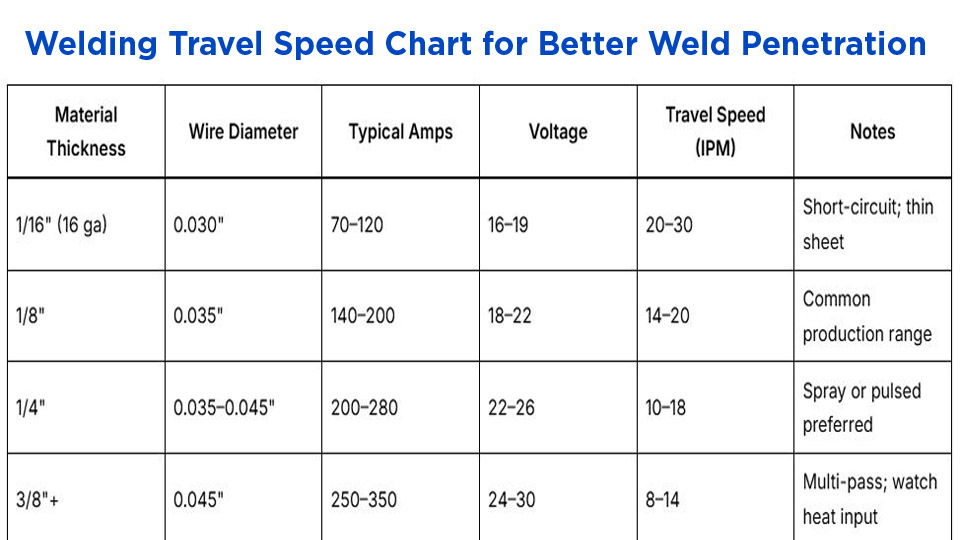
Gas metal arc welding feeds continuous solid wire under external shielding gas, delivering high deposition rates and slag-free welds. Learning curves are shorter for flat and horizontal work, making it efficient for production of mild-steel fabrications.
Wind or drafts disrupt the gas shield and introduce porosity, restricting reliable outdoor use without wind protection. Equipment complexity and consumable gas costs exceed those of SMAW.
GTAW Precision and Metallurgical Control Versus Low Deposition Rates
Gas tungsten arc welding provides independent control of heat input and filler addition, producing high-purity welds with excellent fusion and minimal spatter on stainless steel, aluminum, and thin sections. Root-pass quality on pipe is often superior.
Deposition rates remain the lowest among common arc processes, increasing labor time on thicker material. Skill requirements for torch and filler coordination are high.
FCAW High Deposition and Position Flexibility for Heavy Fabrication
Flux-cored arc welding combines continuous wire with internal flux, achieving deposition rates higher than SMAW while retaining better outdoor tolerance than solid-wire GMAW when self-shielded wires are used. Deep penetration suits structural plate and heavy equipment repair.
Slag removal and higher fume generation remain process drawbacks, and equipment maintenance exceeds that of SMAW.
Cost, Permanence, and Project-Scale Decision Factors
Labor typically dominates total joining cost. Shop welding benefits from fixtures, positioners, and controlled environments that raise productivity, while field welding faces wind, access, and weather constraints that increase time and defect risk.
Shop Versus Field Economics and Automation Potential
Shop environments allow higher deposition processes and semi-automatic or robotic systems that reduce labor content per joint. Field work often reverts to SMAW or self-shielded FCAW for portability, accepting lower deposition rates.
Permanent welded joints eliminate future disassembly costs when the structure will not require modification, but they raise demolition or repair expense if changes become necessary later. Bolted alternatives preserve adjustability and simplify inspection of fastener preload.
When Permanence Creates Liability Rather Than Benefit
Repair or modification of welded structures requires cutting and re-welding, which reintroduces residual stress and heat-affected zone issues. In modular or temporary assemblies, mechanical fasteners allow repeated assembly without metallurgical alteration of the base metal.
Code-required nondestructive examination of critical welds (radiography, ultrasonic testing) further elevates cost relative to visual inspection of bolts.
Inspection Demands and Long-Term Reliability Considerations
Weld quality depends on procedure qualification, operator qualification, and in-process controls. Visual inspection catches surface defects but cannot verify subsurface fusion or internal porosity.
Critical applications therefore require volumetric nondestructive testing, increasing both schedule and expense compared with mechanical joints whose geometry is verified by measurement.
Defects such as incomplete penetration, slag inclusions, or cracks act as stress raisers that can initiate fatigue or brittle fracture under service loads. Proper joint design, preheat, interpass temperature control, and consumable selection mitigate these risks, yet they add procedural complexity absent from most bolted connections.
Wrapping Up
Selecting welding over alternative joining methods is justified when continuous strength, sealing, or stiffness outweigh the penalties of heat input, residual stress, and permanence.
The decisive technical step is matching process heat input and deposition characteristics to material thickness, restraint level, and service environment while verifying that residual stress and distortion remain within acceptable limits for the finished assembly.
Advanced fabricators further optimize by combining hybrid sequences—GTAW root with higher-deposition fill passes—to capture precision where needed and productivity where possible.
FAQs
Is welding stronger than bolting for structural steel?
A properly executed complete-joint-penetration weld develops the full strength of the base metal without net-section loss from holes. Bolted joints rely on the net section and friction or bearing; they are adequate for many shear connections but generally less stiff.
What is the biggest disadvantage of arc welding?
Localized heating produces residual stresses and distortion that can reduce fatigue life, cause dimensional inaccuracy, or promote cracking if not controlled through procedure and sequencing.
When should I choose MIG (GMAW) over stick (SMAW)?
Choose GMAW for higher deposition rates and cleaner welds in controlled shop environments on mild steel. Use SMAW when portability, outdoor conditions, or lower equipment cost take priority.
Does welding always require highly skilled operators?
Process skill demand varies. GMAW short-circuit transfer is relatively forgiving for flat work, while out-of-position SMAW, GTAW, and critical code work demand higher operator qualification and procedure control.